Simulation plays a crucial role in carburizing furnace design, especially for a supplier like us. In this blog, I'll share how simulation impacts our work and why it's a game - changer in creating top - notch carburizing furnaces.
Understanding Carburizing Furnaces
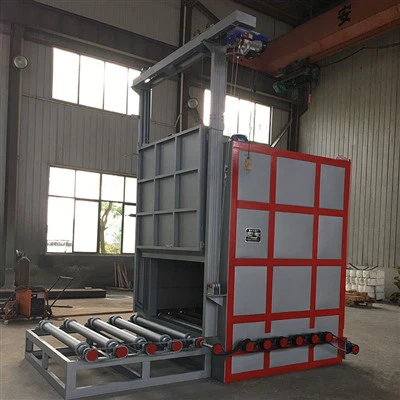
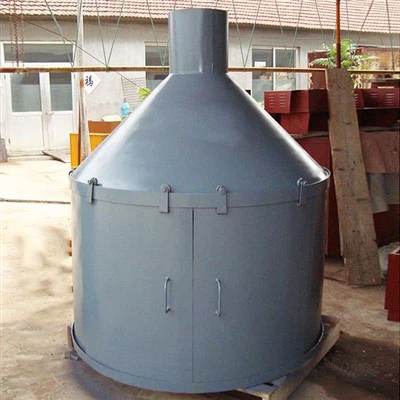
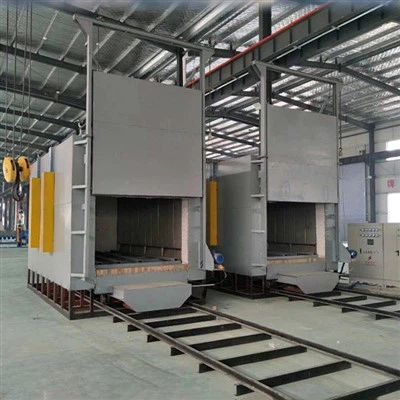
First, let's quickly go over what carburizing furnaces are. Carburizing is a heat - treatment process where carbon is added to the surface of low - carbon steel to increase its hardness and wear resistance. Our company supplies different types of carburizing furnaces, like the Carburizing Pit Furnace and the Box Type Gas Carburizing Furnace. These furnaces are used in various industries, from automotive to aerospace, to improve the quality of metal parts.
The Role of Simulation in Design
Predicting Temperature Distribution
One of the most important aspects of carburizing furnace design is ensuring uniform temperature distribution. Simulation allows us to model how heat spreads inside the furnace. By inputting factors like furnace shape, insulation materials, and heating element placement, we can create a virtual model of the furnace's internal environment.


For example, if we're designing a new carburizing pit furnace, simulation helps us figure out where hot spots and cold spots might form. This is crucial because uneven temperature can lead to inconsistent carburizing results. With simulation, we can adjust the design, such as changing the layout of the heating elements or the thickness of the insulation, to achieve a more uniform temperature distribution.
Gas Flow Analysis
In a carburizing furnace, the flow of carburizing gas is just as important as temperature. The gas needs to reach all parts of the workpiece evenly to ensure proper carbon diffusion. Simulation software can model the gas flow patterns inside the furnace.
We can see how the gas enters the furnace, how it circulates around the workpieces, and where it exits. If there are areas with poor gas flow, it can result in incomplete carburizing. Using simulation, we can optimize the gas inlet and outlet design, as well as the internal baffles, to improve gas distribution.
Material Property Prediction
Simulation also helps us predict how different materials will behave during the carburizing process. We can input the properties of the steel workpiece, such as its initial carbon content and grain structure, into the simulation software. The software then predicts how the carbon will diffuse into the material over time.
This is extremely useful for custom - designing furnaces for specific applications. For instance, if a customer needs a furnace to carburize a particular type of high - strength steel, we can use simulation to determine the optimal carburizing time, temperature, and gas composition.
Advantages of Using Simulation in Design
Cost - Saving
Designing a carburizing furnace without simulation often involves a lot of trial and error. We would have to build multiple prototypes, test them, and make adjustments based on the results. This process is not only time - consuming but also expensive.
Simulation allows us to test different design concepts virtually, without the need for physical prototypes. We can quickly evaluate the performance of different designs and choose the most efficient one. This reduces the cost of development and speeds up the time to market.
Improved Product Quality
By accurately predicting temperature distribution, gas flow, and material behavior, simulation helps us design furnaces that produce more consistent and high - quality carburized parts. This means fewer defective products and higher customer satisfaction.
For example, if a customer is using our box - type gas carburizing furnace to produce gears for an automotive transmission, the precise control of the carburizing process ensured by simulation results in gears with better wear resistance and longer service life.
Customization
Every customer has different requirements for their carburizing process. Some may need a furnace with a specific capacity, while others may require a particular heating rate. Simulation enables us to customize our furnace designs to meet these unique needs.
We can easily modify the virtual model of the furnace to accommodate different workpiece sizes, carburizing depths, and production volumes. This flexibility gives us a competitive edge in the market.
Challenges in Simulation
Of course, using simulation in carburizing furnace design is not without its challenges. One of the main challenges is the accuracy of the input data. The simulation results are only as good as the data we feed into the software. If the material properties or process parameters are not accurately defined, the simulation may not reflect the real - world behavior of the furnace.
Another challenge is the complexity of the simulation models. As the design becomes more complex, the simulation time can increase significantly. This requires powerful computing resources and skilled engineers to manage and interpret the results.
Conclusion
In conclusion, simulation is an indispensable tool in carburizing furnace design. It allows us to optimize temperature distribution, gas flow, and material performance, resulting in cost - effective, high - quality, and customizable furnaces.
If you're in the market for a carburizing furnace, whether it's a Carburizing Pit Furnace or a Box Type Gas Carburizing Furnace, we're here to help. Our team of experts uses the latest simulation technology to design furnaces that meet your specific needs. Contact us to discuss your requirements and start a procurement negotiation.
References
- Smith, J. (2018). Simulation in Heat Treatment Furnace Design. Journal of Industrial Furnaces, 25(3), 45 - 52.
- Johnson, R. (2019). Advances in Carburizing Process Simulation. International Journal of Materials Science, 12(4), 67 - 74.