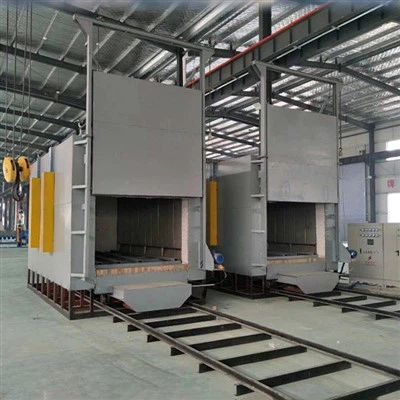
As a supplier of Box Annealing Furnaces, I am often asked about the types of materials that can be annealed in these versatile pieces of equipment. Box annealing furnaces are widely used in various industries for their ability to provide controlled heat treatment processes, which are essential for improving the properties of different materials. In this blog post, I will explore the materials that can be effectively annealed in a Box Annealing Furnace and discuss the benefits of this heat treatment method.
Metals
Metals are the most common materials annealed in Box Annealing Furnaces. The annealing process helps to relieve internal stresses, improve ductility, and enhance the overall mechanical properties of metals. Here are some of the metals that can be annealed in a Box Annealing Furnace:


Steel
Steel is one of the most widely used metals in the world, and annealing is a crucial process in its manufacturing. Box annealing is commonly used for low - carbon and medium - carbon steels. During the annealing process, the steel is heated to a specific temperature (usually between 700°C and 900°C depending on the carbon content), held at that temperature for a certain period to allow for the recrystallization of the grains, and then slowly cooled. This results in a more uniform grain structure, reduced hardness, and increased ductility, making the steel easier to machine and form. For example, in the automotive industry, annealed steel is used for components such as gears and shafts, where good formability and toughness are required.
Aluminum
Aluminum and its alloys are also suitable for annealing in a Box Annealing Furnace. Annealing aluminum helps to soften the material, making it more malleable and easier to shape. The annealing temperature for aluminum typically ranges from 300°C to 450°C. After annealing, the aluminum can be further processed into various products, such as automotive body panels, aerospace components, and consumer electronics casings. The improved ductility of annealed aluminum allows for more complex forming operations without cracking or tearing.
Copper
Copper and copper alloys, like brass and bronze, can benefit from the annealing process. Copper is often annealed to relieve stresses caused by cold working, such as rolling or drawing. The annealing temperature for copper is usually around 500°C - 700°C. Annealed copper has better electrical conductivity and is more suitable for applications in the electrical and electronics industries, such as wiring, connectors, and printed circuit boards.
Alloys
In addition to pure metals, many alloys can be annealed in a Box Annealing Furnace. Alloys are mixtures of two or more metals, and the annealing process can optimize their properties.
Nickel - based alloys
Nickel - based alloys are known for their high strength, corrosion resistance, and heat resistance. These alloys are used in aerospace, power generation, and chemical processing industries. Annealing nickel - based alloys in a Box Annealing Furnace helps to control the grain size and precipitation of secondary phases, which can improve their mechanical properties and corrosion resistance. The annealing temperature for nickel - based alloys can be quite high, often above 1000°C, and the cooling rate needs to be carefully controlled to achieve the desired properties.
Titanium alloys
Titanium alloys are widely used in the aerospace and medical industries due to their high strength - to - weight ratio and biocompatibility. Annealing titanium alloys in a Box Annealing Furnace can relieve internal stresses, improve ductility, and enhance the fatigue resistance. The annealing process for titanium alloys is complex and requires precise control of temperature and time, as different titanium alloys have different phase transformation characteristics.
Ceramics
Although less common than metals and alloys, some ceramics can also be annealed in a Box Annealing Furnace. Annealing ceramics can help to relieve internal stresses, improve the density, and enhance the mechanical properties. For example, alumina ceramics are often annealed at high temperatures (above 1000°C) to improve their strength and fracture toughness. The annealing process allows for the removal of defects and the growth of a more uniform grain structure in the ceramic material.
Glass
Glass is another material that can be annealed in a Box Annealing Furnace. Annealing glass is essential to relieve internal stresses that are introduced during the manufacturing process, such as cooling from the molten state. If these stresses are not relieved, the glass may crack or shatter under normal use. The annealing process for glass involves heating the glass to a specific temperature (usually around 500°C - 600°C for soda - lime glass), holding it at that temperature for a sufficient time to allow the stresses to relax, and then slowly cooling it. This results in a more stable and durable glass product, suitable for applications such as windows, glassware, and optical lenses.
Benefits of Using a Box Annealing Furnace
Box Annealing Furnaces offer several advantages for annealing different materials. Firstly, they provide a controlled environment, allowing for precise control of temperature, time, and atmosphere. This is crucial for achieving consistent and repeatable annealing results. Secondly, the slow cooling rate in a Box Annealing Furnace is beneficial for many materials, as it helps to prevent the formation of new stresses and ensures a more uniform grain structure. Additionally, Box Annealing Furnaces are relatively easy to operate and maintain, making them a cost - effective solution for heat treatment processes in various industries.
Other Types of Annealing Furnaces
While Box Annealing Furnaces are versatile, there are other types of annealing furnaces available for specific applications. For example, the Rapid Annealing Furnace is designed for quick heat treatment processes, which can be useful for materials that require short annealing times. The Pit Type Annealing Furnace is suitable for annealing large - scale or long - shaped workpieces, as it provides a vertical annealing chamber. The Vacuum Annealing Furnace is ideal for materials that are sensitive to oxidation, as it can perform the annealing process in a vacuum environment, preventing the formation of oxides on the surface of the workpiece.
Conclusion
In conclusion, a Box Annealing Furnace can be used to anneal a wide range of materials, including metals, alloys, ceramics, and glass. The annealing process helps to improve the mechanical properties, relieve internal stresses, and enhance the formability of these materials. As a supplier of Box Annealing Furnaces, I understand the importance of providing high - quality equipment that can meet the diverse needs of different industries. If you are interested in annealing various materials and are looking for a reliable Box Annealing Furnace, I encourage you to contact me for further discussions and to explore how our products can fit your specific requirements. Whether you are in the automotive, aerospace, electronics, or any other industry, we can provide you with the right annealing solution.
References
- "Heat Treatment Principles and Techniques" by George E. Totten and David Scott MacKenzie.
- "Materials Science and Engineering: An Introduction" by William D. Callister, Jr. and David G. Rethwisch.
- Industry standards and technical documents related to annealing processes for different materials.