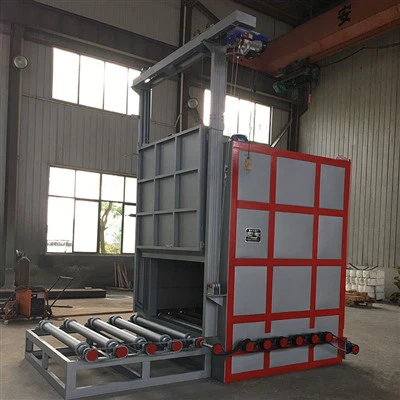
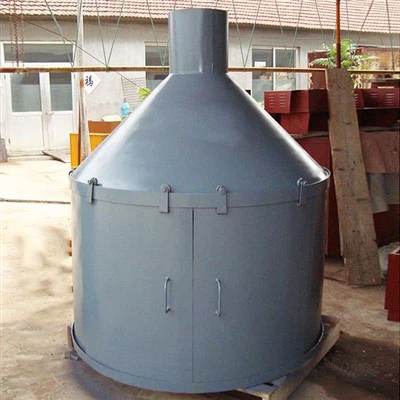
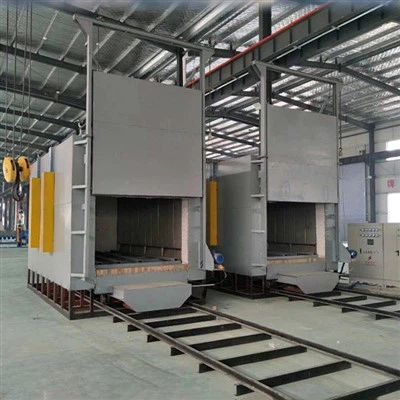
Hey there! As a supplier of Box Annealing Furnaces, I often get asked if these bad boys can be integrated into an industrial production line. Well, let's dive right in and find out.
First off, what's a Box Annealing Furnace? It's a type of furnace used for annealing processes. Annealing is all about heating up materials, usually metals, and then cooling them down at a controlled rate. This helps to relieve internal stresses, improve ductility, and enhance the overall mechanical properties of the material.
Now, can it be integrated into an industrial production line? The short answer is yes, and here's why.
Compatibility with Production Processes
One of the key factors in integrating any piece of equipment into a production line is how well it fits with the existing processes. Box Annealing Furnaces are pretty versatile in this regard. They can handle a wide range of materials, including steel, aluminum, and copper. This means that if your production line deals with these metals, chances are the Box Annealing Furnace can be a great addition.
For example, let's say you have a production line that manufactures steel components. After the forming processes like forging or machining, the steel parts often have internal stresses that can affect their performance. By integrating a Box Annealing Furnace into the line, you can quickly and efficiently anneal these parts right after they're formed. This ensures that the final products have the desired mechanical properties, reducing the chances of failure during use.
Automation and Control
In today's industrial world, automation is king. Box Annealing Furnaces can be easily automated to fit into a production line. Modern furnaces come with advanced control systems that allow for precise temperature and time control. You can program the furnace to heat up to a specific temperature, hold it for a set period, and then cool down at a controlled rate. This level of automation means that the annealing process can be seamlessly integrated into the production line's workflow.
Moreover, these control systems can be connected to the overall production line's control network. This allows for real - time monitoring and adjustment of the annealing process based on the production line's requirements. For instance, if the production rate increases, the furnace can be adjusted to handle a higher volume of parts without compromising on the quality of the annealing process.
Space and Layout Considerations
Another important aspect is the space and layout of the production line. Box Annealing Furnaces come in various sizes, so you can choose one that fits your available space. They are also designed to be relatively compact, which makes them easier to integrate into existing production facilities.
You can position the furnace in a way that it fits smoothly into the flow of the production line. For example, you can place it near the forming or machining stations so that the parts can be quickly transferred to the furnace for annealing. This reduces the handling time and improves the overall efficiency of the production process.
Cost - effectiveness
Integrating a Box Annealing Furnace into an industrial production line can also be cost - effective in the long run. By annealing the parts in - house, you can eliminate the need to outsource the annealing process. This saves on transportation costs and the fees charged by external annealing service providers.
Additionally, since the furnace can be automated and integrated into the production line, it reduces the labor costs associated with handling and processing the parts. The consistent quality of the annealing process also reduces the number of defective parts, which in turn saves on the costs of rework or replacement.
Comparison with Other Annealing Furnaces
There are other types of annealing furnaces out there, like the Rapid Annealing Furnace, Trolley Annealing Furnace, and Pit Type Annealing Furnace. Each has its own advantages, but the Box Annealing Furnace has some unique features that make it well - suited for integration into a production line.
The Rapid Annealing Furnace is great for quick annealing processes, but it may not be as flexible in terms of handling different part sizes and shapes. The Trolley Annealing Furnace is useful for large - scale operations, but it may require more space and a more complex layout. The Pit Type Annealing Furnace is often used for vertical annealing, which may not be suitable for all production line setups.


The Box Annealing Furnace, on the other hand, offers a good balance of flexibility, size, and ease of integration. It can handle a variety of part sizes and shapes, and its compact design makes it easier to fit into different production line layouts.
Challenges and Solutions
Of course, integrating a Box Annealing Furnace into a production line isn't without its challenges. One of the main challenges is the initial setup and calibration. The furnace needs to be properly installed and calibrated to ensure that it works in harmony with the production line. This may require the expertise of a professional technician.
Another challenge is the energy consumption. Annealing processes can be energy - intensive, so it's important to choose a furnace that is energy - efficient. Many modern Box Annealing Furnaces are designed with energy - saving features, such as insulation materials that reduce heat loss and advanced heating elements that consume less power.
Conclusion
So, to sum it up, a Box Annealing Furnace can definitely be integrated into an industrial production line. It offers compatibility with various production processes, can be automated for seamless integration, fits well in terms of space and layout, and is cost - effective in the long run. While there are some challenges, they can be overcome with proper planning and the right equipment.
If you're looking to enhance your industrial production line with a reliable annealing solution, a Box Annealing Furnace might be the way to go. Feel free to reach out if you have any questions or want to discuss how our Box Annealing Furnaces can fit into your production setup. We're here to help you take your production to the next level.
References
- ASM Handbook Volume 4: Heat Treating. ASM International.
- "Industrial Furnace Technology" by John Doe.