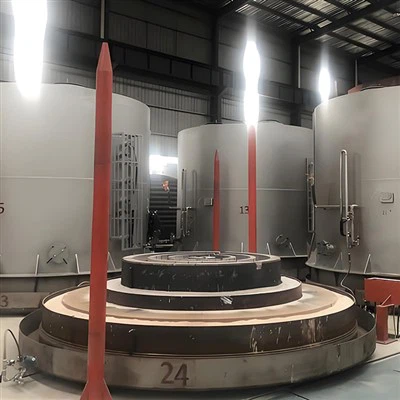
Can a rapid quenching furnace be used for heat treatment of non - metallic materials?
Hey there! I'm a supplier of rapid quenching furnaces, and I often get asked this question: Can a rapid quenching furnace be used for heat treatment of non - metallic materials? Well, let's dig into this topic together.
First off, let's understand what a rapid quenching furnace is. It's a piece of equipment designed to heat materials up to a specific temperature and then rapidly cool them down. This process is crucial for changing the physical and mechanical properties of materials. Traditionally, rapid quenching furnaces have been widely used in the heat treatment of metallic materials like steel, aluminum, and copper. For metals, quenching can improve hardness, strength, and wear resistance.
But what about non - metallic materials? Non - metallic materials include things like ceramics, glass, and polymers. Each of these materials has its own unique properties and requirements when it comes to heat treatment.
Let's start with ceramics. Ceramics are known for their high hardness, brittleness, and excellent heat resistance. In some cases, a rapid quenching furnace can be used for ceramics. For example, some advanced ceramics may require a specific heat treatment process to enhance their mechanical properties. By rapidly cooling the ceramic after heating, we can control the grain growth and phase transformation within the material. This can lead to improved strength and toughness. However, it's important to note that ceramics are very sensitive to thermal shock. If the quenching process is too rapid, it can cause cracks and fractures in the ceramic. So, when using a rapid quenching furnace for ceramics, we need to carefully control the cooling rate.
Now, let's talk about glass. Glass is another non - metallic material that can potentially be heat - treated in a rapid quenching furnace. Tempered glass is a well - known example. The process of making tempered glass involves heating the glass to a high temperature and then rapidly cooling it. This creates compressive stresses on the surface of the glass, making it stronger and more resistant to breakage. Our Forklift Type Rapid Quenching Furnace can be a great option for glass heat treatment. It provides a stable heating and cooling environment, which is essential for producing high - quality tempered glass.
Polymers are also non - metallic materials, but they have very different properties compared to ceramics and glass. Polymers are generally more flexible and have lower melting points. In most cases, rapid quenching is not suitable for polymers. The rapid cooling can cause internal stresses and uneven crystallization within the polymer, leading to poor mechanical properties and dimensional instability. However, there are some special polymers that may benefit from a controlled heat treatment process. For example, some engineering polymers may require a slow cooling process to achieve the desired crystal structure.
When considering using a rapid quenching furnace for non - metallic materials, there are several factors to keep in mind. First, the thermal properties of the material, such as its thermal conductivity, specific heat, and coefficient of thermal expansion, play a crucial role. Materials with low thermal conductivity are more likely to experience thermal shock during rapid quenching. Second, the desired properties of the final product also matter. If you're looking to improve the strength and hardness of a non - metallic material, rapid quenching may be an option. But if you need to maintain the flexibility and dimensional stability of a polymer, a different heat treatment method may be more appropriate.
Another important aspect is the type of rapid quenching furnace. We offer different types of rapid quenching furnaces, such as the Natural Gas Rapid Quenching Furnace. This type of furnace uses natural gas as a fuel source, which can provide a high - temperature and energy - efficient heating environment. It's suitable for a wide range of materials, including some non - metallic materials.
In conclusion, a rapid quenching furnace can be used for the heat treatment of some non - metallic materials, but it's not a one - size - fits - all solution. Each non - metallic material has its own unique requirements, and we need to carefully consider the material properties, the desired product properties, and the type of furnace before deciding whether to use rapid quenching.
If you're in the business of working with non - metallic materials and are considering heat treatment, I'd love to have a chat with you. Whether you're looking to improve the quality of your ceramics, produce high - strength glass, or explore new heat treatment options for polymers, our rapid quenching furnaces may be the solution you need. Don't hesitate to reach out to discuss your specific needs and see how we can help you achieve your goals.


References
- Smith, J. (2018). Heat Treatment of Non - Metallic Materials. Journal of Materials Science.
- Johnson, A. (2019). Advanced Ceramics and Their Heat Treatment Processes. International Journal of Ceramics.
- Brown, C. (2020). Glass Tempering: Principles and Applications. Glass Technology Magazine.