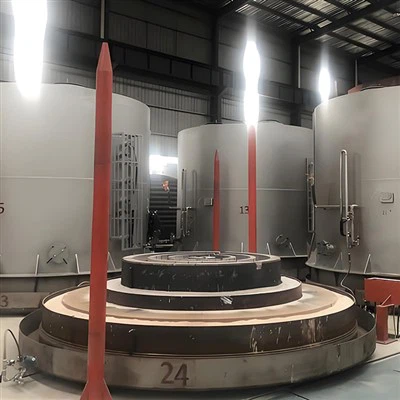
Controlling the quench rate in an aluminum aging furnace is a critical aspect of the heat treatment process for aluminum alloys. As a leading supplier of Aluminum Aging Furnaces, we understand the significance of precise quench rate control in achieving the desired mechanical properties and microstructure in aluminum components. In this blog post, we will explore the factors influencing the quench rate, methods for controlling it, and the importance of maintaining optimal quench rates in aluminum aging furnaces.
Factors Influencing the Quench Rate
The quench rate in an aluminum aging furnace is influenced by several factors, including the quenching medium, the geometry and size of the workpiece, the initial temperature of the workpiece, and the agitation of the quenching medium.
Quenching Medium
The choice of quenching medium plays a crucial role in determining the quench rate. Different quenching media have different cooling capacities, which can significantly affect the rate at which the aluminum workpiece cools. Common quenching media for aluminum aging furnaces include water, oil, and air.
- Water: Water is a popular quenching medium due to its high cooling capacity. It can rapidly remove heat from the aluminum workpiece, resulting in a high quench rate. However, the high cooling rate can also lead to increased residual stresses and distortion in the workpiece.
- Oil: Oil has a lower cooling capacity than water, which results in a slower quench rate. This slower cooling rate can help reduce residual stresses and distortion in the workpiece. However, oil quenching can also be more expensive and may require additional cleaning steps to remove the oil from the workpiece.
- Air: Air quenching is the slowest method of quenching, resulting in the lowest quench rate. It is often used for aluminum alloys that are less sensitive to quenching stresses or for workpieces with complex geometries that are prone to distortion. Air quenching can also be more environmentally friendly than water or oil quenching.
Geometry and Size of the Workpiece
The geometry and size of the aluminum workpiece can also affect the quench rate. Workpieces with larger cross-sectional areas or complex geometries may have a slower quench rate due to the increased heat transfer resistance. Additionally, workpieces with thin sections may cool more rapidly than thicker sections, leading to non-uniform cooling and potential distortion.
Initial Temperature of the Workpiece
The initial temperature of the aluminum workpiece before quenching can also influence the quench rate. A higher initial temperature will result in a greater temperature difference between the workpiece and the quenching medium, which can increase the heat transfer rate and the quench rate. However, a very high initial temperature can also increase the risk of thermal shock and distortion in the workpiece.
Agitation of the Quenching Medium
Agitation of the quenching medium can help improve the heat transfer rate and the quench rate. By circulating the quenching medium around the workpiece, agitation can ensure that the heat is evenly removed from all surfaces of the workpiece, resulting in a more uniform quench rate. Agitation can also help prevent the formation of vapor bubbles on the surface of the workpiece, which can reduce the heat transfer rate.
Methods for Controlling the Quench Rate
There are several methods for controlling the quench rate in an aluminum aging furnace, including adjusting the quenching medium, controlling the agitation of the quenching medium, and using quenching fixtures.
Adjusting the Quenching Medium
As mentioned earlier, the choice of quenching medium can have a significant impact on the quench rate. By selecting the appropriate quenching medium based on the specific requirements of the aluminum alloy and the workpiece, you can control the quench rate to achieve the desired mechanical properties and microstructure.
In addition to choosing the right quenching medium, you can also adjust the temperature and concentration of the quenching medium to further control the quench rate. For example, increasing the temperature of the quenching medium can reduce the cooling capacity and the quench rate, while increasing the concentration of additives in the quenching medium can enhance the cooling capacity and the quench rate.


Controlling the Agitation of the Quenching Medium
As discussed earlier, agitation of the quenching medium can help improve the heat transfer rate and the quench rate. By controlling the speed and direction of the agitation, you can ensure that the heat is evenly removed from all surfaces of the workpiece, resulting in a more uniform quench rate.
There are several methods for agitating the quenching medium, including mechanical agitation, air agitation, and ultrasonic agitation. Mechanical agitation involves using a pump or a stirrer to circulate the quenching medium around the workpiece. Air agitation involves introducing air bubbles into the quenching medium to create turbulence and improve the heat transfer rate. Ultrasonic agitation involves using high-frequency sound waves to create cavitation bubbles in the quenching medium, which can enhance the heat transfer rate and the quench rate.
Using Quenching Fixtures
Quenching fixtures can be used to control the quench rate by ensuring that the aluminum workpiece is properly positioned and supported during the quenching process. By using fixtures that are designed to promote uniform cooling, you can reduce the risk of non-uniform cooling and distortion in the workpiece.
Quenching fixtures can also be used to control the flow of the quenching medium around the workpiece. For example, fixtures with channels or holes can be used to direct the flow of the quenching medium to specific areas of the workpiece, resulting in a more uniform quench rate.
Importance of Maintaining Optimal Quench Rates
Maintaining optimal quench rates in an aluminum aging furnace is essential for achieving the desired mechanical properties and microstructure in the aluminum components. A proper quench rate can help ensure that the aluminum alloy undergoes the necessary phase transformations to develop the desired strength, hardness, and ductility.
If the quench rate is too high, the aluminum alloy may experience excessive residual stresses and distortion, which can lead to cracking and premature failure of the component. On the other hand, if the quench rate is too low, the aluminum alloy may not undergo the necessary phase transformations, resulting in reduced strength and hardness.
In addition to affecting the mechanical properties of the aluminum alloy, the quench rate can also influence the microstructure of the alloy. A proper quench rate can help ensure that the aluminum alloy develops a fine-grained microstructure, which can improve the strength, toughness, and corrosion resistance of the component.
Conclusion
Controlling the quench rate in an aluminum aging furnace is a complex but essential aspect of the heat treatment process for aluminum alloys. By understanding the factors that influence the quench rate and using the appropriate methods for controlling it, you can ensure that the aluminum components achieve the desired mechanical properties and microstructure.
As a leading supplier of Pit Type Aluminum Alloy Aging Furnace and Box Type Aging Furnace, we have the expertise and experience to help you optimize the quench rate in your aluminum aging furnace. Our team of engineers can work with you to select the appropriate quenching medium, control the agitation of the quenching medium, and design custom quenching fixtures to meet your specific requirements.
If you are interested in learning more about how to control the quench rate in your aluminum aging furnace or if you are looking for a reliable supplier of aluminum aging furnaces, please contact us today. We would be happy to discuss your needs and provide you with a customized solution.
References
- Totten, G. E., & MacKenzie, D. S. (2003). Handbook of Aluminum: Physical Metallurgy and Processes. CRC Press.
- Davis, J. R. (1993). Heat Treating Aluminum and Aluminum Alloys. ASM International.
- Liscic, B., & Totten, G. E. (2001). Quenching Theory and Technology. Marcel Dekker.