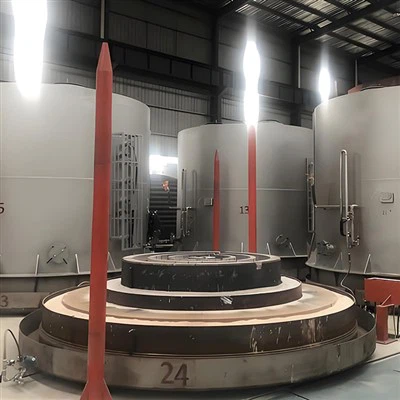
In the dynamic landscape of modern manufacturing, the seamless integration of production equipment is a cornerstone for enhancing efficiency, reducing costs, and improving overall product quality. As a leading supplier of aluminum aging furnaces, I am often asked whether an aluminum aging furnace can be integrated with other production equipment. The answer is a resounding yes, and in this blog post, I will explore the possibilities, benefits, and considerations of integrating an aluminum aging furnace into a broader production ecosystem.
Understanding Aluminum Aging Furnaces
Before delving into integration, it's essential to understand what an aluminum aging furnace does. Aluminum aging, also known as precipitation hardening, is a heat treatment process used to enhance the strength and hardness of aluminum alloys. An aluminum aging furnace precisely controls temperature and time to facilitate the precipitation of fine particles within the aluminum matrix, resulting in improved mechanical properties.
At our company, we offer a diverse range of aluminum aging furnaces to meet various production needs, including the Trolley Type Aluminum Alloy Aging Furnace, Aluminum Wire Aging Furnace, and Box Type Aging Furnace. Each type is designed with specific features and capabilities to ensure optimal performance in different applications.
The Case for Integration
Integrating an aluminum aging furnace with other production equipment can bring numerous benefits to a manufacturing operation. Here are some of the key advantages:
1. Streamlined Production Flow
By integrating the aging furnace with upstream and downstream equipment, such as extrusion presses, machining centers, or surface treatment systems, manufacturers can create a continuous and efficient production line. This reduces the need for manual handling and transportation of workpieces between different processes, minimizing the risk of damage and improving overall productivity.
2. Improved Quality Control
Integration allows for better synchronization of processes, enabling real - time monitoring and adjustment of production parameters. For example, data from the extrusion process can be used to optimize the aging process, ensuring that the final product meets the desired quality standards. This level of control helps to reduce scrap rates and improve the consistency of the finished products.
3. Cost Savings
Integrated systems can lead to significant cost savings in several ways. Firstly, by eliminating unnecessary handling and storage steps, manufacturers can reduce labor costs and inventory levels. Secondly, improved energy management is possible when equipment is integrated, as the overall system can be optimized to use energy more efficiently. Finally, the reduction in scrap rates and rework also contributes to cost savings.
4. Enhanced Flexibility
An integrated production system can be more easily adapted to changes in production volume or product specifications. For example, if a manufacturer needs to increase the production of a particular aluminum alloy, the integrated system can be quickly reconfigured to accommodate the new requirements.
Integration Possibilities
There are several ways in which an aluminum aging furnace can be integrated with other production equipment. Here are some common examples:
1. Integration with Extrusion Equipment
Extrusion is a common process for shaping aluminum alloys. By integrating the aging furnace with an extrusion press, the extruded profiles can be directly transferred to the aging furnace for heat treatment. This eliminates the need for intermediate storage and handling, reducing the risk of surface damage and improving the overall production speed.
2. Connection with Machining Centers
After aging, aluminum parts often require further machining to achieve the desired dimensions and surface finish. Integrating the aging furnace with machining centers allows for seamless transfer of workpieces between the two processes. This can be achieved through automated conveyor systems or robotic handling, ensuring precise and efficient material flow.
3. Linkage with Surface Treatment Systems
Surface treatment, such as anodizing or powder coating, is often applied to aluminum products to enhance their corrosion resistance and appearance. Integrating the aging furnace with surface treatment systems enables a more coordinated production process. For example, the aging process can be optimized based on the requirements of the subsequent surface treatment, resulting in better adhesion and finish.
Considerations for Integration
While the benefits of integration are clear, there are also several considerations that manufacturers need to take into account when integrating an aluminum aging furnace with other production equipment:
1. Compatibility
The first and most crucial consideration is the compatibility of the aging furnace with other equipment. This includes physical compatibility, such as the size and layout of the equipment, as well as technological compatibility, such as communication protocols and control systems. It is essential to work with equipment suppliers who have experience in integration to ensure that all components work together seamlessly.
2. Automation and Control
To achieve the full benefits of integration, a high level of automation and control is required. This involves implementing advanced sensors, actuators, and control systems to monitor and manage the entire production process. Manufacturers need to invest in the necessary technology and training to operate and maintain these systems effectively.


3. Safety
Safety is always a top priority in manufacturing. When integrating equipment, it is important to ensure that all safety features are properly integrated and functioning. This includes interlocks, emergency stop buttons, and safety guards to protect workers from potential hazards.
4. Maintenance and Support
Integrated systems are more complex than standalone equipment, which means that maintenance and support become more challenging. Manufacturers need to have a comprehensive maintenance plan in place and access to reliable technical support from equipment suppliers. This ensures that any issues can be quickly resolved, minimizing downtime and maintaining production efficiency.
Real - World Examples
To illustrate the benefits of integrating an aluminum aging furnace with other production equipment, let's look at a few real - world examples:
1. Automotive Manufacturer
An automotive manufacturer integrated its aluminum aging furnace with an extrusion line and a machining center. By automating the transfer of extruded aluminum parts directly from the extrusion press to the aging furnace and then to the machining center, the manufacturer was able to reduce production time by 30% and improve the quality of the finished parts. The integrated system also allowed for better control of the production process, resulting in a significant reduction in scrap rates.
2. Aerospace Supplier
An aerospace supplier integrated its aging furnace with a surface treatment system. By optimizing the aging process based on the requirements of the subsequent anodizing treatment, the supplier was able to improve the adhesion of the anodized coating and reduce the number of rejected parts. The integrated system also enabled more efficient use of energy, resulting in cost savings.
Conclusion
In conclusion, integrating an aluminum aging furnace with other production equipment is not only possible but also highly beneficial for manufacturers. It offers the potential for streamlined production flow, improved quality control, cost savings, and enhanced flexibility. However, careful consideration must be given to compatibility, automation, safety, and maintenance to ensure a successful integration.
As a leading supplier of aluminum aging furnaces, we have the expertise and experience to help you integrate our furnaces into your existing production systems. Our team of engineers can work with you to design and implement a customized solution that meets your specific needs. If you are interested in exploring the possibilities of integrating an aluminum aging furnace with your production equipment, we encourage you to contact us for a consultation. Let's work together to optimize your production process and achieve greater efficiency and profitability.
References
- ASM Handbook, Volume 4: Heat Treating, ASM International.
- Aluminum Association, Aluminum Design Manual.
- Manufacturing Engineering Magazine, various issues on production integration and automation.