Hey there! As a supplier of Ion Nitriding Furnaces, I often get asked if an Ion Nitriding Furnace can be used for the post-heat treatment of nitrided parts. It's a great question, and today, I'm gonna dig deep into this topic and share my insights with you.


First off, let's quickly go over what ion nitriding is. Ion nitriding is a surface hardening process where nitrogen ions are accelerated and bombarded onto the surface of a metal part in a low-pressure plasma environment. This creates a hard nitride layer on the surface, which can improve the part's wear resistance, corrosion resistance, and fatigue properties. It's a pretty cool process that's widely used in industries like automotive, aerospace, and tool manufacturing.
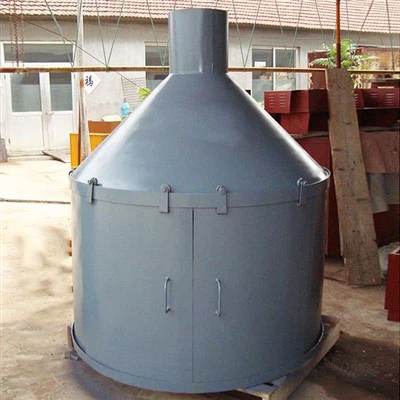
Now, the big question: Can an Ion Nitriding Furnace be used for post-heat treatment of nitrided parts? The short answer is yes, it can. But there are some things you need to consider.
Advantages of Using an Ion Nitriding Furnace for Post - Heat Treatment
One of the main advantages is the precise control it offers. Ion nitriding furnaces allow you to accurately control the temperature, gas composition, and time during the post-heat treatment process. This precision is crucial because it ensures that the nitrided layer and the base material of the part are treated in the right way. For example, if you want to relieve the internal stress that might have built up during the nitriding process, you can set the furnace to a specific temperature and hold it for a certain period. This controlled environment helps to maintain the integrity of the nitride layer while also improving the overall mechanical properties of the part.
Another benefit is the uniformity of treatment. In an ion nitriding furnace, the plasma distribution is relatively uniform around the part. This means that all areas of the nitrided part will receive the same level of heat treatment. Whether it's a small, intricate part or a large, complex component, the furnace can provide consistent results. This uniformity is especially important for parts that require high performance and reliability.
Limitations and Considerations
However, there are also some limitations and things to keep in mind. The first is the cost. Ion nitriding furnaces can be quite expensive to operate. They require a certain amount of energy to maintain the plasma and the desired temperature. Also, the gases used in the process, such as nitrogen and hydrogen, can add to the cost. So, you need to weigh the benefits against the cost, especially if you're dealing with a large volume of parts.
Another consideration is the size and shape of the parts. While ion nitriding furnaces can handle a wide range of part sizes, there are still limitations. If you have extremely large or oddly shaped parts, it might be challenging to ensure uniform treatment. In some cases, you might need to use special fixtures or adjust the process parameters to get the best results.
Comparison with Other Furnace Types
Let's compare the Ion Nitriding Furnace with other types of nitriding furnaces for post-heat treatment.
-
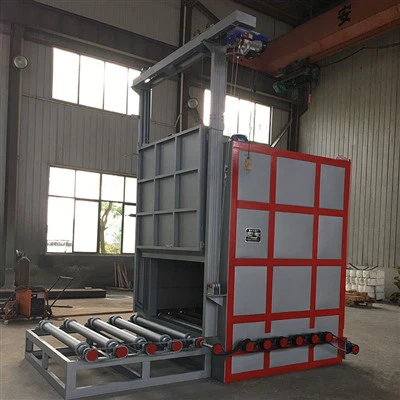
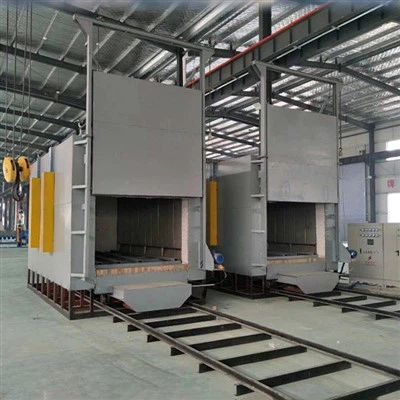
Pit Type Nitriding Furnace: A Pit Type Nitriding Furnace is a different kind of beast. It's typically used for larger parts or when you need to treat a large number of parts at once. Pit type furnaces use a different heating method, usually a gas-fired or electric heating system. While they can be effective for post-heat treatment, they might not offer the same level of precision as an ion nitriding furnace. The temperature distribution in a pit type furnace might not be as uniform, especially in larger pits. Also, the gas flow and control in these furnaces are generally less precise compared to ion nitriding furnaces.
-
Vacuum Nitriding Furnace: Vacuum Nitriding Furnaces operate in a vacuum environment. They are great for preventing oxidation during the nitriding and post-heat treatment processes. However, like ion nitriding furnaces, they can be costly to operate. The main difference is that vacuum nitriding relies on a different mechanism to introduce nitrogen into the part. In an ion nitriding furnace, the nitrogen ions are accelerated by an electric field, while in a vacuum nitriding furnace, the nitrogen is introduced in a gaseous form and diffuses into the part. Each method has its own advantages and disadvantages, and the choice depends on your specific requirements.
Process Parameters for Post - Heat Treatment in an Ion Nitriding Furnace
When using an Ion Nitriding Furnace for post-heat treatment, you need to pay close attention to several process parameters.
-
Temperature: The temperature is a critical factor. If the temperature is too high, it can cause the nitride layer to grow or change its structure, which might affect the part's properties. On the other hand, if the temperature is too low, it might not be effective in relieving stress or improving the mechanical properties. The ideal temperature depends on the material of the part and the initial nitriding process. For example, for some steels, a post-heat treatment temperature in the range of 400 - 600°C might be appropriate.
-
Time: The duration of the post-heat treatment is also important. You need to hold the part at the set temperature for a sufficient amount of time to achieve the desired results. This time can vary from a few hours to several hours, depending on the size and complexity of the part.
-
Gas Composition: The gas composition in the furnace can also impact the post-heat treatment. In most cases, a mixture of nitrogen and hydrogen is used. The ratio of these gases can affect the diffusion of nitrogen in the part and the formation of the nitride layer. You might need to adjust the gas composition based on the specific requirements of the part.
Real - World Applications
In the real world, using an Ion Nitriding Furnace for post-heat treatment of nitrided parts has many applications. In the automotive industry, for example, nitrided parts like gears and shafts can benefit from post-heat treatment in an ion nitriding furnace. The post-heat treatment can improve the fatigue resistance of these parts, which is crucial for their long - term performance in a vehicle.
In the aerospace industry, where parts need to withstand extreme conditions, post-heat treatment in an ion nitriding furnace can help to ensure the reliability and safety of components. For instance, nitrided turbine blades can be post - heat treated to relieve stress and improve their resistance to high - temperature corrosion.
Conclusion
So, to sum it up, an Ion Nitriding Furnace can definitely be used for the post-heat treatment of nitrided parts. It offers precise control, uniform treatment, and can be tailored to meet the specific needs of different parts and materials. However, you need to consider the cost, part size, and process parameters carefully.
If you're in the market for an Ion Nitriding Furnace or have any questions about using it for post - heat treatment, feel free to reach out. We're here to help you make the right choice for your business. Whether you're a small - scale manufacturer or a large industrial company, we can provide you with the best solutions for your heat treatment needs.
References
- Smith, J. (2018). Heat Treatment of Metals. New York: MetalPress.
- Johnson, A. (2020). Advanced Surface Hardening Techniques. London: TechBooks.