Annealing high-strength steels in a Bell Annealing Furnace presents a unique set of challenges that manufacturers must navigate to achieve optimal results. As a leading Bell Annealing Furnace supplier, I've witnessed firsthand the complexities involved in this process. In this blog post, I'll share insights on how to overcome these challenges, drawing on my experience and industry knowledge.
Understanding the Basics of Bell Annealing Furnaces
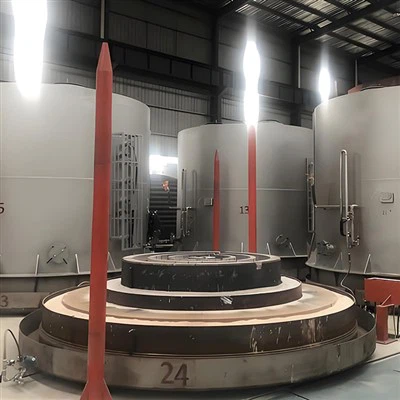
Before delving into the challenges, it's essential to understand the fundamentals of Bell Annealing Furnaces. These furnaces consist of a base, a heating bell, and a cooling bell. The steel coils or other workpieces are placed on the base, and the heating bell is lowered over them to heat the steel to a specific temperature. Once the desired temperature is reached, the heating bell is removed, and the cooling bell is placed over the workpieces to cool them down slowly.
There are different types of Bell Annealing Furnaces available, each with its own advantages and applications. For example, the Bell Type Resistance Furnace uses electrical resistance heating elements to provide a uniform heat distribution, making it suitable for annealing high-strength steels. The Mobile Bell Type Furnace offers flexibility in terms of location and can be easily moved around the production facility. The Split Mobile Bell Furnace is designed for larger workpieces and allows for easy loading and unloading.
Challenges in Annealing High-Strength Steels
High-strength steels are known for their excellent mechanical properties, such as high tensile strength and hardness. However, these properties also make them more challenging to anneal compared to conventional steels. Here are some of the key challenges faced when annealing high-strength steels in a Bell Annealing Furnace:
1. Temperature Control
Maintaining a precise and uniform temperature throughout the annealing process is crucial for achieving the desired properties in high-strength steels. Any fluctuations in temperature can lead to inconsistent hardness, grain size, and other mechanical properties. High-strength steels often require a narrow temperature range for annealing, and even a small deviation can result in suboptimal results.
2. Cooling Rate
The cooling rate after annealing is another critical factor that affects the properties of high-strength steels. A rapid cooling rate can cause the formation of hard and brittle martensite, while a slow cooling rate may result in the formation of coarse grains and reduced strength. Finding the right balance between the cooling rate and the desired properties is a significant challenge in annealing high-strength steels.
3. Decarburization
Decarburization is the loss of carbon from the surface of the steel during the annealing process. This can occur when the steel is exposed to an oxidizing atmosphere at high temperatures. Decarburization can reduce the surface hardness and wear resistance of the steel, making it less suitable for applications where these properties are critical.
4. Stress Relief
High-strength steels often have high internal stresses due to the manufacturing processes such as rolling, forging, or machining. These stresses can cause distortion and cracking during annealing if not properly relieved. Ensuring effective stress relief is essential to prevent these issues and maintain the dimensional stability of the workpieces.
Strategies to Overcome the Challenges
Overcoming the challenges of annealing high-strength steels in a Bell Annealing Furnace requires a combination of advanced technology, proper process control, and expertise. Here are some strategies that can help manufacturers achieve successful annealing results:
1. Advanced Temperature Control Systems
Investing in a Bell Annealing Furnace equipped with advanced temperature control systems is essential for precise temperature management. These systems use sensors and controllers to monitor and adjust the temperature in real-time, ensuring a uniform and stable heating environment. Some furnaces also feature multi-zone heating, which allows for more precise control of the temperature distribution across the workpieces.
2. Optimized Cooling Techniques
To control the cooling rate effectively, manufacturers can use various cooling techniques such as forced air cooling, water quenching, or a combination of both. The choice of cooling technique depends on the specific requirements of the high-strength steel and the desired properties. For example, some high-strength steels may require a slow and controlled cooling rate to avoid the formation of martensite, while others may benefit from a rapid cooling rate to achieve a specific hardness.
3. Protective Atmosphere
To prevent decarburization, a protective atmosphere can be used inside the Bell Annealing Furnace. This atmosphere can be created by introducing inert gases such as nitrogen or argon, or by using a reducing gas mixture. The protective atmosphere helps to minimize the exposure of the steel to oxygen and other oxidizing agents, reducing the risk of decarburization.
4. Stress Relief Annealing
Prior to the main annealing process, a stress relief annealing step can be performed to reduce the internal stresses in the high-strength steel. This step involves heating the steel to a lower temperature than the main annealing temperature and holding it for a specific period of time. Stress relief annealing helps to improve the dimensional stability of the workpieces and reduces the risk of distortion and cracking during the main annealing process.
5. Process Monitoring and Optimization
Continuous monitoring of the annealing process is crucial to ensure consistent quality and identify any potential issues early on. Manufacturers can use sensors and data logging systems to collect information on temperature, cooling rate, and other process parameters. This data can then be analyzed to optimize the annealing process and make adjustments as needed.
Case Studies
To illustrate the effectiveness of these strategies, let's look at some real-world case studies of manufacturers who have successfully overcome the challenges of annealing high-strength steels in a Bell Annealing Furnace.
Case Study 1: Automotive Component Manufacturer
An automotive component manufacturer was experiencing issues with inconsistent hardness and dimensional stability in their high-strength steel parts. After implementing an advanced temperature control system and optimizing the cooling rate, they were able to achieve a more uniform hardness distribution and reduce the dimensional variation in the parts. This resulted in improved product quality and reduced scrap rates.
Case Study 2: Aerospace Manufacturer
An aerospace manufacturer was facing challenges with decarburization in their high-strength steel components. By using a protective atmosphere in the Bell Annealing Furnace and adjusting the annealing parameters, they were able to significantly reduce the decarburization depth and improve the surface properties of the components. This allowed them to meet the strict quality requirements of the aerospace industry.
Conclusion
Annealing high-strength steels in a Bell Annealing Furnace is a complex process that requires careful consideration of various factors. By understanding the challenges and implementing the strategies outlined in this blog post, manufacturers can overcome these challenges and achieve optimal results. As a Bell Annealing Furnace supplier, we are committed to providing our customers with the latest technology and expertise to help them succeed in their annealing processes.
If you're facing challenges in annealing high-strength steels or are interested in learning more about our Bell Annealing Furnaces, we encourage you to contact us for a consultation. Our team of experts will be happy to discuss your specific requirements and provide you with customized solutions.


References
- Smith, J. (2020). High-Strength Steel: Properties, Applications, and Processing. Wiley.
- Jones, A. (2019). Annealing Processes for Metals and Alloys. Elsevier.
- Brown, K. (2018). Advanced Temperature Control Systems for Industrial Furnaces. Springer.