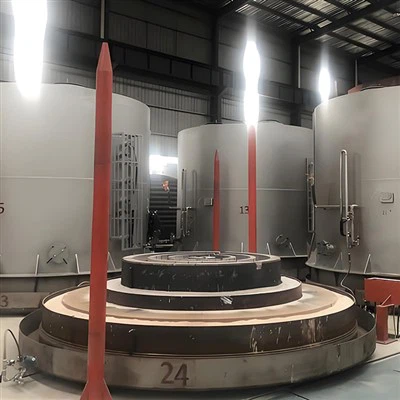
Hey there! As a supplier of rapid quenching furnaces, I often get asked about the differences between batch - type and continuous - type rapid quenching furnaces. So, I thought I'd write this blog to break it all down for you.
Let's start with batch - type rapid quenching furnaces. These bad boys are like the old - school workhorses of the heat - treating world. With a batch - type furnace, you load a specific quantity of materials into the furnace at once. It's like making a big batch of cookies. You put all the ingredients in the oven, wait for them to bake, and then take them out.
One of the biggest advantages of batch - type furnaces is their flexibility. You can easily change the type of material you're processing from one batch to the next. If you need to treat a small quantity of high - value parts one day and a larger quantity of standard parts the next, a batch - type furnace can handle it. It's also great for experimental work or when you're dealing with different alloys that require different heat - treating parameters.


Another plus is the control you have over the process. Since each batch is treated separately, you can closely monitor and adjust the temperature, time, and other variables for each individual load. This means you can achieve very precise heat - treating results, which is crucial for applications where quality and consistency are key.
However, batch - type furnaces do have their drawbacks. One of the main issues is the efficiency. There's a lot of downtime between batches. You have to load the furnace, heat it up, cool it down, and then unload it. This cycle can take a significant amount of time, especially if you're dealing with large batches or materials that require long heat - treating times. And let's not forget about the energy consumption. Heating and cooling the furnace repeatedly uses a lot of energy, which can drive up your operating costs.
Now, let's talk about continuous - type rapid quenching furnaces. These are the speed demons of the heat - treating industry. In a continuous - type furnace, the materials move through the furnace in a continuous stream, kind of like a conveyor belt in a factory.
The biggest advantage of continuous - type furnaces is their high production rate. Since the materials are constantly moving through the furnace, there's very little downtime. This means you can process a large volume of materials in a relatively short period of time. If you're in a high - volume production environment, a continuous - type furnace can really boost your productivity.
Energy efficiency is another major plus. Once the furnace is up to temperature, it can maintain a relatively stable heat, which reduces the overall energy consumption compared to batch - type furnaces. This can result in significant cost savings over time.
But continuous - type furnaces aren't perfect either. One of the main limitations is the lack of flexibility. Once the furnace is set up for a particular process, it's difficult to change the parameters or switch to a different type of material. If you need to process a variety of materials or have different heat - treating requirements, a continuous - type furnace may not be the best choice.
Another issue is the initial cost. Continuous - type furnaces are generally more expensive to purchase and install than batch - type furnaces. They also require more complex maintenance and monitoring systems, which can add to the long - term costs.
So, which type of furnace is right for you? Well, it really depends on your specific needs. If you're a small - scale manufacturer or need to process a variety of materials, a batch - type furnace might be the way to go. On the other hand, if you're in a high - volume production environment and need to maximize efficiency, a continuous - type furnace could be the better option.
At our company, we offer a wide range of rapid quenching furnaces to suit different needs. For example, we have the Natural Gas Rapid Quenching Furnace, which is a great choice for those looking for an energy - efficient and cost - effective solution. And if you need a furnace that's easy to load and unload, our Forklift Type Rapid Quenching Furnace might be just what you're looking for.
If you're still not sure which type of furnace is right for your business, don't hesitate to reach out to us. Our team of experts is always ready to help you make the right decision. We can provide you with detailed information about our products, answer any questions you may have, and even offer on - site consultations.
Investing in the right rapid quenching furnace is a big decision, but with the right information and guidance, you can make a choice that will benefit your business for years to come. So, why wait? Contact us today and let's start the conversation about finding the perfect furnace for your needs.
References
- Heat Treating Furnace Handbook, ASM International
- Industrial Furnaces: Principles, Design, and Operation, CRC Press