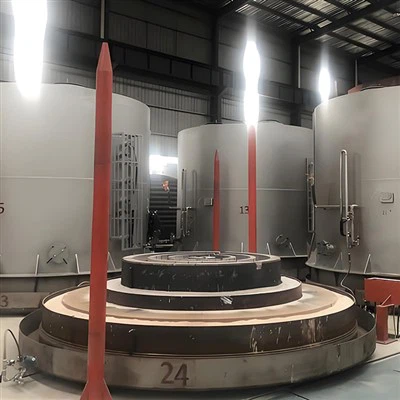
Hey there! As a supplier of resistance furnaces, I've spent a ton of time exploring how different gas atmospheres can mess with the heating process in these bad boys. Resistance furnaces are super versatile and are used in all sorts of industries, from metallurgy to electronics manufacturing. And the gas atmosphere inside the furnace? Well, it can make or break the whole heating deal.
Let's start with the most common gas we all know and love - air. When you heat stuff in a resistance furnace with an air atmosphere, oxygen is the main player. Oxygen can cause oxidation, which is basically when the metal in your furnace reacts with the oxygen to form metal oxides. This can be a real pain in the neck if you're trying to keep the purity of your metal. For example, in the heat treatment of steel, oxidation can lead to the formation of a scale on the surface of the steel. This scale not only affects the appearance of the steel but can also reduce its mechanical properties.
But it's not all bad news. Sometimes, a little oxidation can be beneficial. In some cases, a thin oxide layer can act as a protective barrier, preventing further oxidation. And in the production of certain ceramics, controlled oxidation in an air atmosphere can help in the formation of specific crystal structures.
Now, let's talk about nitrogen. Nitrogen is an inert gas, which means it doesn't react easily with most materials. Using a nitrogen atmosphere in a resistance furnace can help prevent oxidation. It's like wrapping your material in a protective blanket. In the heat treatment of metals, a nitrogen atmosphere can keep the surface of the metal clean and free from oxidation. This is especially important in industries where the surface finish of the metal is crucial, like in the aerospace and automotive industries.
One of the cool things about nitrogen is that it can also be used to control the cooling rate of the material. By adjusting the flow rate of nitrogen in the furnace, you can slow down or speed up the cooling process. This is known as controlled cooling, and it can have a big impact on the microstructure and properties of the material.
Another popular gas is hydrogen. Hydrogen is a reducing gas, which means it can remove oxygen from metal oxides. This makes it ideal for processes where you need to reduce the oxidation state of a material. For example, in the production of tungsten powder, hydrogen is used to reduce tungsten oxide to tungsten metal.


But hydrogen also comes with its own set of challenges. It's highly flammable, so you need to be really careful when using it in a resistance furnace. You need to have proper safety measures in place to prevent any explosions or fires.
Argon is another inert gas that's commonly used in resistance furnaces. Like nitrogen, argon doesn't react with most materials, so it can be used to prevent oxidation. Argon is often used in high-temperature applications because it has a higher thermal conductivity than nitrogen. This means it can transfer heat more efficiently, which can lead to faster heating and cooling times.
In some cases, a mixture of gases can be used to achieve specific results. For example, a mixture of nitrogen and hydrogen can be used to create a reducing atmosphere with better control over the reduction process. This type of mixture is often used in the heat treatment of stainless steel to prevent oxidation and improve the surface finish.
Now, let's take a look at how different gas atmospheres can affect the heating process in different types of resistance furnaces.
First up, the Car-type Resistance Furnace. These furnaces are great for heat treating large or heavy workpieces. When using different gas atmospheres in a car-type resistance furnace, the key is to ensure uniform gas distribution. Uneven gas distribution can lead to uneven heating and cooling, which can cause problems with the quality of the workpiece.
For example, if you're using an air atmosphere and the oxygen distribution is uneven, some parts of the workpiece may oxidize more than others. This can result in a non-uniform surface finish and may even affect the mechanical properties of the workpiece.
Next, we have the High Temperature Trolley Resistance Furnace. These furnaces are designed to operate at very high temperatures, so the choice of gas atmosphere is even more critical. At high temperatures, the reactivity of gases increases, so you need to choose a gas that can withstand the heat without causing any unwanted reactions.
For example, hydrogen can be a good choice for high-temperature applications because it can reduce oxidation at high temperatures. However, as I mentioned earlier, you need to be extra careful with hydrogen due to its flammability.
Finally, let's talk about the Box Type Resistance Furnace. These furnaces are commonly used for small to medium-sized workpieces. The gas atmosphere in a box-type resistance furnace can have a big impact on the heating efficiency.
For example, using an inert gas like argon can help reduce heat loss through convection. This is because argon has a lower thermal conductivity than air, so it can act as an insulator. This can lead to energy savings and faster heating times.
So, as you can see, the choice of gas atmosphere in a resistance furnace is a crucial factor that can affect the quality, efficiency, and safety of the heating process. Whether you're looking for a Car-type Resistance Furnace, a High Temperature Trolley Resistance Furnace, or a Box Type Resistance Furnace, understanding the effects of different gas atmospheres is essential.
If you're in the market for a resistance furnace or have any questions about gas atmospheres and their effects on the heating process, don't hesitate to reach out. We're here to help you make the best choice for your specific needs.
References
- ASM Handbook Volume 4: Heat Treating. ASM International.
- Introduction to Materials Science for Engineers. James F. Shackelford.