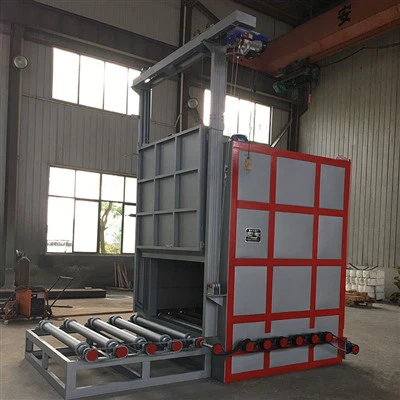
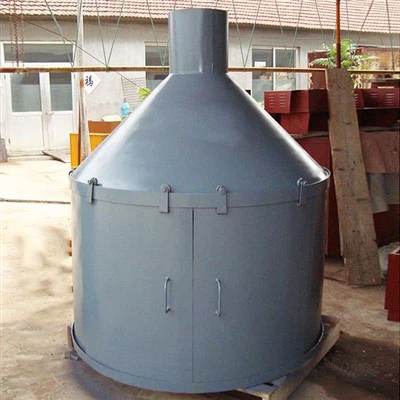
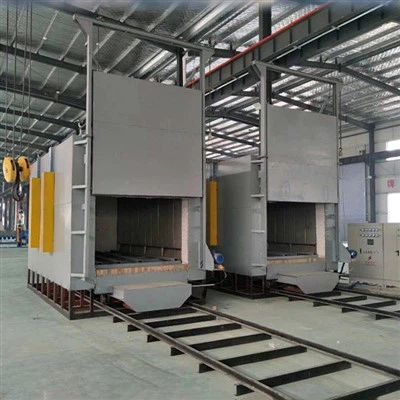
Tempering furnaces are crucial equipment in the heat treatment industry, used to enhance the mechanical properties of metals by reducing brittleness and increasing toughness. As a tempering furnace supplier, we understand the importance of monitoring various parameters to ensure the optimal performance and quality of the tempering process. In this blog post, we will discuss the key monitoring parameters for a tempering furnace.
Temperature
Temperature is the most critical parameter in a tempering furnace. The tempering process involves heating the metal to a specific temperature range and holding it there for a certain period. The temperature affects the microstructure and mechanical properties of the metal. If the temperature is too low, the desired tempering effect may not be achieved, resulting in a metal that is still brittle. On the other hand, if the temperature is too high, the metal may lose its hardness or even experience over - tempering, which can lead to a decrease in strength.
We use advanced temperature sensors, such as thermocouples, to accurately measure the temperature inside the furnace. These sensors are placed at multiple locations within the furnace chamber to ensure uniform temperature distribution. Our Mesh Belt Tempering Furnace is equipped with a precise temperature control system that can maintain the set temperature within a narrow tolerance range. This ensures consistent and high - quality tempering results for continuous production.
Time
The time the metal spends at the tempering temperature is also a vital parameter. The tempering time depends on several factors, including the type of metal, its initial microstructure, and the desired final properties. Generally, longer tempering times at a given temperature can lead to more complete transformation of the microstructure and better mechanical properties. However, excessive tempering time can be wasteful and may even cause degradation of the metal.
Our tempering furnaces are designed with programmable controllers that allow users to set the tempering time accurately. For example, in our Pit Type Tempering Furnace, the operator can input the specific time required for the tempering process. The furnace then automatically controls the heating and cooling cycles based on the pre - set time, ensuring that the metal is tempered for the optimal duration.
Atmosphere
The atmosphere inside the tempering furnace can have a significant impact on the quality of the tempered metal. In some cases, an inert or reducing atmosphere is required to prevent oxidation and decarburization of the metal surface. Oxidation can lead to the formation of a scale on the metal surface, which can affect its appearance and mechanical properties. Decarburization can reduce the carbon content at the surface, resulting in a loss of hardness.
We offer tempering furnaces with different atmosphere control options. For example, our Box Type Tempering Furnace can be equipped with an atmosphere control system that can introduce nitrogen, argon, or other protective gases into the furnace chamber. This creates a controlled environment that minimizes oxidation and decarburization, ensuring the surface quality of the tempered metal.
Heating Rate
The heating rate is another important parameter to monitor. A rapid heating rate can cause thermal stress in the metal, which may lead to cracking or distortion. On the other hand, a very slow heating rate can be time - consuming and inefficient.
Our tempering furnaces are designed to provide a controlled heating rate. The heating elements are carefully selected and arranged to ensure a uniform and appropriate heating rate. The control system continuously monitors the temperature change during the heating process and adjusts the power supply to the heating elements accordingly. This helps to prevent thermal shock and ensures the integrity of the metal being tempered.


Cooling Rate
After the tempering process, the metal needs to be cooled at a proper rate. The cooling rate affects the final microstructure and mechanical properties of the metal. A fast cooling rate can sometimes lead to the formation of unwanted phases or residual stresses, while a slow cooling rate may result in a coarser microstructure.
Our tempering furnaces are equipped with cooling systems that can control the cooling rate precisely. In some cases, we use forced - air cooling, while in others, we may use water - cooled systems. The cooling rate can be adjusted based on the specific requirements of the metal being tempered.
Pressure
In some tempering processes, especially those carried out in a controlled atmosphere, pressure can be an important parameter. Maintaining the correct pressure in the furnace chamber is essential to ensure the stability of the atmosphere and prevent the ingress of outside air.
Our furnaces are designed with pressure sensors and control valves to monitor and adjust the pressure inside the chamber. This ensures that the tempering process is carried out under the optimal pressure conditions.
Gas Composition
When using a controlled atmosphere in the tempering furnace, the composition of the gas is crucial. The gas composition affects the chemical reactions that occur on the metal surface. For example, in a reducing atmosphere, the presence of hydrogen can help to remove oxides from the metal surface.
We provide gas analysis systems for our tempering furnaces. These systems continuously monitor the composition of the gas in the furnace chamber and can adjust the gas flow rates to maintain the desired gas composition.
Power Consumption
Monitoring power consumption is important for both cost - efficiency and equipment performance. Excessive power consumption may indicate a problem with the heating elements or the control system.
Our tempering furnaces are designed with energy - efficient heating elements and advanced control systems. We also provide power monitoring devices that allow users to track the power consumption during the tempering process. This helps users to optimize the operation of the furnace and reduce energy costs.
Conclusion
In conclusion, monitoring the parameters of a tempering furnace is essential for achieving high - quality tempering results. Temperature, time, atmosphere, heating rate, cooling rate, pressure, gas composition, and power consumption are all key factors that need to be carefully controlled. As a tempering furnace supplier, we are committed to providing our customers with high - quality furnaces equipped with advanced monitoring and control systems.
If you are interested in our tempering furnaces or have any questions about the tempering process, please feel free to contact us for a detailed discussion. We are ready to provide you with the best solutions for your heat treatment needs.
References
- ASM Handbook Volume 4: Heat Treating, ASM International
- Heat Treatment Principles and Techniques, R. C. Reed - Hill and R. Abbaschian