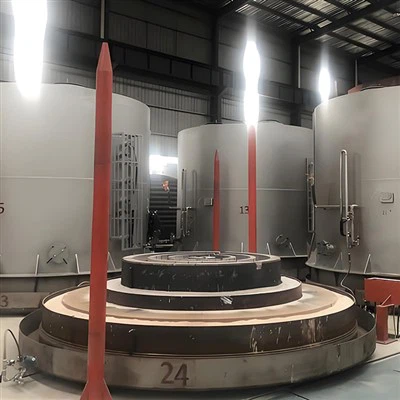
Oxidation and decarburization are two critical issues that often plague the operation of pit furnaces. As a supplier of pit furnaces, I've witnessed firsthand how these problems can impact the quality of heat - treated products and the overall efficiency of industrial processes. In this blog, I'll delve into the nature of oxidation and decarburization in pit furnaces, their causes, effects, and the solutions we offer to mitigate these issues.
Understanding Oxidation in Pit Furnaces
Oxidation in a pit furnace occurs when the metal being heat - treated reacts with oxygen in the furnace environment. When a metal is heated to high temperatures in the presence of oxygen, a chemical reaction takes place, forming metal oxides on the surface of the workpiece. For example, iron reacts with oxygen to form iron oxide (rust).
The causes of oxidation in pit furnaces are multi - fold. Firstly, the air infiltration into the furnace is a major culprit. Even small leaks in the furnace seals can allow oxygen to enter the chamber. Secondly, the type of atmosphere within the furnace plays a crucial role. If the furnace is not properly purged with an inert gas, the remaining oxygen can initiate oxidation. Thirdly, the duration and temperature of the heat - treatment process also influence oxidation. Higher temperatures and longer exposure times generally lead to more severe oxidation.
The effects of oxidation on the heat - treated products are significant. Oxide layers on the surface of the metal can reduce its corrosion resistance. The oxide scale can also cause dimensional inaccuracies, as it adds thickness to the workpiece. Moreover, the presence of oxide layers can affect the adhesion of coatings or subsequent surface treatments, thereby reducing the overall quality of the final product.
Decarburization in Pit Furnaces
Decarburization is another common problem in pit furnaces. It refers to the loss of carbon from the surface layer of a steel workpiece during heat treatment. When steel is heated in an oxidizing or carburizing - deficient environment, the carbon in the steel reacts with oxygen, carbon dioxide, or water vapor to form carbon monoxide or carbon dioxide, which then diffuses out of the steel surface.
The main causes of decarburization include the furnace atmosphere composition. An atmosphere with a high oxygen or water vapor content is more likely to cause decarburization. Similar to oxidation, the heat - treatment temperature and time are also important factors. Higher temperatures and longer exposure times increase the rate of carbon diffusion and reaction, leading to more severe decarburization. Additionally, the initial carbon content of the steel and the type of steel can influence the susceptibility to decarburization.
The consequences of decarburization are detrimental to the mechanical properties of the steel. The loss of carbon from the surface layer reduces the hardness and wear resistance of the steel. This can lead to premature failure of the component in applications where high - strength and wear - resistant surfaces are required, such as in automotive parts and tooling.
Our Solutions as a Pit Furnace Supplier
At our company, we offer a range of advanced pit furnaces designed to minimize oxidation and decarburization issues. Our Pit Type Heat Treatment Furnace is equipped with state - of - the - art sealing technology to prevent air infiltration. The furnace doors and joints are carefully designed and sealed to ensure a tight enclosure, reducing the entry of oxygen into the chamber.
We also provide a precise atmosphere control system. Our furnaces can be purged with inert gases such as nitrogen or argon to create a non - oxidizing environment. By maintaining a proper gas flow rate and pressure, we can effectively displace the oxygen in the furnace and prevent oxidation and decarburization. The gas composition can be continuously monitored and adjusted during the heat - treatment process to ensure optimal conditions.


In addition, our High Precision Pit Furnace features advanced temperature control capabilities. Precise temperature regulation helps to minimize the duration and intensity of the heat - treatment process, reducing the risk of oxidation and decarburization. Our furnace controllers can accurately maintain the set temperature within a narrow range, ensuring consistent and high - quality heat treatment.
For applications that require lower temperatures, our Low Temperature Pit Furnace is an ideal choice. Lower temperatures generally result in less severe oxidation and decarburization. These furnaces are designed to operate efficiently at low temperatures while still providing uniform heating throughout the workpiece.
Preventive Measures and Best Practices
Apart from the features of our pit furnaces, we also recommend several preventive measures and best practices to further reduce oxidation and decarburization. Before loading the workpiece into the furnace, it should be properly cleaned to remove any contaminants such as oil, grease, or rust. These contaminants can react with oxygen during heat treatment and exacerbate oxidation and decarburization.
Regular maintenance of the furnace is essential. The furnace seals should be inspected and replaced if necessary to prevent air leakage. The gas supply system should be checked for proper functioning, and the gas filters should be cleaned or replaced regularly. Additionally, the furnace should be periodically calibrated to ensure accurate temperature and atmosphere control.
Conclusion
Oxidation and decarburization are significant challenges in pit furnace operations, but with the right equipment and preventive measures, these issues can be effectively managed. As a pit furnace supplier, we are committed to providing high - quality furnaces with advanced features to minimize oxidation and decarburization. Our Pit Type Heat Treatment Furnace, High Precision Pit Furnace, and Low Temperature Pit Furnace are designed to meet the diverse needs of our customers and ensure the production of high - quality heat - treated products.
If you are facing oxidation or decarburization issues in your heat - treatment processes or are looking for a reliable pit furnace supplier, we invite you to contact us for a detailed discussion. Our team of experts is ready to provide you with customized solutions and technical support to help you achieve the best results in your heat - treatment operations.
References
- ASM Handbook Volume 4: Heat Treating. ASM International.
- "Furnace Atmospheres for Heat Treatment" by R. A. Grange. Metal Treating Institute.
- "Heat Treatment Principles and Techniques" by George E. Totten and David Scott MacKenzie. CRC Press.