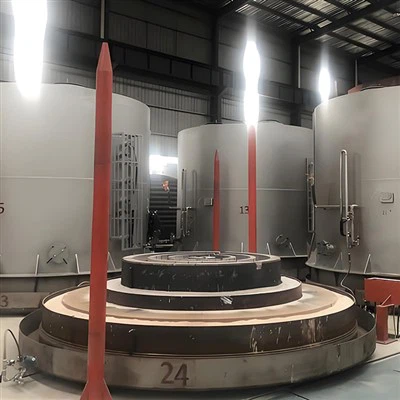
In the realm of materials processing, the box annealing furnace stands as a cornerstone for achieving precise and consistent annealing results. As a trusted supplier of box annealing furnaces, I've witnessed firsthand the transformative power of this equipment in various industries. One of the most critical aspects of operating a box annealing furnace is understanding the annealing process curve. In this blog post, I'll delve into what the annealing process curve is, its significance, and how it relates to our box annealing furnaces.
Understanding the Annealing Process Curve
The annealing process curve is a graphical representation of the temperature-time relationship during the annealing process. It outlines the specific steps and temperature profiles that a material must undergo to achieve the desired properties. The curve typically consists of three main stages: heating, soaking, and cooling.

Heating Stage
The heating stage is the initial phase of the annealing process, where the material is gradually heated to the desired annealing temperature. This stage is crucial as it prepares the material for the subsequent soaking and cooling stages. The heating rate is carefully controlled to prevent thermal shock, which can cause cracking or other defects in the material.
During the heating stage, the temperature of the material increases steadily until it reaches the annealing temperature. The heating rate depends on several factors, including the type of material, its thickness, and the size of the furnace. In our box annealing furnaces, we use advanced heating systems to ensure uniform heating and precise temperature control.
Soaking Stage
Once the material reaches the annealing temperature, it enters the soaking stage. During this stage, the material is held at the annealing temperature for a specific period to allow for the desired microstructural changes to occur. The soaking time depends on the type of material, its thickness, and the desired properties.
The soaking stage is essential for achieving the desired hardness, ductility, and other mechanical properties of the material. It allows the atoms in the material to rearrange themselves into a more stable and uniform structure. In our box annealing furnaces, we provide precise temperature control during the soaking stage to ensure consistent results.
Cooling Stage
The cooling stage is the final phase of the annealing process, where the material is gradually cooled to room temperature. The cooling rate is carefully controlled to prevent the formation of internal stresses and to achieve the desired microstructure. The cooling rate depends on several factors, including the type of material, its thickness, and the size of the furnace.
There are two main types of cooling in the annealing process: slow cooling and rapid cooling. Slow cooling is typically used for materials that require a more uniform microstructure and lower internal stresses. Rapid cooling, on the other hand, is used for materials that require a specific hardness or other mechanical properties.
In our box annealing furnaces, we offer both slow cooling and rapid cooling options to meet the specific needs of our customers. We use advanced cooling systems to ensure precise temperature control and uniform cooling throughout the material.
Significance of the Annealing Process Curve
The annealing process curve is of utmost importance in the annealing process as it determines the final properties of the material. By carefully controlling the heating, soaking, and cooling stages, we can achieve the desired hardness, ductility, and other mechanical properties of the material.
A well-defined annealing process curve ensures consistent results and minimizes the risk of defects in the material. It also helps to optimize the annealing process, reducing energy consumption and production costs.
In addition to its technical significance, the annealing process curve also plays a crucial role in quality control. By monitoring the temperature-time relationship during the annealing process, we can ensure that the material meets the required specifications and standards.
Our Box Annealing Furnaces and the Annealing Process Curve
As a leading supplier of box annealing furnaces, we understand the importance of the annealing process curve. That's why we design and manufacture our furnaces to provide precise temperature control and uniform heating and cooling throughout the material.
Our box annealing furnaces are equipped with advanced heating and cooling systems that allow for precise control of the annealing process curve. We use high-quality insulation materials to minimize heat loss and ensure energy efficiency. Our furnaces also feature advanced control systems that allow for easy programming and monitoring of the annealing process.
In addition to our standard box annealing furnaces, we also offer customized solutions to meet the specific needs of our customers. Whether you need a furnace for a specific type of material or a particular annealing process, we can design and manufacture a furnace that meets your requirements.
Other Types of Annealing Furnaces
In addition to box annealing furnaces, we also offer other types of annealing furnaces, including Bell Type Annealing Furnace, Trolley Annealing Furnace, and Roller Annealing Furnace. Each type of furnace has its own unique features and advantages, and we can help you choose the right furnace for your specific application.
Bell Type Annealing Furnace
The bell type annealing furnace is a popular choice for annealing large quantities of materials. It consists of a bell-shaped cover that is placed over the material to be annealed. The furnace is heated from the outside, and the material is annealed in a controlled atmosphere.
The bell type annealing furnace offers several advantages, including high energy efficiency, uniform heating, and precise temperature control. It is suitable for annealing a wide range of materials, including steel, aluminum, and copper.
Trolley Annealing Furnace
The trolley annealing furnace is a versatile furnace that is suitable for annealing a variety of materials. It consists of a trolley that is loaded with the material to be annealed and then placed inside the furnace. The furnace is heated from the bottom, and the material is annealed in a controlled atmosphere.
The trolley annealing furnace offers several advantages, including easy loading and unloading, uniform heating, and precise temperature control. It is suitable for annealing a wide range of materials, including steel, aluminum, and copper.
Roller Annealing Furnace
The roller annealing furnace is a continuous annealing furnace that is suitable for annealing long strips of materials. It consists of a series of rollers that transport the material through the furnace. The furnace is heated from the top and bottom, and the material is annealed in a controlled atmosphere.
The roller annealing furnace offers several advantages, including high production efficiency, uniform heating, and precise temperature control. It is suitable for annealing a wide range of materials, including steel, aluminum, and copper.
Contact Us for Your Annealing Furnace Needs
If you're in the market for a box annealing furnace or any other type of annealing furnace, we'd love to hear from you. Our team of experts can help you choose the right furnace for your specific application and provide you with the support and service you need to ensure its successful operation.
Whether you're a small business or a large corporation, we have the expertise and experience to meet your annealing furnace needs. Contact us today to learn more about our products and services and to schedule a consultation.
References
- ASM Handbook, Volume 4: Heat Treating, ASM International, 1991.
- Heat Treating: Principles and Processes, Third Edition, by Ronald A. Granger, ASM International, 2016.
- Industrial Furnaces: Principles, Design, and Operation, Second Edition, by M. P. Groover, John Wiley & Sons, 2010.