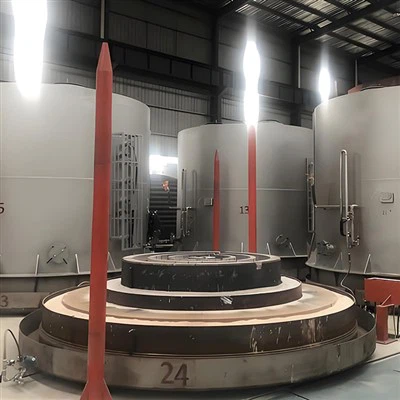
Hey there! As a supplier of carburizing furnaces, I've seen firsthand how crucial ventilation systems are in the heat treatment industry. In this blog, I'm gonna break down the functions of ventilation systems, especially in the context of our carburizing furnaces.
1. Removing Harmful Gases
One of the primary functions of a ventilation system in a carburizing furnace setup is to get rid of harmful gases. During the carburizing process, various gases are produced. For instance, when we use Carburizing Pit Furnace, the chemical reactions inside the furnace generate carbon monoxide, methane, and other volatile organic compounds (VOCs). These gases are not only toxic but can also pose a serious explosion hazard if they accumulate in high concentrations.
Carbon monoxide is a silent killer. It's odorless and colorless, and when inhaled, it binds to hemoglobin in our blood, preventing the normal transport of oxygen. This can lead to headaches, dizziness, and in severe cases, even death. The ventilation system continuously pulls these gases out of the furnace area and expels them safely outside the facility.
VOCs, on the other hand, can cause long - term health problems. They can irritate the eyes, nose, and throat, and some are even known to be carcinogenic. By removing these gases, the ventilation system helps create a safe working environment for the operators.
2. Controlling Temperature and Humidity
Another important function of the ventilation system is to control the temperature and humidity inside the furnace area. Carburizing is a precise heat - treatment process that requires specific temperature and humidity conditions to achieve the desired results.


In a Box Type Gas Carburizing Furnace, for example, the ventilation system can bring in fresh air to cool down the furnace if the temperature gets too high. This is crucial because overheating can damage the furnace components and affect the quality of the carburized parts.
Humidity control is also essential. High humidity can cause corrosion of the furnace parts and affect the chemical reactions during carburizing. The ventilation system can either remove excess moisture from the air or introduce dry air to maintain the optimal humidity level.
3. Preventing Dust and Particulate Accumulation
During the carburizing process, there is often the generation of dust and particulate matter. This can come from the decomposition of the carburizing agents, the wear and tear of the furnace lining, or the oxidation of the metal parts being treated.
If these dust and particulates are allowed to accumulate, they can clog the furnace components, reduce the efficiency of the heating elements, and even contaminate the carburized parts. The ventilation system has filters that trap these particles as the air is being circulated. This not only helps keep the furnace clean and running smoothly but also ensures the quality of the final products.
4. Ensuring Uniform Gas Distribution
In a carburizing furnace, uniform gas distribution is vital for achieving consistent carburizing results across all the parts being treated. The ventilation system helps in this regard by creating a proper airflow pattern inside the furnace.
It ensures that the carburizing gases are evenly distributed throughout the furnace chamber. This means that each part gets the same amount of carbon diffusion, resulting in uniform hardness and surface properties. Without proper ventilation, there could be areas in the furnace where the gas concentration is too high or too low, leading to inconsistent carburizing and poor - quality parts.
5. Maintaining Air Quality for Combustion
Most carburizing furnaces use gas burners for heating. For efficient and clean combustion, a proper supply of oxygen is required. The ventilation system brings in fresh air, which contains the necessary oxygen for the combustion process.
If there is not enough oxygen, the combustion will be incomplete, leading to the production of more harmful gases like carbon monoxide and soot. By providing a continuous supply of fresh air, the ventilation system ensures that the burners operate at their optimal efficiency, reducing fuel consumption and emissions.
Why Our Ventilation Systems are a Great Fit
At our company, we understand the unique requirements of carburizing furnaces. Our ventilation systems are designed to work seamlessly with our Carburizing Pit Furnace and Box Type Gas Carburizing Furnace.
We use high - quality materials for the construction of our ventilation components, ensuring durability and long - term performance. Our filters are designed to have a high dust - holding capacity and can be easily replaced or cleaned.
The airflow control in our ventilation systems is highly adjustable, allowing you to fine - tune the conditions according to your specific carburizing process. Whether you are treating small parts or large batches, our ventilation systems can be customized to meet your needs.
Let's Talk!
If you're in the market for a carburizing furnace or looking to upgrade your existing ventilation system, we'd love to hear from you. Our team of experts can provide you with detailed information, answer all your questions, and help you find the best solution for your business. Contact us today to start the conversation and take your heat - treatment process to the next level.
References
- ASM Handbook: Heat Treating. ASM International.
- Industrial Ventilation: A Manual of Recommended Practice. American Conference of Governmental Industrial Hygienists.