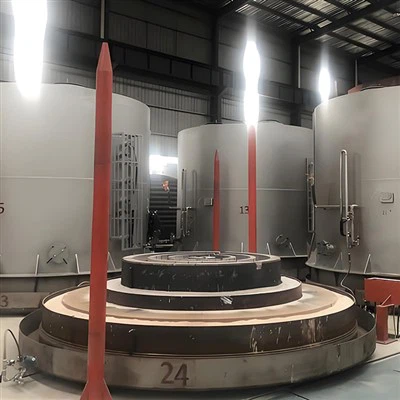
Hey there! As a supplier of tempering furnaces, I often get asked about the heating rate of these machines. It's a crucial factor that can significantly impact the quality and efficiency of the tempering process. So, let's dive into what the heating rate of a tempering furnace is and why it matters.
What is the Heating Rate?
The heating rate of a tempering furnace refers to how quickly the furnace can raise the temperature of the workpiece inside. It's usually measured in degrees Celsius per minute (°C/min) or degrees Fahrenheit per minute (°F/min). For example, if a furnace has a heating rate of 10°C/min, it means that it can increase the temperature of the workpiece by 10 degrees Celsius every minute.
Why Does the Heating Rate Matter?
1. Product Quality
The heating rate plays a vital role in determining the final properties of the tempered material. A too - fast heating rate can cause thermal stress within the workpiece. This stress can lead to cracking, warping, or uneven hardness distribution. On the other hand, a very slow heating rate might be time - consuming and could also result in surface oxidation or decarburization, affecting the material's performance.
2. Production Efficiency
In a manufacturing environment, time is money. A higher heating rate generally means that the tempering process can be completed more quickly. This allows for higher production volumes and shorter lead times. However, as mentioned earlier, this needs to be balanced with the quality requirements of the product.
Factors Affecting the Heating Rate
1. Furnace Design
The design of the tempering furnace has a significant impact on the heating rate. Different types of furnaces, such as Trolley Tempering Furnace, Pit Type Tempering Furnace, and Nitrogen Protection Pit Tempering Furnace, have different heating mechanisms and heat transfer characteristics.
- Trolley Tempering Furnace: This type of furnace usually has a large workspace and is suitable for batch processing. Its heating rate can be affected by the size of the trolley and the distribution of heating elements. If the heating elements are evenly distributed, heat can be transferred more efficiently, resulting in a relatively high heating rate.
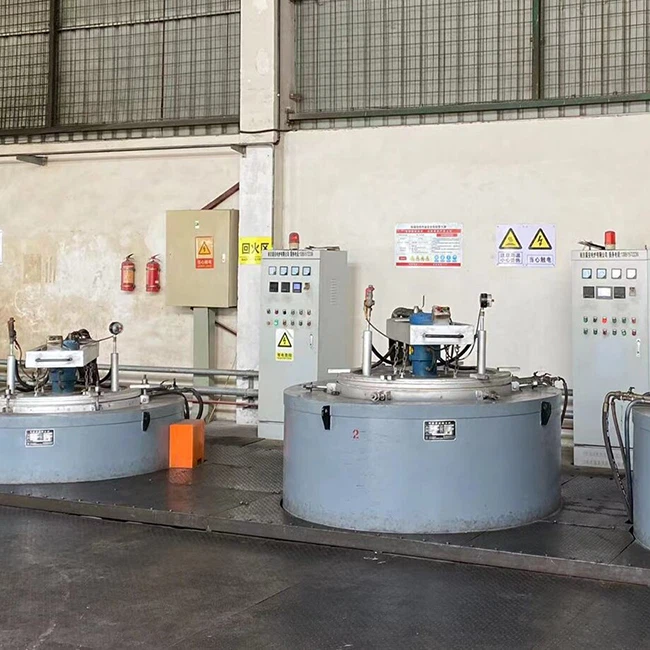
- Pit Type Tempering Furnace: Pit furnaces are often used for vertical workpieces. The depth of the pit and the arrangement of heating coils around it can influence the heating rate. A well - designed pit furnace can provide uniform heating and a decent heating rate for the workpiece.
- Nitrogen Protection Pit Tempering Furnace: In addition to the factors mentioned above, the presence of nitrogen gas for protection can also affect the heating rate. Nitrogen has different thermal properties compared to air, and it can influence heat transfer within the furnace.
2. Heating Elements
The type and power of the heating elements are key factors. Electric heating elements, such as resistance wires, are commonly used in tempering furnaces. Higher - power heating elements can generate more heat in a shorter time, leading to a faster heating rate. However, the power needs to be carefully selected to avoid overheating and damage to the furnace or the workpiece.
3. Workpiece Material and Size
The material of the workpiece has different thermal conductivities. Metals with high thermal conductivity, like aluminum, will heat up faster than those with low thermal conductivity, such as stainless steel. Also, the size of the workpiece matters. Larger workpieces require more heat to reach the desired temperature, so the heating rate might be slower compared to smaller ones.

Controlling the Heating Rate
1. Temperature Control Systems
Modern tempering furnaces are equipped with advanced temperature control systems. These systems can monitor the temperature inside the furnace and adjust the power of the heating elements accordingly. For example, if the heating rate is too fast, the system can reduce the power to slow down the heating process.
2. Pre - heating and Ramp - up Programs
Many furnaces allow users to set pre - heating and ramp - up programs. Pre - heating can help to gradually raise the temperature of the workpiece and reduce thermal stress. The ramp - up program can control the rate at which the temperature increases, ensuring a smooth and controlled heating process.
How We Can Help
As a tempering furnace supplier, we understand the importance of the heating rate and its impact on your production. Our team of experts can help you select the right type of furnace based on your specific requirements. Whether you need a high - speed heating furnace for large - scale production or a more precise - controlled furnace for high - quality products, we've got you covered.
We offer a wide range of tempering furnaces, including Trolley Tempering Furnace, Pit Type Tempering Furnace, and Nitrogen Protection Pit Tempering Furnace. All our furnaces are designed with the latest technology to ensure optimal heating rates and high - quality performance.
If you're interested in learning more about our tempering furnaces or have any questions regarding the heating rate, feel free to reach out to us. We're here to assist you in making the best decision for your business. Let's start a conversation and see how we can improve your tempering process together.
References
- ASM Handbook Volume 4: Heat Treating. ASM International.
- Heat Treating Principles and Processes. Lynn C. Decker, David A. Treat.