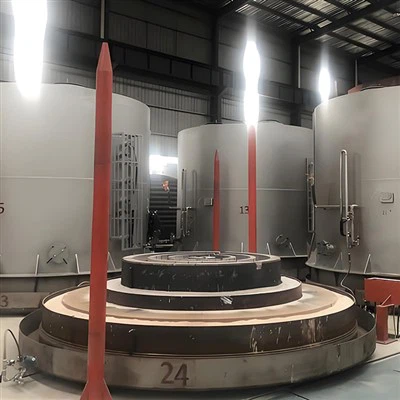
Can a Crucible Furnace Be Used for Melting Titanium?
As a seasoned supplier of crucible furnaces, I often encounter inquiries regarding the compatibility of our products with various metals, including titanium. Titanium is a highly sought - after metal due to its exceptional strength - to - weight ratio, corrosion resistance, and biocompatibility. It finds extensive applications in aerospace, medical, and automotive industries. The question of whether a crucible furnace can be used for melting titanium is both complex and crucial for many of our clients.
Understanding Titanium's Melting Properties
Titanium has a relatively high melting point of approximately 1,668°C (3,034°F). This high melting point poses a significant challenge when it comes to melting the metal. Additionally, titanium is highly reactive at elevated temperatures, especially with oxygen, nitrogen, and carbon. When exposed to these elements during the melting process, titanium can form hard and brittle compounds, which can significantly degrade its mechanical properties.
Types of Crucible Furnaces
We offer a range of crucible furnaces, each with its own unique features and capabilities.
The Crucible Melting Resistance Furnace is a popular choice among our customers. It uses electrical resistance heating elements to generate heat. This type of furnace provides precise temperature control, which is essential when dealing with metals like titanium that require a specific melting temperature. The resistance heating elements can heat the crucible and the metal inside evenly, ensuring a consistent melting process.


The Gas Crucible Aluminum Melting Furnace is another option. It utilizes natural gas or propane as a fuel source. Gas - fired furnaces can heat up quickly, which can be an advantage in some industrial settings. However, they may require more careful monitoring to ensure that the combustion process does not introduce contaminants into the melting environment.
The Tilting Crucible Melting Furnace is designed for easy pouring of the molten metal. Once the metal is melted, the furnace can be tilted to pour the liquid titanium into molds or other containers. This feature is particularly useful for large - scale production where efficiency is key.
Challenges of Melting Titanium in a Crucible Furnace
When considering using a crucible furnace to melt titanium, several challenges need to be addressed.
Reactivity: As mentioned earlier, titanium is highly reactive at high temperatures. In a traditional crucible furnace, the crucible material and the surrounding atmosphere can react with the molten titanium. For example, if the crucible is made of a material that contains oxygen or carbon, these elements can react with the titanium, forming titanium oxides or carbides. To overcome this, special crucible materials such as yttria - stabilized zirconia or graphite coated with a protective layer can be used. These materials are less likely to react with titanium at high temperatures.
Atmosphere Control: Controlling the atmosphere inside the furnace is crucial. A vacuum or an inert gas environment, such as argon, is typically required to prevent the titanium from reacting with oxygen and nitrogen in the air. In a crucible furnace, achieving and maintaining a proper atmosphere can be challenging. Special sealing mechanisms and gas - purging systems need to be installed to ensure that the atmosphere inside the furnace is free of contaminants.
Temperature Uniformity: Titanium requires a uniform temperature throughout the melting process to ensure a high - quality melt. In a crucible furnace, heat transfer can be uneven, especially in larger furnaces. This can lead to temperature gradients within the molten titanium, which can cause variations in its properties. Advanced heating systems and proper insulation are necessary to achieve and maintain a uniform temperature.
Solutions for Melting Titanium in a Crucible Furnace
Despite the challenges, it is possible to use a crucible furnace to melt titanium with the right approach.
Crucible Selection: Choosing the right crucible material is essential. As mentioned, yttria - stabilized zirconia crucibles are a good choice because they have excellent thermal stability and are resistant to chemical reactions with titanium. Graphite crucibles can also be used if they are properly coated to prevent carbon from reacting with the titanium.
Atmosphere Control Systems: Installing a high - quality atmosphere control system is crucial. This system should be able to create and maintain a vacuum or an inert gas environment inside the furnace. Gas - purging systems can be used to remove oxygen and nitrogen from the furnace before the melting process begins. Additionally, continuous gas flow during the melting process can help maintain a clean atmosphere.
Advanced Heating and Temperature Control: To ensure temperature uniformity, advanced heating systems and precise temperature control mechanisms are required. Resistance heating elements can be designed to distribute heat evenly around the crucible. Temperature sensors can be installed at multiple locations inside the furnace to monitor and adjust the temperature as needed.
Case Studies
There have been successful cases of using crucible furnaces to melt titanium. In some small - scale research and development projects, crucible furnaces have been modified to meet the specific requirements of melting titanium. These modifications include the use of special crucibles, advanced atmosphere control systems, and precise temperature control.
In a large - scale industrial setting, companies have also adopted crucible furnaces for titanium melting. By investing in high - quality equipment and implementing strict quality control measures, they have been able to produce high - quality titanium products efficiently.
Conclusion
In conclusion, while melting titanium in a crucible furnace presents several challenges, it is indeed possible with the right equipment and techniques. Our range of crucible furnaces, including the Crucible Melting Resistance Furnace, Gas Crucible Aluminum Melting Furnace, and Tilting Crucible Melting Furnace, can be adapted to meet the specific needs of melting titanium.
If you are interested in using a crucible furnace for melting titanium or have any questions about our products, we encourage you to contact us for a detailed discussion. Our team of experts is ready to assist you in finding the best solution for your specific requirements.
References
- "Titanium: A Technical Guide" by John R. Davis
- "Handbook of High - Temperature Superconductivity" which contains information on high - temperature melting processes
- Industry research papers on crucible furnace technology and titanium melting