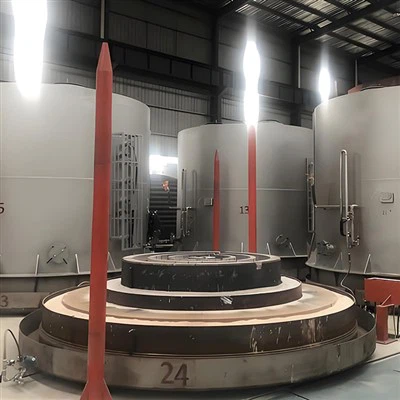
Hey there! As a supplier of trolley furnaces, I often get asked about the power requirements of electric trolley furnaces. It's a crucial topic, especially for those looking to invest in these industrial workhorses. So, let's dive right in and break down what you need to know.
First off, what exactly is an electric trolley furnace? Well, it's a type of industrial furnace that uses electricity as its power source. These furnaces are mounted on trolleys, which allows for easy movement of the furnace and the materials being processed. They're commonly used in various industries, such as metalworking, heat treatment, and forging, to heat materials to high temperatures for processes like annealing, tempering, and hardening.
Now, let's talk about power requirements. The power needed for an electric trolley furnace depends on several factors. One of the most significant factors is the size of the furnace. Generally, larger furnaces require more power to heat up and maintain the desired temperature. For example, a small - scale trolley furnace used in a small workshop might have a relatively low power requirement, say around 20 - 50 kilowatts (kW). On the other hand, a large industrial - grade High Temperature Trolley Furnace used for heavy - duty forging or heat treatment could need 100 kW or more.
Another important factor is the maximum temperature the furnace needs to reach. Different processes require different temperatures. For instance, annealing a metal might require temperatures in the range of 400 - 700 degrees Celsius, while forging certain high - strength alloys could demand temperatures upwards of 1000 degrees Celsius. The higher the temperature, the more power the furnace will need to generate and maintain that heat.


The insulation of the furnace also plays a big role. A well - insulated furnace will lose less heat to the surroundings, which means it doesn't have to work as hard (and use as much power) to keep the internal temperature stable. Modern Segmented Bogie Furnace designs often incorporate advanced insulation materials like ceramic fiber blankets, which can significantly reduce heat loss and, in turn, lower the power consumption.
The type of heating elements used in the furnace is yet another factor. There are different types of heating elements, such as resistance heating elements. The efficiency of these elements can vary. High - quality, efficient heating elements will convert a larger percentage of the electrical energy into heat, reducing the overall power requirement.
Let's take a closer look at how we can calculate the approximate power requirement. A common way is to use the following basic formula:
Power (kW)= (Heat capacity of the load×Mass of the load×Temperature change) / (Time×Efficiency)
The heat capacity of the load depends on the material being heated. For example, the heat capacity of steel is different from that of aluminum. The mass of the load is simply the weight of the material placed inside the furnace. The temperature change is the difference between the initial temperature of the load and the desired final temperature. The time is the amount of time you want to heat the load to the desired temperature, and the efficiency takes into account losses in the heating process.
However, this is a simplified formula, and in real - world scenarios, other factors like heat losses through the furnace walls, doors, and trolley also need to be considered. That's why it's often best to consult with a professional or the furnace manufacturer to get an accurate power requirement estimate.
When it comes to our Trolley Type Forging Furnace, we've designed it to be as energy - efficient as possible. We use state - of - the - art insulation materials and high - efficiency heating elements to minimize power consumption while still delivering top - notch performance.
If you're in the market for an electric trolley furnace, it's essential to understand the power requirements. Not only does it help you plan your electrical supply, but it also has a direct impact on your operating costs. A furnace that consumes less power will save you money in the long run.
We understand that every customer's needs are different. Whether you're a small - scale manufacturer looking for a compact and energy - efficient furnace or a large industrial enterprise in need of a high - capacity furnace, we've got you covered. Our team of experts can help you determine the right power requirement for your specific application and recommend the best furnace model.
If you're interested in learning more about our trolley furnaces or have any questions regarding power requirements, feel free to reach out to us. We're always here to assist you in making the right choice for your business. Don't hesitate to start a conversation with us for purchasing and negotiation. We're confident that we can provide you with a furnace that meets your needs and budget.
References:
- Industrial Furnace Handbook: Principles, Design, and Operation, Various authors
- Technical guides on electric furnace technology from industry associations