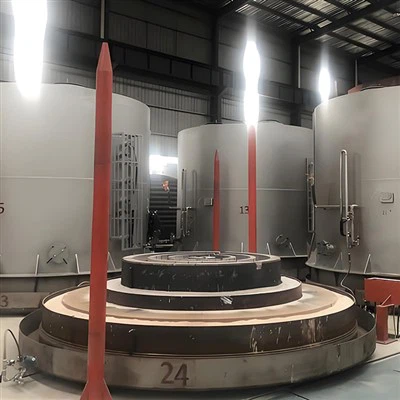
In the realm of industrial heat treatment, the Pit Quenching Furnace stands as a cornerstone for various manufacturing processes. As a seasoned supplier of Pit Quenching Furnace, I've witnessed firsthand the critical role that insulation plays in the performance and efficiency of these furnaces. This blog post aims to delve into the significance of insulation in a Pit Quenching Furnace, exploring its functions, benefits, and the impact it has on overall operations.
The Basics of Pit Quenching Furnaces
Before we dive into the role of insulation, it's essential to understand the fundamental principles of a Pit Quenching Furnace. These furnaces are designed to heat materials to a specific temperature and then rapidly cool them in a quenching medium, such as oil or water. This process is crucial for enhancing the mechanical properties of metals, including hardness, strength, and wear resistance.
Pit Quenching Furnaces are typically cylindrical in shape and are installed vertically, with the workpiece lowered into the furnace chamber for heating. The furnace is equipped with heating elements, a temperature control system, and a quenching tank. The heating elements generate the necessary heat to raise the temperature of the workpiece, while the temperature control system ensures precise regulation of the heating process. Once the desired temperature is reached, the workpiece is quickly transferred to the quenching tank for rapid cooling.
The Role of Insulation in a Pit Quenching Furnace
Insulation plays a multifaceted role in a Pit Quenching Furnace, contributing to its efficiency, performance, and safety. Let's explore the key functions of insulation in detail:
Thermal Efficiency
One of the primary functions of insulation in a Pit Quenching Furnace is to minimize heat loss. During the heating process, a significant amount of energy is required to raise the temperature of the workpiece and maintain it at the desired level. Without proper insulation, a substantial portion of this energy would be lost to the surrounding environment, resulting in increased energy consumption and higher operating costs.
Insulation materials with low thermal conductivity, such as ceramic fiber blankets, refractory bricks, and insulation boards, are used to line the furnace chamber and other components. These materials act as a barrier, reducing the transfer of heat from the furnace interior to the exterior. By minimizing heat loss, insulation helps to improve the thermal efficiency of the furnace, allowing it to achieve and maintain the desired temperature with less energy input.
Temperature Uniformity
In addition to improving thermal efficiency, insulation also helps to ensure temperature uniformity within the furnace chamber. A uniform temperature distribution is crucial for achieving consistent heat treatment results and preventing thermal gradients that can lead to uneven hardness and distortion of the workpiece.
Insulation materials help to create a stable thermal environment within the furnace by reducing heat transfer through the furnace walls. This allows the heating elements to distribute heat more evenly throughout the chamber, ensuring that all parts of the workpiece are heated to the same temperature. As a result, the heat treatment process is more precise and reliable, leading to higher-quality products.
Protection of Furnace Components
Insulation also plays a vital role in protecting the furnace components from the high temperatures generated during the heating process. The heating elements, temperature sensors, and other components are exposed to extreme heat, which can cause damage and premature failure if not properly protected.
Insulation materials act as a thermal barrier, shielding the components from direct contact with the high-temperature environment. This helps to extend the lifespan of the components, reduce maintenance costs, and improve the overall reliability of the furnace. Additionally, insulation can help to prevent heat from radiating to other parts of the furnace, such as the control panel and electrical wiring, reducing the risk of electrical malfunctions and fire hazards.
Safety
Insulation is also essential for ensuring the safety of the operators and the surrounding environment. The high temperatures generated in a Pit Quenching Furnace can pose a significant risk of burns and other injuries if the furnace is not properly insulated. Insulation materials help to reduce the surface temperature of the furnace, making it safer to touch and operate.
Furthermore, insulation can help to prevent the release of harmful gases and fumes from the furnace. During the heating process, some materials may release volatile organic compounds (VOCs) and other pollutants. Insulation materials can help to contain these emissions, preventing them from escaping into the environment and posing a health risk to the operators.
Benefits of Using High-Quality Insulation
Using high-quality insulation in a Pit Quenching Furnace offers several benefits, including:
Energy Savings
As mentioned earlier, insulation helps to minimize heat loss, which can result in significant energy savings. By reducing the amount of energy required to operate the furnace, high-quality insulation can lower operating costs and improve the overall profitability of the manufacturing process.
Improved Product Quality
Temperature uniformity is crucial for achieving consistent heat treatment results and ensuring the quality of the finished products. High-quality insulation helps to maintain a stable thermal environment within the furnace chamber, reducing thermal gradients and ensuring that all parts of the workpiece are heated to the same temperature. This leads to more precise and reliable heat treatment, resulting in higher-quality products with improved mechanical properties.
Longer Furnace Lifespan
Insulation helps to protect the furnace components from the high temperatures generated during the heating process, reducing the risk of damage and premature failure. By extending the lifespan of the furnace components, high-quality insulation can reduce maintenance costs and improve the overall reliability of the furnace.
Enhanced Safety
Insulation helps to reduce the surface temperature of the furnace, making it safer to touch and operate. Additionally, it can help to prevent the release of harmful gases and fumes, protecting the operators and the surrounding environment from potential health hazards.
Choosing the Right Insulation Material
Selecting the appropriate insulation material for a Pit Quenching Furnace is crucial for ensuring optimal performance and efficiency. Several factors need to be considered when choosing insulation, including:


Thermal Conductivity
The thermal conductivity of the insulation material is a key factor in determining its effectiveness in reducing heat loss. Materials with low thermal conductivity, such as ceramic fiber blankets and refractory bricks, are preferred for use in Pit Quenching Furnaces.
Temperature Resistance
The insulation material must be able to withstand the high temperatures generated in the furnace without degrading or losing its insulating properties. Different insulation materials have different temperature limits, so it's important to choose a material that can handle the maximum temperature reached in the furnace.
Chemical Resistance
In some cases, the insulation material may be exposed to chemicals or corrosive substances during the heat treatment process. It's important to choose a material that is resistant to chemical attack to ensure its long-term durability.
Installation and Maintenance
The ease of installation and maintenance of the insulation material is also an important consideration. Some insulation materials, such as ceramic fiber blankets, are lightweight and easy to install, while others, such as refractory bricks, require more specialized installation techniques. Additionally, the insulation material should be easy to maintain and repair, if necessary.
Conclusion
In conclusion, insulation plays a critical role in the performance, efficiency, and safety of a Pit Quenching Furnace. By minimizing heat loss, ensuring temperature uniformity, protecting furnace components, and enhancing safety, insulation helps to improve the overall quality and profitability of the heat treatment process.
As a supplier of Pit Quenching Furnace, we understand the importance of using high-quality insulation materials in our products. We offer a range of insulation options, including ceramic fiber blankets, refractory bricks, and insulation boards, to meet the specific needs of our customers. Our experienced team can provide expert advice on the selection and installation of insulation materials, ensuring optimal performance and efficiency of your Pit Quenching Furnace.
If you're interested in learning more about our Pit Quenching Furnaces or need assistance with insulation selection and installation, please don't hesitate to contact us. We're here to help you achieve the best results in your heat treatment processes.
References
- ASM Handbook, Volume 4: Heat Treating, ASM International, 1991.
- Industrial Furnaces: Principles, Design, and Operation, by R. A. Schaefer, John Wiley & Sons, 2004.
- Heat Treatment: Principles and Techniques, by George E. Totten and Milan C. Bozic, CRC Press, 2008.