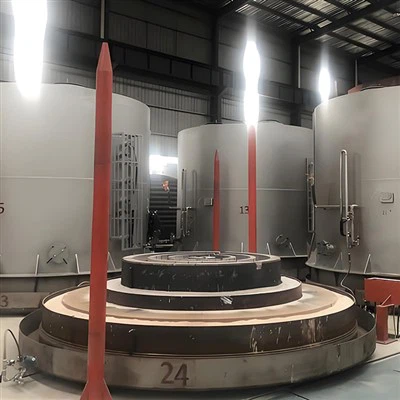
Hey there! As a supplier of Pit Quenching Furnaces, I often get asked about the ventilation requirements for these bad boys. So, I thought I'd take a few minutes to break it down for you.
First off, let's talk about why ventilation is so important for a Pit Quenching Furnace. When you're using a quenching furnace, you're dealing with high temperatures and some pretty intense chemical reactions. The quenching process involves rapidly cooling a heated metal object, which can release a whole bunch of fumes and gases. These fumes can be harmful if inhaled, and they can also cause damage to the furnace and the surrounding equipment if they're not properly vented.
One of the main gases released during the quenching process is carbon monoxide (CO). This is a colorless, odorless gas that can be extremely dangerous. In high concentrations, it can cause headaches, dizziness, nausea, and even death. That's why it's crucial to have a good ventilation system in place to remove CO and other harmful gases from the air.
Another reason for proper ventilation is to control the temperature and humidity inside the furnace area. The quenching process generates a lot of heat, and if the heat isn't dissipated properly, it can lead to overheating of the furnace and other equipment. A well-designed ventilation system can help to keep the temperature and humidity at optimal levels, which can improve the efficiency and lifespan of the furnace.
So, what are the specific ventilation requirements for a Pit Quenching Furnace? Well, it depends on a few factors, such as the size of the furnace, the type of quenching medium being used, and the volume of work being processed.
Airflow Rate
The first thing you need to consider is the airflow rate. This is the amount of air that needs to be moved through the ventilation system per minute. A general rule of thumb is to have an airflow rate of at least 100 cubic feet per minute (CFM) for every square foot of the furnace opening. However, this can vary depending on the specific circumstances. For example, if you're using a particularly volatile quenching medium, you may need a higher airflow rate to ensure that all the fumes are removed.
Exhaust Ducting
The exhaust ducting is another important aspect of the ventilation system. The ducts need to be properly sized and installed to ensure that the fumes are efficiently removed from the furnace area. The ducts should be made of a material that can withstand high temperatures and corrosive gases. Stainless steel is a popular choice for exhaust ducting because it's durable and resistant to corrosion.
It's also important to make sure that the ducts are properly insulated. This helps to prevent heat loss and also reduces the risk of condensation inside the ducts, which can lead to corrosion and blockages.
Ventilation Hood
A ventilation hood is typically installed above the Pit Quenching Furnace to capture the fumes as they are released. The hood should be large enough to cover the entire opening of the furnace and should be designed to create a negative pressure environment. This means that the air is drawn into the hood and then out of the building through the exhaust ducts.
The hood should also be equipped with baffles or other devices to help direct the airflow and improve the capture efficiency. Additionally, it's a good idea to have a variable speed fan on the hood so that you can adjust the airflow rate based on the specific needs of the furnace.
Filtration System
In some cases, it may be necessary to install a filtration system in the ventilation system. This can help to remove particulate matter and other contaminants from the air before it is exhausted outside. There are different types of filters available, such as HEPA filters and activated carbon filters. The type of filter you choose will depend on the specific contaminants that you need to remove.


Now, let's talk about some of the different types of ventilation systems that are commonly used for Pit Quenching Furnaces.
Natural Ventilation
Natural ventilation relies on the natural movement of air to remove fumes from the furnace area. This can be achieved through the use of windows, vents, or louvers. While natural ventilation can be a cost-effective option, it may not be sufficient for larger or more heavily used furnaces. It also depends on external factors such as wind direction and temperature, which can be unpredictable.
Mechanical Ventilation
Mechanical ventilation uses fans and blowers to move air through the ventilation system. This is a more reliable and efficient option compared to natural ventilation. There are different types of mechanical ventilation systems, such as exhaust-only systems and supply-and-exhaust systems.
An exhaust-only system simply removes the fumes from the furnace area and exhausts them outside. A supply-and-exhaust system, on the other hand, not only removes the fumes but also brings in fresh air from outside to replace the air that has been removed. This can help to maintain a more comfortable and healthy working environment.
As a supplier of Pit Quenching Furnaces, we can help you design and install a ventilation system that meets your specific needs. We have a team of experts who can assess your furnace and the surrounding environment to determine the best ventilation solution for you.
If you're also interested in other types of quenching furnaces, we have some great options available. Check out our Trolley Quenching Furnace, Forklift Quenching Furnace, and Fully Automatic Aluminum Alloy Quenching Furnace. These furnaces are designed to provide high-quality heat treatment solutions for a variety of applications.
If you're in the market for a Pit Quenching Furnace or need help with your ventilation system, don't hesitate to reach out. We're here to answer any questions you may have and to help you make the best decision for your business. Contact us today to start the conversation about your heat treatment needs.
References
- ASHRAE Handbook - HVAC Applications. American Society of Heating, Refrigerating and Air-Conditioning Engineers.
- OSHA Guidelines for Ventilation in Industrial Settings. Occupational Safety and Health Administration.
- Heat Treatment Furnace Design and Operation Manual. Industry standard publication.