What is the Temperature Range of a Quenching Furnace?
Quenching is a critical heat treatment process used to enhance the mechanical properties of metals and alloys. A quenching furnace plays a pivotal role in this process by heating the workpiece to a specific temperature before rapid cooling. As a leading quenching furnace supplier, understanding the temperature range of these furnaces is essential for providing optimal solutions to our customers.


The Basics of Quenching Furnaces
Quenching furnaces are designed to heat materials to a high temperature, typically above the critical transformation temperature of the material. This allows the material to undergo a phase change, altering its crystal structure and improving its hardness, strength, and wear resistance. After reaching the desired temperature, the workpiece is rapidly cooled, or "quenched," in a quenching medium such as water, oil, or air.
The temperature range of a quenching furnace depends on several factors, including the type of material being processed, the desired properties of the final product, and the specific quenching process being used. Different materials have different critical transformation temperatures, which determine the minimum temperature required for effective quenching.
Temperature Ranges for Common Materials
- Steel: Steel is one of the most commonly quenched materials, and its temperature range for quenching can vary widely depending on the specific type of steel. For carbon steels, the quenching temperature typically ranges from 750°C to 900°C (1382°F to 1652°F). Alloy steels, which contain additional elements such as chromium, nickel, and molybdenum, may require higher quenching temperatures, ranging from 800°C to 1050°C (1472°F to 1922°F).
- Aluminum Alloys: Aluminum Alloy Quenching Furnace are often quenched to improve their strength and hardness. The quenching temperature for aluminum alloys usually ranges from 450°C to 550°C (842°F to 1022°F). This relatively low temperature range is due to the lower melting point of aluminum compared to steel.
- Copper Alloys: Copper alloys, such as brass and bronze, can also be quenched to enhance their mechanical properties. The quenching temperature for copper alloys typically ranges from 600°C to 800°C (1112°F to 1472°F).
Factors Affecting the Temperature Range
- Material Composition: As mentioned earlier, the composition of the material being processed is a major determining factor in the quenching temperature range. Different elements in the alloy can affect its critical transformation temperature and the resulting properties of the quenched material.
- Desired Properties: The specific mechanical properties desired in the final product also influence the quenching temperature. For example, higher quenching temperatures generally result in greater hardness but may also reduce the ductility of the material.
- Quenching Medium: The type of quenching medium used can affect the cooling rate and, therefore, the required quenching temperature. Faster cooling rates, such as those achieved with water quenching, may allow for slightly lower quenching temperatures compared to slower cooling rates, such as those achieved with oil quenching.
Types of Quenching Furnaces and Their Temperature Capabilities
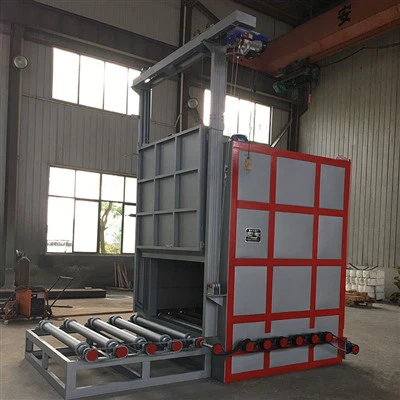
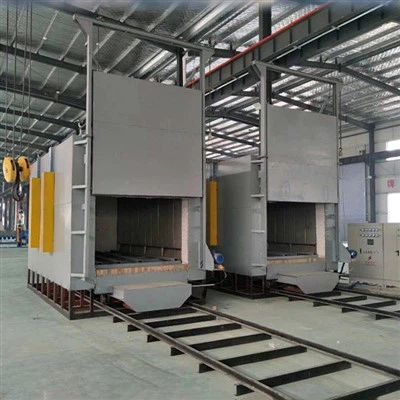
- Batch Quenching Furnaces: These furnaces are designed to process a single batch of workpieces at a time. They offer flexibility in terms of the size and quantity of workpieces that can be processed and can achieve a wide range of quenching temperatures. Batch quenching furnaces can typically reach temperatures up to 1200°C (2192°F).
- Continuous Quenching Furnaces: Continuous quenching furnaces are used for high-volume production applications. Workpieces are continuously fed through the furnace, allowing for a more efficient and consistent quenching process. These furnaces can also achieve high temperatures, typically up to 1100°C (2012°F).
- Mesh Belt Quenching Furnace: Mesh belt quenching furnaces are a type of continuous furnace that uses a mesh belt to transport the workpieces through the heating and quenching zones. They are commonly used for small to medium-sized workpieces and can achieve temperatures up to 950°C (1742°F).
- Forklift Quenching Furnace: Forklift quenching furnaces are specialized furnaces designed for quenching forklift components. They are typically capable of reaching temperatures between 800°C and 900°C (1472°F and 1652°F).
Importance of Precise Temperature Control
Maintaining precise temperature control in a quenching furnace is crucial for achieving consistent and high-quality results. Even small variations in temperature can have a significant impact on the mechanical properties of the quenched material. Our quenching furnaces are equipped with advanced temperature control systems that ensure accurate and uniform heating throughout the entire workpiece.
Customizing Quenching Furnaces for Specific Applications
As a quenching furnace supplier, we understand that every customer's needs are unique. That's why we offer customized quenching furnace solutions tailored to the specific requirements of each application. Whether you need a furnace with a specific temperature range, size, or capacity, our team of experts can work with you to design and build the perfect furnace for your needs.
Conclusion
The temperature range of a quenching furnace is a critical factor in the success of the quenching process. By understanding the specific temperature requirements of different materials and applications, we can provide our customers with the most suitable quenching furnace solutions. Our commitment to quality, precision, and customization ensures that our customers receive the best possible results from their quenching processes.
If you are in the market for a quenching furnace or have any questions about the temperature range or other aspects of our products, we encourage you to contact us for a free consultation and to discuss your specific requirements. Our team of experts is ready to help you find the perfect quenching furnace solution for your business.
References
- ASM Handbook, Volume 4: Heat Treating, ASM International
- Metals Handbook, Volume 2: Properties and Selection: Nonferrous Alloys and Special-Purpose Materials, ASM International