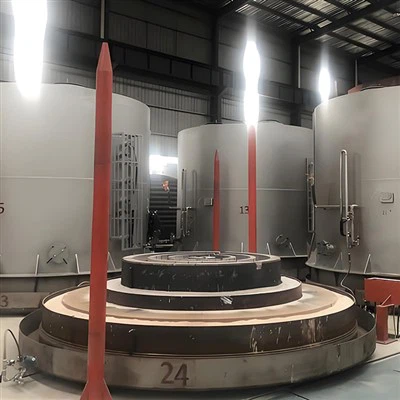
Hey there! As a supplier of bell type furnaces, I often get asked about temperature uniformity in these bad boys. So, let's dive right in and break down what temperature uniformity in a bell type furnace really means.
First off, what's a bell type furnace? Well, it's a pretty unique piece of equipment. You've got a bell - shaped cover that can be lifted up and down. These furnaces are used for all sorts of heat - treating processes like annealing, normalizing, and stress relieving. They come in different types such as the Bell Type Resistance Furnace, Bell Annealing Furnace, and Mobile Bell Type Furnace.

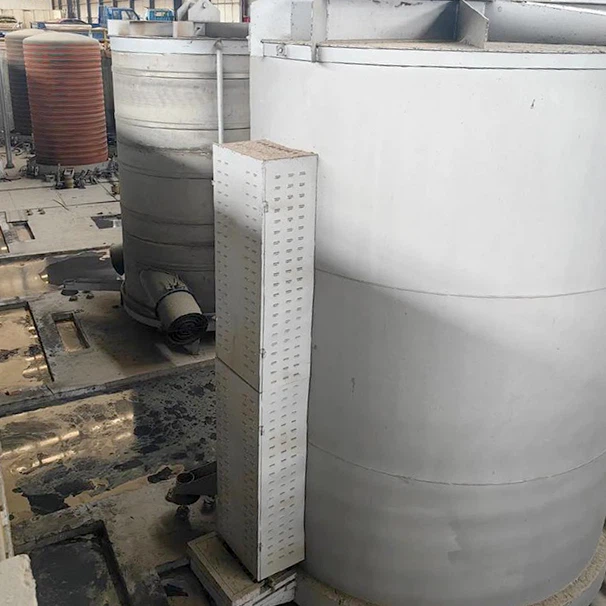
Now, temperature uniformity is super important in a bell type furnace. Think about it. When you're using a furnace for heat - treating, you want every part of the material you're working on to be at the same temperature. If there are hot spots and cold spots, it can lead to all sorts of problems. For example, in annealing, uneven temperatures can cause inconsistent material properties. Some parts of the metal might be too soft, while others are still hard and brittle. This can seriously affect the quality and performance of the final product.
So, how do we measure temperature uniformity in a bell type furnace? Well, it's usually done by placing multiple thermocouples at different locations inside the furnace. These thermocouples are like little temperature detectives. They constantly send back data on the temperature at their specific spots. By comparing the readings from all these thermocouples, we can figure out how uniform the temperature is.
The industry standard for temperature uniformity can vary depending on the application. In some cases, a variation of plus or minus 5 degrees Celsius might be acceptable. But for more precise applications, like in the aerospace or medical industries, the tolerance can be as low as plus or minus 1 degree Celsius. That's some seriously tight control!
There are several factors that can affect temperature uniformity in a bell type furnace. One of the big ones is the design of the heating elements. If the heating elements are not evenly spaced or if they're not working properly, it can create hot and cold spots. For example, if one heating element is stronger than the others, it'll heat up the area around it more, causing a temperature imbalance.
The airflow inside the furnace also plays a huge role. Good airflow helps to distribute the heat evenly. If the airflow is poor, the heat might just stay in one area, leaving other parts of the furnace cold. That's why many bell type furnaces are equipped with fans or blowers to improve the airflow.
The loading pattern of the materials in the furnace is another factor. If you stack the materials too closely together or in a way that blocks the airflow, it can disrupt the temperature distribution. You need to make sure there's enough space between the materials for the heat and air to circulate freely.
As a bell type furnace supplier, we take temperature uniformity very seriously. We use advanced design techniques to ensure that our furnaces have the best possible temperature distribution. Our engineers carefully select the heating elements and design the airflow system to minimize temperature variations.
We also offer regular maintenance services. Over time, the heating elements can wear out, and the fans might not work as efficiently. By performing regular maintenance, we can keep the furnace in top - notch condition and ensure that the temperature uniformity remains within the acceptable range.
When you're choosing a bell type furnace, it's crucial to consider the temperature uniformity capabilities. You don't want to end up with a furnace that can't give you consistent results. Look for a supplier who can provide detailed information about the temperature uniformity of their furnaces, like test reports and performance data.
If you're in the market for a bell type furnace and want to learn more about how we can ensure excellent temperature uniformity in our products, don't hesitate to reach out. We're always happy to have a chat and discuss your specific needs. Whether you're in the automotive industry, the electronics industry, or any other field that requires heat - treating, we've got the right furnace for you.
In conclusion, temperature uniformity is a key factor in the performance of a bell type furnace. It can make or break the quality of your heat - treated products. As a reliable supplier, we're committed to providing you with furnaces that offer the best temperature uniformity possible. So, if you're interested in purchasing a bell type furnace, get in touch with us, and let's start a conversation about how we can meet your requirements.
References
- ASM Handbook Volume 4: Heat Treating
- Industrial Furnace Handbook: Principles, Designs, and Operations