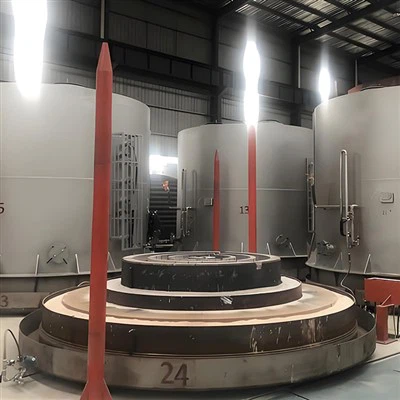
Hey there! As a supplier of Ion Nitriding Furnaces, I've been getting a lot of questions lately about how the frequency of the power supply affects the ion nitriding process in a furnace. So, I thought I'd take a few minutes to break it down for you.
First off, let's talk a bit about what ion nitriding is. It's a surface hardening process that uses a low-pressure plasma to introduce nitrogen into the surface of a metal component. This creates a hard, wear-resistant layer that can significantly improve the performance and lifespan of the part. And that's where our Ion Nitriding Furnace comes in – it's designed to provide the optimal environment for this process to take place.
Now, onto the main topic: the frequency of the power supply. The power supply frequency plays a crucial role in the ion nitriding process, and it can have a big impact on the quality of the nitrided layer and the overall efficiency of the process.
Low-Frequency Power Supply
Let's start with low-frequency power supplies. These typically operate in the range of 50 - 100 Hz. One of the main advantages of using a low-frequency power supply is that it can produce a relatively stable plasma. The ions in the plasma have more time to interact with the surface of the workpiece, which can result in a deeper and more uniform nitrided layer.
However, there are also some drawbacks. Low-frequency power supplies tend to have a lower ionization rate. This means that fewer nitrogen ions are available to react with the metal surface, which can slow down the nitriding process. Additionally, the low-frequency plasma can sometimes cause arcing, especially on complex-shaped workpieces. Arcing can damage the surface of the workpiece and lead to inconsistent nitriding results.
High-Frequency Power Supply
On the other hand, high-frequency power supplies operate at frequencies above 10 kHz. These power supplies offer several benefits. First of all, they have a much higher ionization rate. This means that more nitrogen ions are generated in the plasma, which can significantly speed up the nitriding process. High-frequency power supplies also tend to produce a more diffuse plasma, which can help to reduce the risk of arcing, even on complex-shaped parts.
But high-frequency power supplies aren't without their issues either. The high-frequency plasma can be more difficult to control, and it may not penetrate as deeply into the workpiece as a low-frequency plasma. This can result in a thinner nitrided layer, which may not be suitable for applications that require a high level of wear resistance.
Medium-Frequency Power Supply
There's also a middle ground: medium-frequency power supplies, which typically operate in the range of 1 - 10 kHz. These power supplies combine some of the best features of both low and high frequencies. They offer a relatively high ionization rate, which can speed up the nitriding process, while still maintaining a relatively stable plasma that can penetrate the workpiece to a reasonable depth.
In our experience, medium-frequency power supplies are often the best choice for most ion nitriding applications. They provide a good balance between speed, quality, and control.
Impact on the Nitrided Layer
The frequency of the power supply can also have a direct impact on the properties of the nitrided layer. For example, a low-frequency power supply may result in a nitrided layer with a more columnar structure. This type of structure can provide good wear resistance but may be more brittle. On the other hand, a high-frequency power supply may produce a nitrided layer with a more granular structure, which can be more ductile but may have slightly lower wear resistance.
Impact on the Furnace and Workpiece
The power supply frequency can also affect the furnace itself and the workpiece. High-frequency power supplies can generate more heat in the plasma, which may require additional cooling systems to prevent overheating of the furnace components. Additionally, the high-frequency electromagnetic fields can sometimes cause interference with other electronic equipment in the vicinity.
As for the workpiece, the frequency of the power supply can influence the distribution of heat during the nitriding process. This can affect the dimensional stability of the workpiece, especially if it has a complex shape or if it's made of a material that is sensitive to thermal stress.
Choosing the Right Frequency
So, how do you choose the right power supply frequency for your ion nitriding process? Well, it depends on several factors. The type of material you're nitriding, the desired properties of the nitrided layer, the shape and size of the workpiece, and the production volume all play a role.
If you're nitriding a simple-shaped workpiece made of a material that is easy to nitride, and you're looking for a deep and uniform nitrided layer, a low-frequency power supply might be a good choice. On the other hand, if you need to nitride a large number of complex-shaped parts quickly, a high-frequency or medium-frequency power supply may be more suitable.


At our company, we offer a range of Ion Nitriding Furnaces with different power supply frequencies to meet the diverse needs of our customers. We also have a team of experts who can help you select the right furnace and power supply frequency for your specific application.
Other Related Furnaces
In addition to our Ion Nitriding Furnaces, we also offer other types of furnaces that may be of interest to you. For example, our Nitrogen Protection Copper Bright Annealing Furnace is designed for annealing copper components in a nitrogen atmosphere, which can help to prevent oxidation and maintain the brightness of the copper surface. And our Pit Type Nitriding Furnace is ideal for nitriding large or long workpieces.
Wrapping Up
In conclusion, the frequency of the power supply is a critical factor in the ion nitriding process. It can affect the quality of the nitrided layer, the efficiency of the process, and the performance of the furnace and the workpiece. By understanding the pros and cons of different power supply frequencies, you can make an informed decision about which one is right for your application.
If you're interested in learning more about our Ion Nitriding Furnaces or any of our other heat treatment furnaces, or if you have any questions about the ion nitriding process, don't hesitate to reach out. We're here to help you find the best solution for your needs and to ensure that you get the most out of your heat treatment processes.
References
- Smith, J. (2018). "The Influence of Power Supply Frequency on Ion Nitriding Processes." Journal of Heat Treatment Technology.
- Johnson, A. (2019). "Advanced Ion Nitriding Techniques and Power Supply Considerations." International Journal of Surface Engineering.