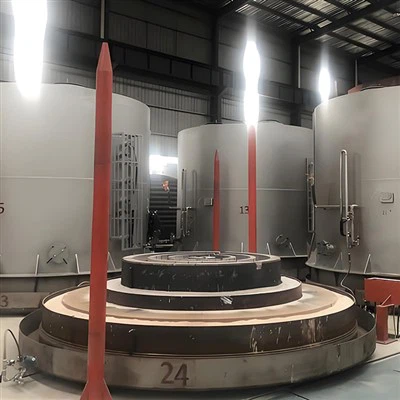
Hey there! As a supplier of Ion Nitriding Furnace, I've been getting a lot of questions about how ion current density affects the nitriding process. So, I thought I'd write this blog to share some insights.


First off, let's quickly go over what ion nitriding is. Ion nitriding is a surface hardening process that uses a low-pressure plasma to introduce nitrogen into the surface of a metal component. It's a really cool technology because it can significantly improve the wear resistance, corrosion resistance, and fatigue life of the treated parts. And that's why it's widely used in industries like automotive, aerospace, and tool manufacturing.
Now, let's talk about ion current density. Ion current density is basically the amount of electric current flowing per unit area in the ion nitriding process. It plays a crucial role in determining the quality and efficiency of the nitriding treatment.
Impact on Nitriding Rate
One of the most obvious effects of ion current density is on the nitriding rate. Generally speaking, a higher ion current density means more nitrogen ions are bombarding the surface of the workpiece. This leads to a faster diffusion of nitrogen into the metal, which in turn speeds up the nitriding process.
For example, if you're treating a batch of small parts and you increase the ion current density, you'll notice that the nitriding layer forms much quicker. This can be a huge advantage if you're looking to increase your production efficiency. However, it's not all about speed. You also need to make sure that the quality of the nitriding layer is up to par.
Influence on Nitriding Layer Quality
The quality of the nitriding layer is another important aspect affected by ion current density. A proper ion current density can help create a uniform and dense nitriding layer. When the ion current density is too low, the nitrogen diffusion may be insufficient, resulting in a thin and uneven nitriding layer. On the other hand, if the ion current density is too high, it can cause overheating of the workpiece surface, which may lead to the formation of a brittle compound layer or even damage the surface structure.
Let's say you're using an Ion Nitriding Furnace to treat a high - precision tool. You need to carefully control the ion current density to ensure that the nitriding layer has the right hardness, thickness, and structure. Otherwise, the tool may not perform as expected in real - world applications.
Effect on Workpiece Temperature
Ion current density also has a significant impact on the temperature of the workpiece during the nitriding process. As the ion current density increases, more energy is transferred to the workpiece surface, causing the temperature to rise. This is because the bombardment of nitrogen ions releases a large amount of kinetic energy, which is converted into heat.
Maintaining the right workpiece temperature is crucial for a successful nitriding process. Different materials have different optimal nitriding temperatures. For instance, some steels require a relatively low temperature to avoid grain growth and maintain their mechanical properties. So, you need to adjust the ion current density to keep the workpiece temperature within the appropriate range.
Considerations for Different Furnace Types
We offer different types of nitriding furnaces, such as Pit Type Nitriding Furnace and Vacuum Nitriding Furnace. Each type has its own characteristics when it comes to ion current density control.
In a pit - type nitriding furnace, the large volume and vertical structure may require a more uniform distribution of ion current density. You need to ensure that all parts of the workpiece are exposed to an appropriate amount of nitrogen ions. This may involve adjusting the electrode configuration and power supply settings.
On the other hand, a vacuum nitriding furnace operates under a low - pressure environment. The ion current density in a vacuum nitriding furnace can be more precisely controlled, which is beneficial for treating high - quality and complex - shaped workpieces. However, you still need to pay attention to the interaction between the ion current density and the vacuum level to achieve the best nitriding results.
Finding the Optimal Ion Current Density
So, how do you find the optimal ion current density for your nitriding process? Well, it depends on several factors, including the material of the workpiece, the desired nitriding layer properties, and the type of furnace you're using.
You can start by referring to some industry standards and previous experience. Many materials have recommended ion current density ranges based on extensive research and practical applications. However, these are just guidelines. You may need to conduct some trial runs to fine - tune the ion current density for your specific requirements.
During the trial runs, you can use various testing methods to evaluate the quality of the nitriding layer, such as hardness testing, microstructure analysis, and thickness measurement. Based on the test results, you can adjust the ion current density accordingly until you achieve the desired nitriding effect.
Conclusion
In conclusion, ion current density is a key parameter in the ion nitriding process. It affects the nitriding rate, layer quality, and workpiece temperature. As a supplier of Ion Nitriding Furnace, we understand the importance of getting this right. Whether you're using a pit - type nitriding furnace or a vacuum nitriding furnace, proper control of ion current density can make a big difference in the quality and efficiency of your nitriding treatment.
If you're interested in learning more about ion nitriding or are looking to purchase an ion nitriding furnace, don't hesitate to contact us. We're here to help you find the best solution for your needs and ensure that you get the most out of your nitriding process.
References
- Smith, J. (2018). "Advanced Surface Hardening Techniques". Elsevier.
- Johnson, A. (2020). "Ion Nitriding: Principles and Applications". Springer.