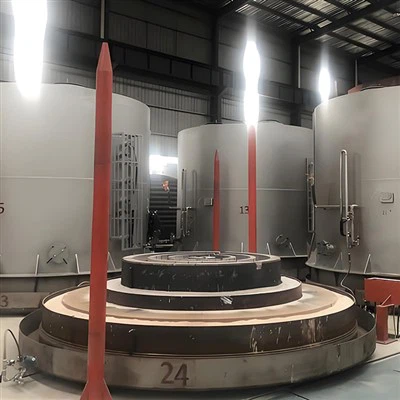
Ion nitriding is a thermochemical surface treatment process that has gained significant popularity in various industries due to its ability to enhance the surface properties of metallic components. As a supplier of Ion Nitriding Furnace, I understand the importance of optimizing the ion nitriding process to achieve better results. In this blog post, I will share some key strategies and considerations for optimizing the ion nitriding process in a furnace.
Understanding the Basics of Ion Nitriding
Before delving into the optimization strategies, it is essential to have a basic understanding of the ion nitriding process. Ion nitriding involves the diffusion of nitrogen atoms into the surface of a metal component under the influence of an electric field. This process is typically carried out in a vacuum chamber filled with a nitrogen-containing gas, such as ammonia or a mixture of nitrogen and hydrogen.
The ion nitriding process consists of several stages, including pre-treatment, heating, nitriding, and post-treatment. During the pre-treatment stage, the components are cleaned and degreased to remove any contaminants that could affect the nitriding process. The heating stage involves raising the temperature of the components to the nitriding temperature, which is typically in the range of 450°C to 600°C.
Once the components reach the nitriding temperature, a direct current or pulsed voltage is applied between the components (cathode) and the furnace wall (anode). This creates a glow discharge, which ionizes the nitrogen-containing gas and accelerates the nitrogen ions towards the surface of the components. The nitrogen ions then react with the metal atoms on the surface to form a nitride layer, which improves the hardness, wear resistance, and corrosion resistance of the components.
After the nitriding stage, the components are cooled down slowly to room temperature. The post-treatment stage may involve additional processes, such as polishing or coating, to further enhance the surface properties of the components.
Key Factors Affecting the Ion Nitriding Process
Several factors can affect the quality and efficiency of the ion nitriding process. Understanding these factors is crucial for optimizing the process and achieving better results. Some of the key factors include:
Temperature
The nitriding temperature plays a critical role in the ion nitriding process. Higher temperatures generally result in faster nitriding rates and thicker nitride layers. However, excessive temperatures can also lead to grain growth, which can reduce the mechanical properties of the components. Therefore, it is essential to select the appropriate nitriding temperature based on the material of the components and the desired properties of the nitride layer.
Gas Composition
The composition of the nitrogen-containing gas used in the ion nitriding process can also affect the quality of the nitride layer. Different gases, such as ammonia, nitrogen, and hydrogen, have different effects on the nitriding process. For example, ammonia is a commonly used gas in ion nitriding because it provides a high concentration of nitrogen ions and promotes the formation of a hard and dense nitride layer. However, ammonia can also produce a white layer on the surface of the components, which may need to be removed during the post-treatment stage.
Gas Pressure
The gas pressure in the furnace during the ion nitriding process can also affect the nitriding rate and the quality of the nitride layer. Lower gas pressures generally result in faster nitriding rates and thinner nitride layers, while higher gas pressures can lead to slower nitriding rates and thicker nitride layers. Therefore, it is essential to select the appropriate gas pressure based on the material of the components and the desired properties of the nitride layer.
Time
The nitriding time is another important factor that affects the thickness and quality of the nitride layer. Longer nitriding times generally result in thicker nitride layers, but they can also increase the risk of grain growth and other defects. Therefore, it is essential to optimize the nitriding time based on the material of the components, the nitriding temperature, and the desired properties of the nitride layer.
Surface Preparation
The surface preparation of the components before the ion nitriding process is crucial for achieving a uniform and high-quality nitride layer. Any contaminants, such as oil, grease, or oxide layers, can prevent the nitrogen ions from reaching the surface of the components and affect the nitriding process. Therefore, it is essential to clean and degrease the components thoroughly before the pre-treatment stage.
Optimization Strategies for the Ion Nitriding Process
Based on the key factors affecting the ion nitriding process, several optimization strategies can be implemented to achieve better results. Some of these strategies include:
Process Control
Implementing a comprehensive process control system is essential for optimizing the ion nitriding process. This system should monitor and control all the key process parameters, such as temperature, gas composition, gas pressure, and time. By maintaining precise control over these parameters, it is possible to ensure consistent and repeatable results.
Advanced Furnace Design
The design of the ion nitriding furnace can also have a significant impact on the quality and efficiency of the process. Advanced furnace designs, such as Vacuum Nitriding Furnace, can provide better temperature uniformity, gas distribution, and electrical field control. This can result in more uniform nitride layers and improved process efficiency.
Pulse Plasma Technology
Pulse plasma technology is a recent development in the field of ion nitriding that offers several advantages over traditional direct current ion nitriding. Pulse plasma technology involves applying a pulsed voltage to the components instead of a continuous direct current. This creates a more stable glow discharge and allows for better control of the nitriding process. Pulse plasma technology can also reduce the formation of the white layer and improve the adhesion of the nitride layer to the substrate.
Pre-Treatment and Post-Treatment
Proper pre-treatment and post-treatment of the components are essential for optimizing the ion nitriding process. Pre-treatment processes, such as cleaning and degreasing, can remove any contaminants that could affect the nitriding process. Post-treatment processes, such as polishing or coating, can further enhance the surface properties of the components and improve their performance in service.
Material Selection
The selection of the appropriate material for the components is also crucial for optimizing the ion nitriding process. Different materials have different nitriding characteristics, and some materials may require specific process parameters to achieve the desired properties. Therefore, it is essential to select the material based on the application requirements and the capabilities of the ion nitriding process.
Conclusion
Optimizing the ion nitriding process in a furnace is essential for achieving better results and improving the performance of metallic components. By understanding the key factors affecting the ion nitriding process and implementing the appropriate optimization strategies, it is possible to enhance the quality, efficiency, and consistency of the process.


As a supplier of Ion Nitriding Furnace, we are committed to providing our customers with high-quality equipment and technical support to help them optimize their ion nitriding processes. If you are interested in learning more about our products or have any questions about the ion nitriding process, please feel free to contact us. We look forward to discussing your specific requirements and helping you achieve your goals.
References
- Bell, T. (2008). Ion nitriding: past, present and future. Surface Engineering, 24(5), 341-349.
- Klemberg-Sapieha, J. E., & Martinu, L. (2009). Plasma surface engineering of thin films and coatings. John Wiley & Sons.
- Rickerby, D. S., & Mattox, D. M. (1994). Handbook of deposition technologies for films and coatings: science, engineering, and applications. Noyes Publications.