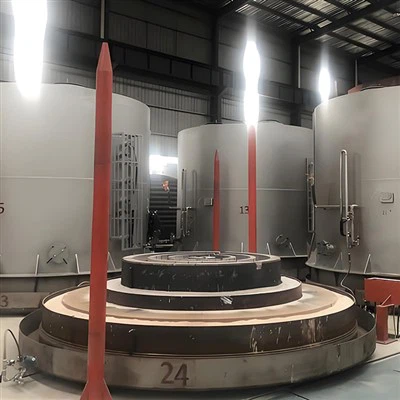
A muffle annealing furnace is a specialized piece of equipment widely used in various industries for heat treatment processes. As an annealing furnace supplier, I have witnessed firsthand the diverse applications of muffle annealing furnaces and their significant impact on improving the quality and performance of materials. In this blog post, I will explore the various applications of muffle annealing furnaces and discuss how they contribute to different industrial processes.
Metallurgical Industry
One of the primary applications of muffle annealing furnaces is in the metallurgical industry. Metals such as steel, aluminum, copper, and their alloys often require heat treatment to enhance their mechanical properties, including hardness, strength, ductility, and toughness. Muffle annealing furnaces provide a controlled environment for heating and cooling metals, allowing for precise control of the annealing process.
- Stress Relief: During the manufacturing process, metals can accumulate internal stresses due to processes such as machining, welding, or cold working. These stresses can lead to distortion, cracking, or reduced mechanical properties. Muffle annealing furnaces are used to relieve these internal stresses by heating the metal to a specific temperature and holding it for a certain period, followed by a slow cooling process. This helps to restore the metal's original structure and reduce the risk of failure.
- Softening: In some cases, metals need to be softened to facilitate further processing, such as machining or forming. Muffle annealing furnaces can be used to heat the metal to a temperature above its recrystallization temperature, causing the grains to grow and the metal to become softer. This process is commonly used for metals such as stainless steel, which can be difficult to machine in their as-cast or cold-worked state.
- Normalizing: Normalizing is a heat treatment process used to refine the grain structure of metals and improve their mechanical properties. Muffle annealing furnaces are used to heat the metal to a temperature above its upper critical temperature and then air-cool it. This results in a more uniform grain structure and improved strength and toughness.
Glass Industry
The glass industry also relies heavily on muffle annealing furnaces for the production of high-quality glass products. Glass is a brittle material that can easily crack or shatter if it is not properly annealed. Muffle annealing furnaces provide a controlled environment for heating and cooling glass, allowing for the removal of internal stresses and the improvement of its mechanical properties.


- Annealing of Glassware: Glassware, such as bottles, jars, and drinking glasses, is typically annealed to remove internal stresses and prevent cracking during use. Muffle annealing furnaces are used to heat the glassware to a specific temperature and hold it for a certain period, followed by a slow cooling process. This helps to ensure that the glassware is strong and durable.
- Annealing of Optical Glass: Optical glass, used in lenses, prisms, and other optical components, requires a high level of precision and quality. Muffle annealing furnaces are used to anneal optical glass to remove internal stresses and improve its optical properties, such as refractive index and homogeneity. This ensures that the optical components have the desired performance and accuracy.
Ceramics Industry
In the ceramics industry, muffle annealing furnaces are used for the firing and annealing of ceramic products. Ceramics are made from inorganic materials, such as clay, feldspar, and quartz, and require high temperatures to transform them into a hard and durable material. Muffle annealing furnaces provide a controlled environment for heating and cooling ceramics, allowing for the proper densification and crystallization of the material.
- Firing of Ceramics: Firing is the process of heating ceramics to a high temperature to transform them from a soft and porous material into a hard and dense material. Muffle annealing furnaces are used to fire ceramics at temperatures ranging from 800°C to 1600°C, depending on the type of ceramic material. The firing process helps to remove any remaining moisture, organic matter, and volatile substances from the ceramics, and also promotes the formation of strong chemical bonds between the particles.
- Annealing of Ceramics: After firing, ceramics may still contain internal stresses due to the rapid cooling process. Muffle annealing furnaces are used to anneal ceramics to remove these internal stresses and improve their mechanical properties. The annealing process involves heating the ceramics to a specific temperature and holding it for a certain period, followed by a slow cooling process. This helps to ensure that the ceramics are strong and resistant to cracking.
Semiconductor Industry
The semiconductor industry is another important application area for muffle annealing furnaces. Semiconductors are materials that have electrical conductivity between that of a conductor and an insulator, and are used in a wide range of electronic devices, such as computers, smartphones, and televisions. Muffle annealing furnaces are used for the annealing of semiconductor wafers to improve their electrical properties and reduce defects.
- Annealing of Semiconductor Wafers: Semiconductor wafers are thin slices of semiconductor material, such as silicon or gallium arsenide, that are used as the substrate for the fabrication of electronic devices. Muffle annealing furnaces are used to anneal semiconductor wafers at high temperatures to remove defects, such as dislocations and impurities, and to improve the electrical properties of the material. The annealing process helps to reduce the resistivity of the semiconductor material and improve the performance of the electronic devices.
- Rapid Thermal Annealing (RTA): Rapid thermal annealing is a specialized annealing process used in the semiconductor industry to achieve high-temperature annealing in a short period of time. Muffle annealing furnaces can be equipped with rapid heating and cooling systems to perform RTA. This process is commonly used for the annealing of shallow junctions and the activation of dopants in semiconductor devices.
Other Applications
In addition to the above industries, muffle annealing furnaces have a wide range of other applications, including:
- Jewelry Making: Muffle annealing furnaces are used in jewelry making to anneal precious metals, such as gold, silver, and platinum, to make them softer and more malleable. This allows for easier shaping and forming of the jewelry.
- Research and Development: Muffle annealing furnaces are used in research and development laboratories for the heat treatment of various materials, such as polymers, composites, and biomaterials. This helps researchers to study the effects of heat treatment on the properties of these materials and develop new materials with improved performance.
- Quality Control: Muffle annealing furnaces are used in quality control laboratories to test the mechanical properties of materials, such as hardness, strength, and ductility. This helps to ensure that the materials meet the required standards and specifications.
Conclusion
In conclusion, muffle annealing furnaces are versatile and essential equipment used in a wide range of industries for heat treatment processes. Their ability to provide a controlled environment for heating and cooling materials allows for precise control of the annealing process, resulting in improved mechanical properties, reduced defects, and enhanced performance of materials. As an annealing furnace supplier, we offer a variety of muffle annealing furnaces, including Pit Type Annealing Furnace, Rapid Annealing Furnace, and Trolley Annealing Furnace, to meet the specific needs of our customers. If you are interested in learning more about our annealing furnaces or have any questions about their applications, please feel free to contact us for further information and to discuss your procurement needs.
References
- ASM Handbook Volume 4: Heat Treating. ASM International, 1991.
- Heat Treatment Principles and Techniques. R. A. Grange, H. J. Aaronson, and H. I. Aaronson, eds. ASM International, 1977.
- The Science and Engineering of Materials. Donald R. Askeland and Pradeep P. Phule. Cengage Learning, 2010.