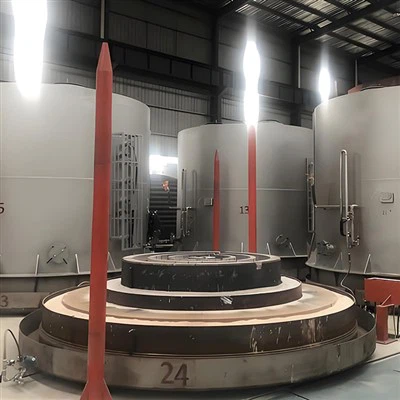
The ion nitriding process is a thermochemical treatment that enhances the surface properties of metal components. In an ion nitriding furnace, the anode plays a crucial role in facilitating this process. As a leading supplier of Ion Nitriding Furnace, I will delve into the functions and significance of the anode in an ion nitriding furnace.
Understanding the Basics of Ion Nitriding
Before we explore the role of the anode, it's essential to understand the fundamental principles of ion nitriding. Ion nitriding, also known as plasma nitriding, is a surface hardening process that involves the diffusion of nitrogen into the surface of a metal component to form nitrides. This process is carried out in a vacuum chamber filled with a nitrogen-rich gas mixture, typically a combination of nitrogen and hydrogen.


When a high voltage is applied between the cathode (the workpiece) and the anode, a glow discharge is created. The glow discharge ionizes the gas molecules in the chamber, producing a plasma of ions and electrons. The nitrogen ions are accelerated towards the cathode by the electric field and bombard the surface of the workpiece. This bombardment causes the nitrogen ions to penetrate the surface of the metal and react with the metal atoms to form nitrides.
The Role of the Anode in Ion Nitriding
The anode in an ion nitriding furnace serves several important functions:
1. Glow Discharge Initiation and Maintenance
The anode is essential for initiating and maintaining the glow discharge in the ion nitriding furnace. When a high voltage is applied between the cathode and the anode, the electric field causes the gas molecules in the chamber to ionize, creating a plasma. The anode provides a path for the electrons to flow back to the power supply, completing the electrical circuit. Without the anode, the glow discharge would not be able to form or be sustained.
2. Plasma Generation
The anode plays a crucial role in generating the plasma in the ion nitriding furnace. The plasma is a highly energetic state of matter consisting of ions, electrons, and neutral particles. The nitrogen ions in the plasma are responsible for the nitriding process, as they are accelerated towards the cathode and bombard the surface of the workpiece. The anode helps to create and maintain the plasma by providing a source of electrons and by controlling the distribution of the electric field in the chamber.
3. Temperature Control
The anode can also be used to control the temperature of the workpiece during the ion nitriding process. The glow discharge generates heat, which can cause the temperature of the workpiece to rise. By adjusting the voltage and current applied to the anode, the intensity of the glow discharge can be controlled, which in turn affects the temperature of the workpiece. This allows for precise control of the nitriding process and ensures that the workpiece is heated to the desired temperature for the appropriate amount of time.
4. Uniformity of Nitriding
The design and placement of the anode can have a significant impact on the uniformity of the nitriding process. A well-designed anode can help to ensure that the plasma is evenly distributed around the workpiece, resulting in a more uniform nitriding layer. This is particularly important for complex-shaped workpieces, where uneven nitriding can lead to variations in the surface properties of the component.
Types of Anodes Used in Ion Nitriding Furnaces
There are several types of anodes that can be used in ion nitriding furnaces, each with its own advantages and disadvantages:
1. Chamber Wall Anode
The chamber wall anode is the simplest and most common type of anode used in ion nitriding furnaces. In this configuration, the inner wall of the furnace chamber acts as the anode. The chamber wall anode provides a large surface area for the glow discharge to occur, which helps to ensure a uniform plasma distribution. However, the chamber wall anode can be difficult to clean and maintain, as it is in direct contact with the plasma and can become coated with nitrides over time.
2. Grid Anode
The grid anode consists of a series of parallel wires or rods that are placed around the workpiece. The grid anode provides a more controlled and uniform electric field compared to the chamber wall anode, which can result in a more uniform nitriding layer. The grid anode is also easier to clean and maintain than the chamber wall anode, as it can be removed from the furnace for cleaning. However, the grid anode can be more expensive to manufacture and install than the chamber wall anode.
3. Segmented Anode
The segmented anode is a more advanced type of anode that consists of multiple segments that can be independently controlled. The segmented anode allows for more precise control of the plasma distribution and temperature in the furnace, which can result in a more uniform and consistent nitriding process. The segmented anode is particularly useful for complex-shaped workpieces or for applications where a high degree of control is required. However, the segmented anode is more expensive and complex to operate than the other types of anodes.
Considerations for Anode Design and Selection
When designing and selecting an anode for an ion nitriding furnace, several factors need to be considered:
1. Workpiece Geometry
The geometry of the workpiece is an important consideration when selecting an anode. Complex-shaped workpieces may require a more advanced anode design, such as a segmented anode, to ensure a uniform nitriding layer. The size and shape of the workpiece also need to be taken into account when determining the size and placement of the anode.
2. Nitriding Requirements
The specific nitriding requirements of the application, such as the desired nitriding depth, hardness, and surface finish, will also influence the choice of anode. Different types of anodes may be more suitable for different nitriding processes or for achieving specific surface properties.
3. Furnace Design
The design of the ion nitriding furnace itself can also affect the choice of anode. The size and shape of the furnace chamber, the type of power supply, and the presence of other components in the furnace can all impact the performance of the anode.
4. Cost and Maintenance
The cost and maintenance requirements of the anode are also important considerations. Some types of anodes may be more expensive to manufacture and install, while others may require more frequent cleaning and maintenance. The overall cost of ownership of the anode, including the initial purchase price, operating costs, and maintenance costs, should be taken into account when making a decision.
Conclusion
In conclusion, the anode plays a crucial role in the ion nitriding process. It is responsible for initiating and maintaining the glow discharge, generating the plasma, controlling the temperature, and ensuring the uniformity of the nitriding layer. The choice of anode depends on several factors, including the workpiece geometry, nitriding requirements, furnace design, and cost and maintenance considerations.
As a supplier of Ion Nitriding Furnace, Pit Type Nitriding Furnace, and Vacuum Nitriding Furnace, we understand the importance of the anode in the ion nitriding process. We offer a range of high-quality anodes and furnace systems that are designed to meet the specific needs of our customers. If you are interested in learning more about our products or have any questions about the ion nitriding process, please contact us to discuss your requirements and explore potential partnerships.
References
- [1] Somers, Marcel A. J., and Rajeev Kumar. "Ion nitriding and plasma nitriding: processes, materials, and applications." Surface and Coatings Technology 204.7 (2009): 1044-1054.
- [2] Bell, T. "Ion nitriding: a review." Journal of Materials Processing Technology 63.1-3 (1997): 10-17.
- [3] Doernberg, R., and G. Erkens. "Ion nitriding technology and its applications." Heat Treatment of Metals 23.2 (1996): 43-49.