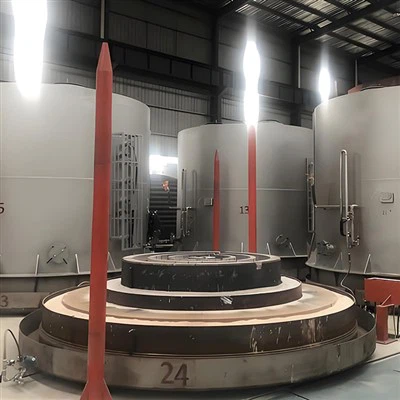
Hey there! As a supplier of aging furnaces, I've seen a lot of different models with various heat - retention capabilities. And let me tell you, these differences can have a huge impact on your operations. So, in this blog, I'm gonna break down the distinctions between aging furnaces with different heat - retention capabilities.
First off, let's talk about what heat retention means in the context of aging furnaces. Heat retention refers to the ability of a furnace to hold onto the heat that's generated inside it. A furnace with good heat retention can maintain a stable temperature for a longer period, which is super important for the aging process.
High Heat - Retention Aging Furnaces
High heat - retention aging furnaces are like the energy - efficient powerhouses of the furnace world. They're designed to minimize heat loss, which means they use less energy to maintain the desired temperature. How do they achieve this? Well, it's all about the insulation. These furnaces are typically built with thick, high - quality insulation materials that act as a barrier between the hot interior and the cooler exterior.
One of the biggest advantages of high heat - retention furnaces is cost - savings. Since they use less energy, your electricity or gas bills will be lower in the long run. For example, if you're running a large - scale manufacturing operation, the savings can really add up over time.
Another benefit is the consistent temperature control. In the aging process, temperature consistency is key. High heat - retention furnaces can keep the temperature within a very narrow range, which ensures that your products are aged evenly. This is especially important for industries like aerospace and automotive, where the quality and performance of the materials are critical.
If you're interested in high - end aging furnaces, you might want to check out our Trolley Type Aluminum Alloy Aging Furnace. It's designed with top - notch insulation to provide excellent heat retention and precise temperature control.
Low Heat - Retention Aging Furnaces
On the other hand, low heat - retention aging furnaces have their own place in the market. These furnaces are usually less expensive to purchase upfront. They might not have the thick insulation of high - heat retention models, but they can still get the job done for some applications.
Low heat - retention furnaces are more suitable for small - scale operations or for projects where the aging process doesn't require extremely precise temperature control. For instance, if you're doing some basic metal aging in a small workshop, a low - heat retention furnace might be a cost - effective option.
However, there are some drawbacks. These furnaces tend to use more energy because they lose heat more quickly. You'll have to keep the heating elements running more often to maintain the desired temperature. This can lead to higher operating costs over time. Also, the temperature fluctuations can be more significant, which might affect the quality of the aged products.
If you're looking for a more budget - friendly option, our Aluminum Aging Furnace could be a good choice. It offers a balance between cost and performance, although it has relatively lower heat retention compared to our high - end models.
Medium Heat - Retention Aging Furnaces
Medium heat - retention aging furnaces are a sort of middle ground. They offer a compromise between the high - end, energy - efficient models and the low - cost, less - precise ones. These furnaces usually have insulation that's better than the low - heat retention models but not as thick as the high - heat retention ones.
The advantage of medium heat - retention furnaces is that they can provide a decent level of temperature control at a reasonable cost. They're suitable for medium - sized businesses that need a bit more precision than what a low - heat retention furnace can offer but don't want to invest in a high - end model.
Our Aluminum Wire Aging Furnace falls into this category. It's designed to meet the needs of many common aging applications, offering a good balance between heat retention, cost, and performance.
Impact on Product Quality
The heat - retention capability of an aging furnace can have a direct impact on the quality of the products being aged. In high - heat retention furnaces, the consistent temperature ensures that the internal structure of the materials is properly formed. This leads to products with better mechanical properties, such as higher strength and improved durability.
In contrast, low - heat retention furnaces with their temperature fluctuations can cause uneven aging. This might result in products that have inconsistent properties. For example, in metal aging, uneven aging can lead to areas of the metal being weaker than others, which can be a big problem in applications where reliability is crucial.
Maintenance Considerations
Maintenance is another aspect to consider when it comes to aging furnaces with different heat - retention capabilities. High - heat retention furnaces usually require less frequent maintenance because the stable temperature environment is less stressful on the components. The insulation also helps protect the internal parts from external factors.
Low - heat retention furnaces, on the other hand, might need more attention. The constant cycling of the heating elements due to heat loss can wear them out faster. You'll also need to keep an eye on the insulation to make sure it's still providing some level of heat retention.
Choosing the Right Furnace
So, how do you choose the right aging furnace based on heat - retention capabilities? Well, it all depends on your specific needs. If you're running a large - scale operation with strict quality requirements and you're looking for long - term cost savings, a high - heat retention furnace is probably the way to go.
If you're on a tight budget and your aging requirements aren't too demanding, a low - heat retention furnace could be a viable option. And if you're in the middle, a medium - heat retention furnace might be the perfect fit.


At the end of the day, we're here to help you make the best decision. Whether you have questions about the technical details or need advice on which furnace is right for your business, don't hesitate to reach out. We're always ready to have a chat and discuss your specific requirements. If you're interested in purchasing an aging furnace or want to learn more about our products, feel free to contact us for a detailed discussion.
References
- Smith, J. (2020). Heat Treatment Furnaces: Principles and Applications. Industrial Press.
- Johnson, A. (2019). The Impact of Temperature Control in Aging Processes. Journal of Materials Science.