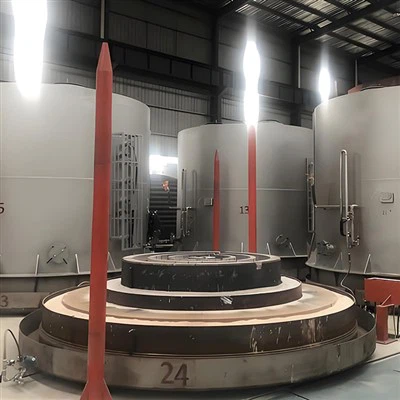
As a reputable rapid quenching furnace supplier, ensuring the quality of the quenching process is of utmost importance. In this blog, I will delve into the various quality control methods for the quenching process in a rapid quenching furnace.
Understanding the Quenching Process
Quenching is a heat treatment process that involves heating a material to a specific temperature and then rapidly cooling it. This process is crucial for altering the material's mechanical properties, such as hardness, strength, and toughness. In a rapid quenching furnace, the speed of cooling is significantly higher compared to conventional quenching methods, which can lead to more desirable material properties.
Quality Control Methods
Temperature Control
One of the most critical aspects of the quenching process is temperature control. The heating and cooling rates must be precisely regulated to achieve the desired material properties. In a rapid quenching furnace, advanced temperature sensors are used to monitor the temperature inside the furnace continuously. These sensors are connected to a control system that can adjust the heating elements and cooling mechanisms to maintain the desired temperature profile.
For example, during the heating phase, the furnace must reach the specific austenitizing temperature for the material being treated. If the temperature is too low, the material may not fully transform into austenite, resulting in inadequate hardness. On the other hand, if the temperature is too high, the material may experience grain growth, which can reduce its toughness.
During the cooling phase, the rate of cooling is equally important. A rapid quenching furnace uses a variety of cooling media, such as oil, water, or gas, to achieve the desired cooling rate. The control system monitors the temperature of the cooling media and adjusts the flow rate to ensure a consistent cooling rate throughout the quenching process.
Quenching Media Management
The choice of quenching media plays a significant role in the quality of the quenching process. Different materials require different quenching media to achieve the desired properties. For example, oil is commonly used for quenching steels because it provides a slower cooling rate compared to water, which helps to reduce the risk of cracking.
As a rapid quenching furnace supplier, we offer a range of quenching media options to meet the specific needs of our customers. We also provide guidance on the proper use and maintenance of the quenching media to ensure optimal performance.
In addition to the choice of quenching media, the quality of the media itself must be carefully monitored. Over time, the quenching media can become contaminated with impurities, such as dirt, debris, and oxidation products. These impurities can affect the cooling rate and the quality of the quenched material. Therefore, regular filtration and maintenance of the quenching media are essential to ensure consistent results.
Material Handling and Fixturing
Proper material handling and fixturing are also important for quality control in the quenching process. The material being quenched must be properly positioned and supported in the furnace to ensure uniform heating and cooling. If the material is not properly positioned, it may experience uneven temperature distribution, which can lead to distortion and cracking.
As a rapid quenching furnace supplier, we offer a variety of fixturing options to ensure proper material handling during the quenching process. Our fixturing systems are designed to hold the material securely in place and allow for uniform heat transfer.
In addition to fixturing, the material must be handled carefully during the loading and unloading process. Any damage or deformation to the material during handling can affect its quality and performance. Therefore, we provide training and guidelines on proper material handling techniques to our customers.
Process Monitoring and Documentation
Continuous process monitoring and documentation are essential for quality control in the quenching process. By monitoring the key process parameters, such as temperature, time, and cooling rate, we can ensure that the quenching process is consistent and repeatable.
Our rapid quenching furnaces are equipped with advanced monitoring systems that can record and store process data in real-time. This data can be used to analyze the process performance, identify any potential issues, and make adjustments as needed.
In addition to process monitoring, we also provide detailed documentation of the quenching process for our customers. This documentation includes the process parameters, the material specifications, and the test results. This information can be used for quality control purposes, as well as for compliance with industry standards and regulations.
Our Rapid Quenching Furnace Products
As a leading rapid quenching furnace supplier, we offer a wide range of high-quality products to meet the diverse needs of our customers. Our product portfolio includes Natural Gas Rapid Quenching Furnace and Forklift Type Rapid Quenching Furnace.
Our natural gas rapid quenching furnace is designed for high-efficiency and energy-saving operation. It uses natural gas as the heating source, which provides a clean and cost-effective solution for heat treatment. The furnace is equipped with advanced temperature control and monitoring systems to ensure precise and consistent quenching results.
Our forklift type rapid quenching furnace is a versatile and flexible solution for quenching large and heavy workpieces. It features a forklift loading and unloading system, which allows for easy and efficient handling of the workpieces. The furnace is also equipped with a high-speed cooling system to achieve rapid quenching rates.
Conclusion
In conclusion, quality control is essential for the quenching process in a rapid quenching furnace. By implementing the various quality control methods discussed in this blog, such as temperature control, quenching media management, material handling and fixturing, and process monitoring and documentation, we can ensure that our customers achieve consistent and high-quality quenching results.


As a rapid quenching furnace supplier, we are committed to providing our customers with the highest level of quality and service. Our products are designed to meet the most demanding requirements of the heat treatment industry, and our team of experts is always available to provide technical support and guidance.
If you are interested in learning more about our rapid quenching furnace products or have any questions about the quenching process, please do not hesitate to contact us. We look forward to the opportunity to discuss your specific needs and provide you with a customized solution.
References
- ASM Handbook, Volume 4: Heat Treating. ASM International.
- Heat Treating: Principles and Processes. by George E. Totten and M. Arif Inal.
- Steel Heat Treatment: Metallurgy and Technologies. by George E. Totten and David Scott MacKenzie.