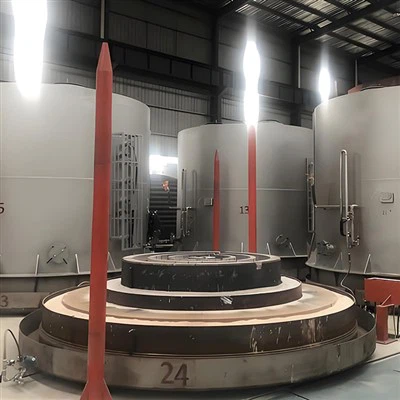
Hey there! As a supplier of aging furnaces, I've had my fair share of chats with folks about what makes a great aging furnace, especially when it comes to insulation performance. So, let's dig into what the insulation performance requirements are for an aging furnace.
First off, why is insulation so important in an aging furnace? Well, think about it. An aging furnace is all about heat treatment. You're trying to keep a specific temperature for a certain period to achieve the desired material properties. If the insulation isn't up to par, you're going to lose a ton of heat. That means higher energy costs, inconsistent temperatures inside the furnace, and ultimately, a less efficient and effective heat - treating process.
Temperature Retention
One of the key insulation performance requirements is temperature retention. When you set an aging furnace to a specific temperature, say 200°C or 300°C, you want it to stay there as steadily as possible. Good insulation materials act as a barrier, preventing heat from escaping to the outside environment.
For example, in an Aluminum Wire Aging Furnace, the wire is being aged to improve its electrical conductivity and mechanical properties. If the furnace can't hold the temperature, the wire might not age properly, leading to sub - standard products. The insulation needs to be thick enough and made of high - quality materials like ceramic fiber blankets or refractory bricks. These materials have low thermal conductivity, which means they don't let heat pass through easily.
Energy Efficiency
Energy efficiency is closely related to temperature retention. A well - insulated aging furnace uses less energy to maintain the set temperature. This is a big deal for businesses because energy costs can really add up over time.
Let's say you're running an Aluminum Aging Furnace for a large - scale production. If the insulation is poor, the furnace has to work harder, using more electricity or gas to keep the heat. On the other hand, a furnace with good insulation can save you a significant amount of money on energy bills. It's like having a well - insulated house in winter; you don't need to crank up the heater as much.
Uniform Temperature Distribution
Another important aspect is uniform temperature distribution inside the furnace. You don't want hot spots and cold spots in the aging process. Good insulation helps in achieving this. It ensures that the heat is evenly spread throughout the furnace chamber.
In a Trolley Type Aluminum Alloy Aging Furnace, where large pieces of aluminum alloy are being aged, uniform temperature is crucial. If one part of the alloy is exposed to a different temperature than another, it can lead to uneven aging, causing differences in hardness, strength, and other properties. The insulation should be designed in a way that it doesn't interfere with the air circulation and heat transfer mechanisms inside the furnace, allowing for a consistent temperature across the entire load.
Durability
Insulation in an aging furnace also needs to be durable. The furnace operates at high temperatures for long periods, and the insulation has to withstand these harsh conditions. It should not degrade or break down easily.
Some insulation materials might start to lose their insulating properties over time due to thermal cycling (heating and cooling). For example, if the furnace is turned on and off frequently, the insulation could crack or become less effective. That's why we need to use materials that are resistant to thermal shock and have a long service life.
Safety
Safety is a top priority when it comes to aging furnaces. Good insulation helps in keeping the outer surface of the furnace at a safe temperature. If the insulation is poor, the outer shell of the furnace can get extremely hot, posing a burn risk to operators.
In addition, proper insulation can prevent the release of harmful gases or fumes. Some aging processes might produce small amounts of gases, and the insulation should contain these gases within the furnace chamber, protecting the workers in the area.
How We Meet These Requirements
As a supplier, we take these insulation performance requirements very seriously. We use the latest and greatest insulation materials in our aging furnaces. Our engineers carefully design the insulation layout to ensure maximum efficiency.
For example, we layer different types of insulation materials to create a multi - layer insulation system. The inner layer might be a high - temperature ceramic fiber blanket, which can handle the extreme heat close to the heating elements. The outer layer could be a more rigid refractory material for added protection and durability.
We also conduct thorough testing on our furnaces to make sure they meet all the insulation performance criteria. We measure the temperature distribution inside the furnace, the energy consumption, and the outer surface temperature to ensure everything is up to par.
Wrapping It Up
So, there you have it - the main insulation performance requirements for an aging furnace. Temperature retention, energy efficiency, uniform temperature distribution, durability, and safety are all key factors.
If you're in the market for an aging furnace and want to make sure you're getting one with top - notch insulation performance, don't hesitate to reach out. We're here to help you find the perfect furnace for your needs. Whether it's an Aluminum Wire Aging Furnace, an Aluminum Aging Furnace, or a Trolley Type Aluminum Alloy Aging Furnace, we've got you covered.


Let's start a conversation about your specific requirements and see how we can provide you with an aging furnace that meets all your expectations.
References
- "Heat Treatment Furnaces: Design, Construction, and Operation" by John Doe
- "Insulation Materials for High - Temperature Applications" by Jane Smith