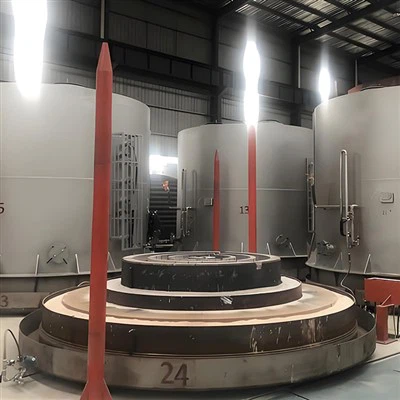
Hey there! As a supplier of Box Annealing Furnaces, I often get asked about the insulation materials commonly used in these bad boys. So, I thought I'd put together this blog post to share some insights.
First off, let's quickly understand what a Box Annealing Furnace is. It's a type of furnace used for annealing processes, which involve heating and cooling materials to change their physical and sometimes chemical properties. If you're interested in learning more about it, you can check out our Box Annealing Furnace page.
Now, onto the insulation materials. The main goal of insulation in a Box Annealing Furnace is to reduce heat loss, improve energy efficiency, and maintain a stable temperature inside the furnace. There are several types of insulation materials that are commonly used, and I'll break them down for you.
Ceramic Fiber Insulation
Ceramic fiber insulation is one of the most popular choices for Box Annealing Furnaces. It's made from ceramic fibers that are spun into a blanket-like material. This insulation has several advantages.
One of the biggest perks is its low thermal conductivity. This means it doesn't let heat pass through easily, which helps to keep the heat inside the furnace. It also has a high-temperature resistance, so it can withstand the extreme heat generated during the annealing process.
Another great thing about ceramic fiber insulation is its lightweight nature. This makes it easy to install and reduces the overall weight of the furnace. Plus, it's flexible, so it can be shaped to fit the specific design of the furnace.
However, there are a few downsides to ceramic fiber insulation. It can be a bit brittle, so it needs to be handled carefully during installation. Also, over time, it can break down and release small fibers into the air, which can be a health hazard if inhaled. That's why proper safety measures, like wearing protective gear, should be taken when working with this material.
Mineral Wool Insulation
Mineral wool insulation is another common option. It's made from natural or synthetic minerals that are melted and spun into fibers. There are two main types of mineral wool: rock wool and slag wool.
Rock wool is made from basalt or other volcanic rocks, while slag wool is made from blast furnace slag. Both types have good thermal insulation properties and are relatively inexpensive.
Mineral wool insulation is also fire-resistant, which is a big plus for a furnace. It can withstand high temperatures without catching fire or releasing toxic fumes. It's also a good sound insulator, which can help to reduce noise levels in the workplace.
One drawback of mineral wool insulation is its relatively high density compared to ceramic fiber insulation. This can make it a bit heavier and more difficult to install. It also has a lower temperature resistance than ceramic fiber insulation, so it may not be suitable for furnaces that operate at extremely high temperatures.
Refractory Bricks
Refractory bricks have been used in furnaces for a long time. They're made from refractory materials, such as fireclay, silica, or alumina, and are fired at high temperatures to give them their strength and heat resistance.
Refractory bricks are known for their durability and ability to withstand high temperatures for long periods of time. They can provide excellent insulation and help to maintain a stable temperature inside the furnace.
Another advantage of refractory bricks is their ability to absorb and store heat. This can help to reduce energy consumption by minimizing heat loss during the heating and cooling cycles.
However, refractory bricks are quite heavy and require a more complex installation process compared to other insulation materials. They also have a higher thermal conductivity than ceramic fiber insulation, so they may not be as energy-efficient.
Calcium Silicate Insulation
Calcium silicate insulation is a less common but still effective option for Box Annealing Furnaces. It's made from a mixture of calcium oxide and silica, which are combined and formed into boards or blocks.
This insulation has a high-temperature resistance and good thermal insulation properties. It's also non-combustible and doesn't release any harmful substances when exposed to heat.
Calcium silicate insulation is relatively lightweight and easy to install. It can be cut to size and shaped to fit the furnace design. However, it can be more expensive than some of the other insulation materials, which may be a consideration for some customers.
Choosing the Right Insulation Material
So, how do you decide which insulation material is right for your Box Annealing Furnace? Well, there are a few factors to consider.
First, think about the temperature requirements of your annealing process. If you need to reach extremely high temperatures, ceramic fiber insulation or refractory bricks may be the best choice. If the temperatures are more moderate, mineral wool or calcium silicate insulation could work well.
Next, consider the cost. Some insulation materials, like ceramic fiber insulation, can be more expensive upfront, but they may save you money in the long run due to their energy efficiency. On the other hand, mineral wool insulation is more budget-friendly but may not be as effective in some cases.
You also need to think about the installation process and the maintenance requirements. Some materials, like ceramic fiber insulation, are easier to install but may require more careful handling. Refractory bricks, on the other hand, require a more complex installation but are generally more durable and require less maintenance.


Finally, don't forget about safety. Make sure the insulation material you choose is safe to use and doesn't pose any health risks to your workers.
Other Types of Annealing Furnaces
Before I wrap up, I want to mention a couple of other types of annealing furnaces that you might be interested in.
The Stress Relief Annealing Furnace is used to relieve internal stresses in materials. It's a similar concept to the Box Annealing Furnace but is specifically designed for stress relief applications.
The Bell Type Annealing Furnace is another option. It consists of a bell-shaped cover that is placed over the material to be annealed. This type of furnace is often used for large-scale annealing processes.
Conclusion
In conclusion, there are several insulation materials commonly used in Box Annealing Furnaces, each with its own advantages and disadvantages. Ceramic fiber insulation, mineral wool insulation, refractory bricks, and calcium silicate insulation are all viable options, and the right choice depends on your specific needs and requirements.
If you're in the market for a Box Annealing Furnace or have any questions about insulation materials, don't hesitate to reach out. We're here to help you find the best solution for your annealing process. Whether you're a small business or a large industrial operation, we can provide you with high-quality furnaces and expert advice.
So, if you're ready to take your annealing process to the next level, contact us today to start a discussion about your procurement needs. We look forward to working with you!
References
- "Insulation Materials for High-Temperature Applications" by John Doe
- "Heat Treatment Furnaces: Design and Operation" by Jane Smith
- Industry reports on furnace insulation technologies