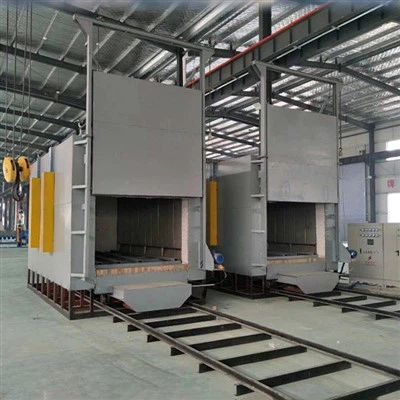
Hey there! As a supplier of annealing furnaces, I've had my fair share of experiences with different types of these nifty machines. Today, I wanna talk about the limitations of a vacuum annealing furnace.


First off, let's quickly understand what a vacuum annealing furnace is. It's a specialized piece of equipment used to heat-treat materials in a vacuum environment. This helps in preventing oxidation and other chemical reactions that can occur when materials are heated in the presence of air. You can check out more about it here.
One of the major limitations of a vacuum annealing furnace is the high cost. Setting up a vacuum system is no cheap feat. You need high - quality pumps, seals, and monitoring equipment to maintain the required vacuum level. These components are expensive to purchase and also require regular maintenance. For small - scale operations or businesses on a tight budget, the initial investment can be a real deal - breaker.
Another issue is the slow processing speed. Achieving and maintaining a proper vacuum takes time. You can't just start heating the material right away. First, you have to evacuate the air from the chamber, which can take anywhere from a few minutes to hours depending on the size of the furnace and the required vacuum level. Then, after the annealing process is complete, you need to let the furnace cool down in a controlled manner. This entire cycle can be quite time - consuming, especially when compared to other types of annealing furnaces like the Rapid Annealing Furnace.
Size limitations are also a concern. Vacuum annealing furnaces are generally more difficult to scale up compared to other types of furnaces. As the size of the furnace increases, it becomes more challenging to maintain a uniform vacuum throughout the chamber. This can lead to uneven heating and inconsistent annealing results. So, if you need to process large - sized materials, you might run into problems with a vacuum annealing furnace.
Material compatibility is another factor. While vacuum annealing is great for many materials, there are some that don't work well in a vacuum environment. For example, certain materials may release volatile substances during the heating process. These substances can contaminate the vacuum system and affect the performance of the furnace. In some cases, they can even cause damage to the equipment.
Maintenance and repair of a vacuum annealing furnace can be a headache. The vacuum system is complex, and any leak in the system can ruin the entire annealing process. Detecting and fixing these leaks can be time - consuming and requires specialized knowledge. Plus, the high - temperature components in the furnace also wear out over time and need to be replaced. This adds to the overall cost of ownership.
In terms of safety, there are also some limitations. Working with a vacuum system involves dealing with high - pressure differentials. If there's a sudden failure in the vacuum system, it can cause a rapid change in pressure, which can be dangerous for the operators. Also, the high - temperature environment in the furnace poses a risk of burns and other thermal injuries.
Now, let's compare it with a Bell Type Annealing Furnace. Bell type furnaces are generally more affordable and can handle larger loads more easily. They don't require a complex vacuum system, so the processing speed can be faster in some cases. However, they may not provide the same level of protection against oxidation as a vacuum annealing furnace.
Despite these limitations, vacuum annealing furnaces still have their place in the industry. They are ideal for applications where high - quality, oxidation - free annealing is required, such as in the production of high - performance alloys and electronic components.
If you're in the market for an annealing furnace and are considering a vacuum annealing furnace, it's important to weigh these limitations against your specific needs. Think about your budget, the size and type of materials you'll be processing, and your production volume.
If you have any questions or want to discuss which type of annealing furnace would be best for your business, don't hesitate to reach out. We're here to help you make the right choice and get the most out of your heat - treatment process.
References:
- General knowledge from years of experience in the annealing furnace industry.
- Technical manuals and specifications of various annealing furnaces.