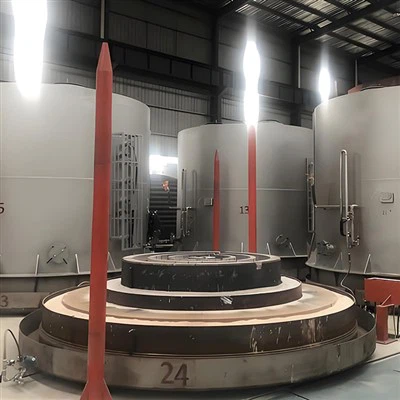
As a nitriding furnace supplier, I often get asked about the corrosion - prevention treatment for the interior of a nitriding furnace. It's a crucial topic because the interior of a nitriding furnace is constantly exposed to high - temperature, corrosive gases, and reactive environments. In this blog, I'll share some common corrosion - prevention methods we use and recommend.
Understanding the Corrosion in Nitriding Furnaces
First, let's understand why corrosion occurs in nitriding furnaces. During the nitriding process, ammonia gas is commonly used. When ammonia decomposes at high temperatures, it releases nitrogen and hydrogen. The hydrogen can react with the furnace's interior components, causing hydrogen embrittlement and corrosion. Also, the nitrogen can form nitrides with the metal surfaces, which may lead to surface degradation over time.
Another factor is the presence of impurities in the gas or in the parts being nitrided. These impurities can react with the furnace lining and heating elements, accelerating the corrosion process.
Common Corrosion - Prevention Treatments
1. Coating
One of the most effective ways to prevent corrosion is by applying a protective coating to the interior surfaces of the furnace. There are several types of coatings available:
- Ceramic Coatings: Ceramic coatings are highly resistant to high temperatures and chemical corrosion. They form a hard, inert layer on the surface of the furnace lining, protecting it from the reactive gases. For example, alumina - based ceramic coatings can withstand temperatures up to 1800°C and provide excellent resistance to ammonia and nitrogen.
- Metallic Coatings: Some metallic coatings, like nickel - chromium alloys, can also be used. These coatings not only resist corrosion but also have good thermal conductivity. They can be applied through processes such as thermal spraying or electroplating.
2. Material Selection
Choosing the right materials for the furnace's interior components is essential. For the furnace lining, refractory materials with high corrosion resistance are preferred. For instance, silicon carbide bricks are often used because they have excellent resistance to chemical attack and high - temperature stability.
When it comes to heating elements, materials like molybdenum disilicide are a good choice. They can operate at high temperatures without significant oxidation or corrosion in a nitriding environment.
3. Gas Purification
Purifying the gas used in the nitriding process can significantly reduce corrosion. Ammonia, which is commonly used, should be free of impurities such as water vapor, oxygen, and sulfur compounds. Water vapor can react with the metal surfaces to form oxides, while sulfur compounds can cause severe corrosion.


Gas purification systems can be installed to remove these impurities. For example, a molecular sieve can be used to remove water vapor from the ammonia gas, and a catalyst can be used to remove oxygen.
4. Regular Maintenance and Inspection
Regular maintenance and inspection are vital for preventing corrosion. This includes checking the furnace lining for cracks or signs of wear, cleaning the interior surfaces to remove any deposits, and monitoring the performance of the heating elements.
During maintenance, any damaged parts should be replaced immediately to prevent further corrosion. For example, if a section of the furnace lining is cracked, it should be repaired or replaced to prevent the reactive gases from reaching the underlying structure.
Corrosion - Prevention in Different Types of Nitriding Furnaces
Pit Type Nitriding Furnace
The Pit Type Nitriding Furnace has a unique design, with a vertical pit - shaped chamber. Due to its design, the corrosion - prevention treatments need to be carefully applied. The coating on the interior walls should be uniform to ensure complete protection. Also, since the pit type furnace is often used for large - scale nitriding, proper gas circulation and purification are crucial to prevent localized corrosion.
Vacuum Nitriding Furnace
In a Vacuum Nitriding Furnace, the absence of air reduces the risk of oxidation. However, the high - energy plasma environment can still cause corrosion. Special coatings that can withstand the plasma bombardment are required. Additionally, the vacuum system needs to be well - maintained to prevent the ingress of air or impurities, which could lead to corrosion.
Ion Nitriding Furnace
The Ion Nitriding Furnace uses a plasma - assisted process. The high - energy ions can cause sputtering and erosion of the interior components. To prevent corrosion, the interior surfaces need to be coated with materials that can resist ion bombardment. Regular cleaning of the electrodes and the chamber is also necessary to remove any sputtered material.
Conclusion
Corrosion prevention in the interior of a nitriding furnace is a multi - faceted process. It involves choosing the right materials, applying protective coatings, purifying the gas, and performing regular maintenance. By implementing these measures, the lifespan of the furnace can be significantly extended, and the quality of the nitriding process can be improved.
If you're in the market for a nitriding furnace or need advice on corrosion - prevention treatments, don't hesitate to reach out. We're here to help you make the best choice for your specific needs. Whether you're looking for a Pit Type Nitriding Furnace, a Vacuum Nitriding Furnace, or an Ion Nitriding Furnace, we have the expertise and products to meet your requirements. Contact us today to start the procurement discussion!
References
- "Heat Treatment Furnaces: Design, Construction, and Operation" by John Doe
- "Corrosion Prevention in High - Temperature Environments" by Jane Smith
- Industry reports on nitriding furnace technology and maintenance