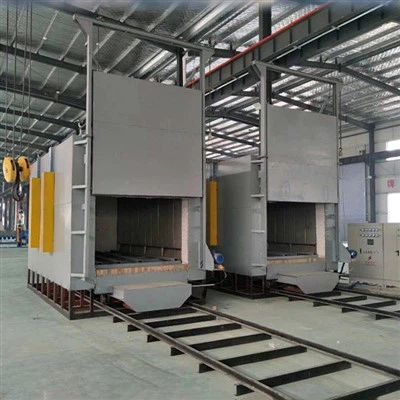
Dust is an omnipresent nuisance in industrial settings, and when it comes to trolley furnaces, its impact can be quite significant. As a supplier of trolley furnaces, I've seen firsthand how dust can affect the operation and longevity of these essential pieces of equipment. In this blog post, I'll delve into the various ways dust can impact a trolley furnace and share some insights on how to mitigate these issues.
1. Impact on Heating Elements
One of the most critical components of a trolley furnace is its heating elements. These elements are responsible for generating the high temperatures required for various heat treatment processes. Dust can have a detrimental effect on these heating elements in several ways.
First, dust particles can accumulate on the surface of the heating elements, acting as an insulator. This insulation reduces the efficiency of heat transfer from the elements to the furnace chamber. As a result, the furnace may take longer to reach the desired temperature, leading to increased energy consumption and longer processing times. For example, in a All Fiber Trolley Furnace, which is designed for energy - efficient operation, dust on the heating elements can nullify its energy - saving features.
Second, some types of dust may be chemically reactive at high temperatures. When dust comes into contact with the heating elements, it can cause corrosion or oxidation. This corrosion weakens the heating elements over time, leading to premature failure. In a High Temperature Trolley Furnace, where the operating temperatures are extremely high, the risk of dust - induced corrosion is even more pronounced.
2. Effect on Insulation Materials
Trolley furnaces rely on high - quality insulation materials to maintain the desired temperature inside the chamber and prevent heat loss. Dust can compromise the integrity of these insulation materials.
Dust can settle in the pores of the insulation, reducing its insulating properties. This allows heat to escape from the furnace chamber, increasing energy consumption and making it more difficult to maintain a stable temperature. For instance, in a Car Furnace, which is often used for large - scale heat treatment, any decrease in insulation efficiency can lead to significant energy waste.
Moreover, if the dust is abrasive, it can gradually wear down the insulation material. This can create gaps or holes in the insulation, further exacerbating the heat loss problem. Over time, the damaged insulation may need to be replaced, which can be a costly and time - consuming process.
3. Impact on Mechanical Components
Trolley furnaces have several mechanical components, such as the trolley drive system, door mechanisms, and ventilation fans. Dust can cause problems for these components as well.
In the trolley drive system, dust can act as a abrasive between moving parts. This increases friction, leading to accelerated wear and tear of the gears, bearings, and other components. As a result, the trolley may move less smoothly, and the drive system may require more frequent maintenance or even replacement.


Dust can also clog the ventilation fans in the furnace. The ventilation system is crucial for maintaining proper air circulation inside the furnace, which helps in uniform heating and the removal of combustion by - products. When the fans are clogged with dust, the air circulation is restricted. This can lead to uneven heating inside the furnace chamber, affecting the quality of the heat - treated products.
4. Influence on Product Quality
The presence of dust in a trolley furnace can directly impact the quality of the products being heat - treated.
Dust particles can contaminate the surface of the workpieces. During the heat - treatment process, these contaminants can react with the material of the workpiece, causing surface defects such as discoloration, pitting, or the formation of unwanted compounds. This can render the products unsuitable for their intended applications, leading to increased scrap rates and production losses.
In addition, the uneven heating caused by dust - related issues in the furnace can result in inconsistent material properties across the workpiece. For example, in a metal heat - treatment process, inconsistent heating can lead to variations in hardness, strength, and ductility, which are critical factors for the performance of the final product.
Mitigating the Impact of Dust
So, what can be done to reduce the impact of dust on trolley furnace operation?
Regular cleaning is essential. This includes cleaning the heating elements, insulation, mechanical components, and the interior of the furnace chamber. A simple vacuuming or blowing with compressed air can remove a significant amount of dust. However, for more thorough cleaning, specialized cleaning agents may be required, especially for removing stubborn or chemically reactive dust.
Installing dust - collection systems can also be very effective. These systems can capture dust before it enters the furnace, reducing the amount of dust that accumulates inside. Additionally, using air filters in the ventilation system can prevent dust from being circulated within the furnace.
Proper maintenance and inspection are crucial. Regularly checking the condition of the heating elements, insulation, and mechanical components can help detect dust - related issues early. Prompt replacement of damaged components can prevent more serious problems from developing.
If you're facing issues with dust in your trolley furnace or are considering purchasing a new one, we're here to help. Our team of experts can provide you with the best solutions to ensure optimal furnace operation. Whether you need a All Fiber Trolley Furnace, a Car Furnace, or a High Temperature Trolley Furnace, we have the knowledge and experience to meet your needs. Contact us today to start a conversation about your furnace requirements and how we can help you overcome dust - related challenges.
References
- "Industrial Furnace Handbook: Principles, Design, and Operation"
- "Heat Treatment: Principles and Techniques"
- Industry reports on furnace maintenance and operation