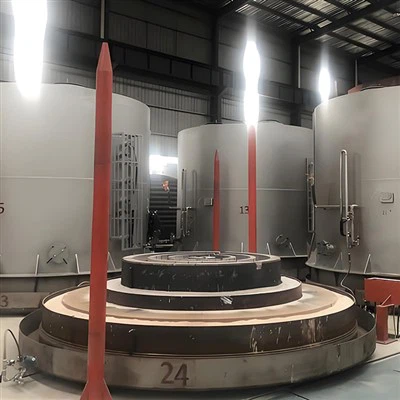
Hey there! As a supplier of Mold Roasting Furnaces, I've seen firsthand how the mold size can have a huge impact on the roasting process. Let's dig into this topic and see what's going on.
First off, let's talk about heat transfer. In a Mold Roasting Furnace, heat is transferred to the mold to achieve the desired roasting effect. When it comes to different mold sizes, the heat transfer dynamics change significantly.
Small - sized molds are like the speed demons of the roasting world. They have a relatively large surface - area - to - volume ratio. This means that heat can penetrate the mold quickly. Think of it like a small piece of bread in an oven. It gets toasted all over in no time because the heat can reach every part of it easily. In a roasting furnace, small molds heat up faster, which reduces the overall roasting time. As a result, you can get more production cycles in a given period, increasing the efficiency of your operation.
On the other hand, large - sized molds are a whole different ballgame. With a smaller surface - area - to - volume ratio, heat transfer becomes a slower process. It's like trying to bake a huge turkey. The outer part might get cooked, but it takes a long time for the heat to reach the center. In a roasting furnace, large molds need more time to reach the required roasting temperature evenly. This longer roasting time can slow down the production rate. You might have to wait hours for a large mold to be properly roasted, which can be a bottleneck in a high - volume production environment.
Another aspect affected by mold size is temperature uniformity. For small molds, it's easier to achieve a uniform temperature throughout. Since the heat can spread quickly, the temperature difference between different parts of the mold is minimal. This is crucial because uneven temperatures can lead to inconsistent roasting results. For example, in some industries where molds are used to produce precision parts, uneven roasting can cause the parts to have different properties in different areas, which is a big no - no.
However, large molds struggle with temperature uniformity. The outer layers of a large mold heat up faster than the inner core. This can create a situation where the outer part is over - roasted while the inner part is under - roasted. To combat this, advanced Mold Roasting Furnaces are equipped with features like powerful circulation fans and multiple heating zones. These features help to distribute the heat more evenly, but it's still a challenge to achieve perfect uniformity in large molds.
The energy consumption is also closely related to the mold size. Small molds require less energy to heat up because of their smaller volume. You can use a relatively low - power furnace to roast small molds efficiently. This not only saves on energy costs but also reduces the environmental impact.
In contrast, large molds demand a significant amount of energy. The furnace has to work harder and for a longer time to reach and maintain the roasting temperature. This can lead to higher energy bills, which is an important consideration for any business looking to keep costs down.
Now, let's take a look at the types of furnaces available and how they interact with different mold sizes. We offer Trolley Type Roasting Furnace and Box Type Roasting Furnace.
The Trolley Type Roasting Furnace is great for handling large molds. It has a large internal space and can be designed to accommodate different sizes of trolleys that carry the molds. The trolley system allows for easy loading and unloading of large and heavy molds. It also provides good access for maintenance and inspection. However, for small molds, using a trolley - type furnace might be overkill. The large internal volume means that more energy is required to heat up the empty space around the small molds.
The Box Type Roasting Furnace is more suitable for small to medium - sized molds. It has a compact design, which is energy - efficient when dealing with smaller molds. The smaller internal volume allows for quicker heat - up times and better temperature control. But if you try to use a box - type furnace for very large molds, you'll run into problems. The mold might not fit properly, and it will be difficult to achieve the right roasting conditions.
We also have the Box Type Shell Baking Furnace, which is specifically designed for shell - type molds. Whether they are small or large, this furnace can provide the right environment for roasting. It has features that ensure the shells are roasted evenly and to the right specifications.


When it comes to choosing the right furnace for your mold size, it's important to consider your production volume, the type of molds you use, and your energy requirements. If you have a high - volume production of small molds, a Box Type Roasting Furnace might be your best bet. But if you deal with large molds on a regular basis, the Trolley Type Roasting Furnace could be the way to go.
In conclusion, the mold size has a profound impact on the roasting process in a Mold Roasting Furnace. From heat transfer and temperature uniformity to energy consumption and furnace selection, every aspect is affected. As a supplier, we understand these challenges and are here to help you find the perfect solution for your needs.
If you're in the market for a Mold Roasting Furnace or want to discuss how to optimize your roasting process based on your mold sizes, don't hesitate to get in touch. We're always happy to have a chat and find the best equipment and setup for your business.
References
- "Heat Transfer Principles and Applications" by Holman, J.P.
- Industry reports on mold roasting processes and furnace technologies.