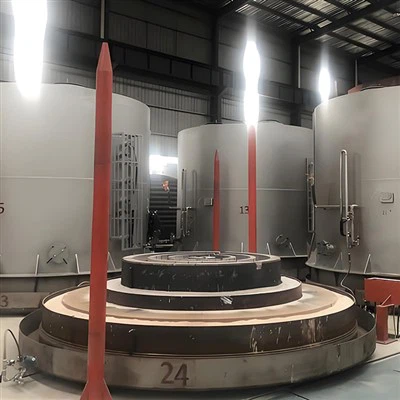
As a seasoned supplier of Bell Annealing Furnaces, I've witnessed firsthand the challenges and opportunities presented by the diverse power supply landscapes across different regions. In this blog, I'll delve into how our Bell Annealing Furnaces are engineered to adapt to these variations, ensuring optimal performance regardless of the local power infrastructure.
Understanding the Global Power Supply Mosaic
The world's power grids are a complex tapestry of different voltages, frequencies, and power qualities. In North America, the standard voltage is typically 120V or 240V at 60Hz, while in Europe, most countries operate on 230V at 50Hz. Asia, Africa, and South America also have their own unique power supply characteristics, with voltages ranging from 100V to 415V and frequencies of either 50Hz or 60Hz.
These variations can pose significant challenges for industrial equipment, including Bell Annealing Furnaces. A furnace designed for a specific voltage and frequency may not function properly or efficiently in a region with different power supply parameters. This can lead to issues such as reduced heating capacity, increased energy consumption, and premature equipment failure.

Adapting to Different Voltages
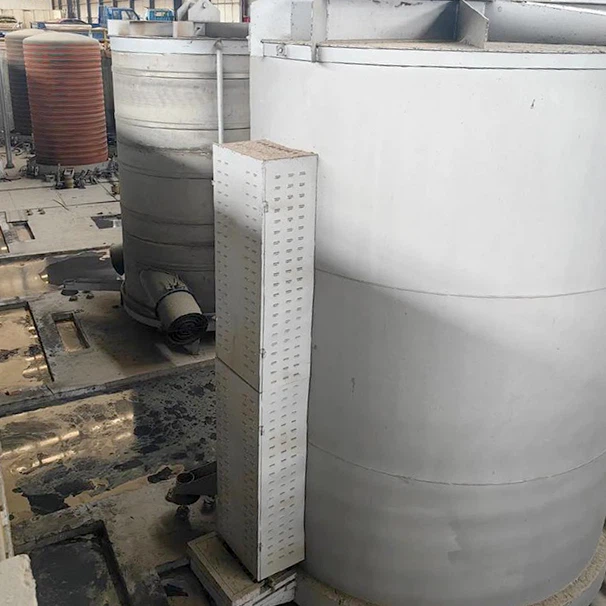
One of the key ways our Bell Annealing Furnaces adapt to different power supplies is through their ability to operate at multiple voltages. Our furnaces are equipped with advanced electrical systems that can automatically adjust to the input voltage, ensuring stable and reliable performance.
For example, our Bell Annealing Furnace is designed to operate at voltages ranging from 208V to 480V, making it suitable for use in a wide range of regions. The furnace's control system continuously monitors the input voltage and adjusts the heating elements accordingly to maintain the desired temperature. This not only ensures consistent annealing results but also helps to extend the lifespan of the furnace.
In addition to voltage flexibility, our furnaces are also designed to handle voltage fluctuations. Power grids in some regions may experience occasional voltage spikes or dips, which can damage sensitive electrical components. Our furnaces are equipped with surge protectors and voltage regulators to protect against these fluctuations, ensuring reliable operation even in unstable power environments.
Accommodating Different Frequencies
Another important factor in adapting to different power supplies is the ability to accommodate different frequencies. Our Bell Annealing Furnaces are designed to operate at both 50Hz and 60Hz frequencies, making them suitable for use in regions with either power grid standard.
The furnace's electrical system is designed to be frequency-independent, meaning that it can operate efficiently at both 50Hz and 60Hz without any significant loss of performance. This is achieved through the use of advanced control algorithms and power electronics that can adjust the heating elements' operation based on the input frequency.
For example, our Split Mobile Bell Furnace is equipped with a variable frequency drive (VFD) that allows the furnace to operate at different frequencies. The VFD adjusts the speed of the furnace's fans and pumps based on the input frequency, ensuring optimal airflow and heat transfer. This not only improves the furnace's energy efficiency but also helps to reduce noise and vibration.
Ensuring Power Quality
In addition to voltage and frequency variations, power quality can also vary significantly across different regions. Poor power quality can lead to issues such as harmonic distortion, power factor problems, and electrical noise, which can affect the performance and reliability of industrial equipment.
Our Bell Annealing Furnaces are designed to mitigate the effects of poor power quality through the use of advanced power conditioning technologies. For example, our furnaces are equipped with harmonic filters to reduce harmonic distortion and improve power factor. This helps to reduce energy consumption, improve equipment efficiency, and extend the lifespan of the furnace.
In addition, our furnaces are designed to be immune to electrical noise and interference. The furnace's control system is shielded to prevent electromagnetic interference (EMI) from affecting its operation. This ensures reliable and stable performance even in electrically noisy environments.
Customization for Specific Regions
At our company, we understand that every region has its own unique power supply characteristics and requirements. That's why we offer customized solutions to meet the specific needs of our customers in different regions.
Our engineering team works closely with customers to understand their power supply requirements and design furnaces that are optimized for their local power grid. This may involve customizing the furnace's electrical system, heating elements, and control system to ensure compatibility with the local voltage, frequency, and power quality.
For example, in regions with high humidity or corrosive environments, we may recommend special coatings or materials to protect the furnace from corrosion. In regions with limited power availability, we may design furnaces with lower power consumption or energy-efficient features to reduce operating costs.
Conclusion
Adapting to different power supplies is a critical challenge for industrial equipment manufacturers, especially in today's global marketplace. Our Bell Annealing Furnaces are designed to overcome these challenges through their ability to operate at multiple voltages and frequencies, handle voltage fluctuations, mitigate the effects of poor power quality, and be customized for specific regions.
If you're in the market for a Bell Annealing Furnace and need a solution that can adapt to your local power supply, we'd love to hear from you. Our team of experts is available to answer your questions, provide technical support, and help you find the right furnace for your needs. Contact us today to start the conversation and take the first step towards a reliable and efficient annealing solution.
References
- International Electrotechnical Commission (IEC). (2021). IEC 60038:2009 - Standard voltages.
- Institute of Electrical and Electronics Engineers (IEEE). (2018). IEEE Standard 1159 - Recommended practice for monitoring electric power quality.
- National Electrical Manufacturers Association (NEMA). (2020). NEMA Standards Publication MG 1 - Motors and generators.