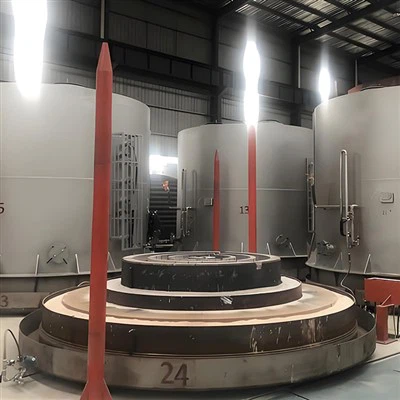
The ion nitriding process is a thermochemical surface treatment method widely used in various industries to enhance the surface properties of metals, such as hardness, wear resistance, and corrosion resistance. As a leading Ion Nitriding Furnace supplier, we understand the critical role that gas composition plays in the ion nitriding process within a furnace. In this blog, we will explore the impact of gas composition on the ion nitriding process and how it affects the final quality of the treated components.
Basic Principles of Ion Nitriding
Before delving into the influence of gas composition, it is essential to understand the basic principles of ion nitriding. Ion nitriding is carried out in a low - pressure environment within a furnace. The workpiece is placed in the furnace chamber and serves as the cathode, while the furnace wall acts as the anode. When a direct - current voltage is applied between the cathode and the anode, a glow discharge is generated. The gas in the furnace is ionized, and nitrogen ions are accelerated towards the workpiece surface. These nitrogen ions react with the metal atoms on the surface of the workpiece, forming nitride compounds, which improve the surface properties of the metal.


Key Gas Components in Ion Nitriding
The most common gases used in ion nitriding are nitrogen (N₂), hydrogen (H₂), and sometimes small amounts of other gases such as methane (CH₄) or ammonia (NH₃). Each gas has its unique role in the ion nitriding process.
Nitrogen (N₂)
Nitrogen is the primary source of nitrogen atoms for nitride formation. The concentration of nitrogen in the gas mixture directly affects the nitrogen potential in the furnace. A higher nitrogen concentration generally leads to a higher nitrogen potential, which promotes the formation of nitride layers on the workpiece surface. However, an excessive nitrogen concentration may result in the formation of a brittle compound layer, which can reduce the fatigue resistance of the treated component.
Hydrogen (H₂)
Hydrogen plays several important roles in the ion nitriding process. Firstly, it helps to clean the workpiece surface by reducing oxides and other contaminants. The hydrogen ions react with the oxygen on the workpiece surface, forming water vapor, which is then pumped out of the furnace. Secondly, hydrogen can affect the growth rate and structure of the nitride layer. It can promote the diffusion of nitrogen atoms into the metal matrix, thereby influencing the thickness and hardness distribution of the nitride layer. A proper ratio of hydrogen to nitrogen is crucial for achieving an optimal nitride layer.
Methane (CH₄) or Ammonia (NH₃)
In some cases, small amounts of methane or ammonia are added to the gas mixture. Methane can introduce carbon atoms into the nitride layer, forming carbonitrides. Carbonitriding can further improve the wear resistance and hardness of the treated component. Ammonia, on the other hand, can decompose into nitrogen and hydrogen during the ion nitriding process, providing an additional source of nitrogen and hydrogen.
Impact of Gas Composition on Nitride Layer Formation
The gas composition has a significant impact on the formation of the nitride layer, including its thickness, structure, and properties.
Thickness of the Nitride Layer
The gas composition affects the nitrogen diffusion rate and the growth rate of the nitride layer. A gas mixture with an appropriate ratio of nitrogen and hydrogen can promote a uniform and controlled growth of the nitride layer. For example, if the hydrogen concentration is too low, the nitrogen diffusion rate may be slow, resulting in a thin nitride layer. Conversely, a high hydrogen concentration may increase the nitrogen diffusion rate, but it may also cause the nitride layer to grow too fast, leading to a non - uniform layer structure.
Structure of the Nitride Layer
The structure of the nitride layer can be divided into two main parts: the compound layer and the diffusion layer. The gas composition influences the formation and properties of these two layers. A high nitrogen concentration tends to promote the formation of a thick compound layer, which is mainly composed of iron nitrides such as Fe₄N and Fe₂ - ₃N. The compound layer provides high surface hardness and wear resistance but can be brittle. A proper amount of hydrogen can help to control the growth of the compound layer and promote the formation of a more ductile diffusion layer, which has a better combination of hardness and toughness.
Properties of the Nitride Layer
The properties of the nitride layer, such as hardness, wear resistance, and corrosion resistance, are closely related to the gas composition. By adjusting the gas composition, we can optimize these properties according to the specific requirements of the application. For example, adding a small amount of methane to the gas mixture can increase the hardness and wear resistance of the nitride layer due to the formation of carbonitrides.
Impact on Process Efficiency and Energy Consumption
The gas composition also affects the process efficiency and energy consumption of ion nitriding. A well - optimized gas mixture can reduce the processing time and energy consumption. For example, a proper ratio of nitrogen and hydrogen can improve the nitrogen utilization rate, reducing the amount of nitrogen required for the process. This not only saves gas costs but also reduces the pumping time and energy consumption associated with gas replacement in the furnace.
Influence on Different Types of Ion Nitriding Furnaces
Different types of ion nitriding furnaces, such as the Nitrogen Protection Copper Bright Annealing Furnace, Vacuum Nitriding Furnace, and Pit Type Nitriding Furnace, may have different requirements for gas composition.
Nitrogen Protection Copper Bright Annealing Furnace
In a nitrogen protection copper bright annealing furnace, the gas composition is carefully controlled to ensure the bright annealing of copper while also providing appropriate nitriding treatment if necessary. The nitrogen - hydrogen ratio needs to be adjusted to prevent oxidation of copper and to achieve the desired surface properties.
Vacuum Nitriding Furnace
A vacuum nitriding furnace operates under a relatively low - pressure environment. The gas composition in a vacuum nitriding furnace needs to be precisely controlled to ensure uniform nitriding across the workpiece surface. The pumping speed and gas flow rate also need to be coordinated with the gas composition to maintain a stable nitriding process.
Pit Type Nitriding Furnace
Pit type nitriding furnaces are often used for large - scale or long - length workpieces. The gas composition in a pit type nitriding furnace should be designed to ensure that the nitrogen can reach all parts of the workpiece evenly. The gas distribution system in the furnace also needs to be optimized to achieve a uniform nitriding effect.
Optimization of Gas Composition
To achieve the best results in ion nitriding, the gas composition needs to be optimized according to the type of workpiece material, the required surface properties, and the specific furnace conditions. This often involves a series of experiments and process adjustments.
Material - Specific Optimization
Different metals have different affinities for nitrogen and different requirements for nitride formation. For example, steels with different carbon contents may require different gas compositions to achieve the optimal nitride layer. Low - carbon steels may need a relatively higher nitrogen concentration to form a sufficient nitride layer, while high - carbon steels may require a more balanced gas mixture to avoid excessive brittleness.
Process - Specific Optimization
The process parameters such as temperature, pressure, and treatment time also interact with the gas composition. For example, at a higher temperature, the nitrogen diffusion rate is faster, and the gas composition may need to be adjusted accordingly to control the growth of the nitride layer.
Conclusion
In conclusion, the gas composition has a profound impact on the ion nitriding process in a furnace. It affects the formation, structure, and properties of the nitride layer, as well as the process efficiency and energy consumption. As an Ion Nitriding Furnace supplier, we have extensive experience in optimizing gas compositions for different applications. Our team of experts can help you select the most suitable gas mixture and furnace parameters to achieve the best results for your specific needs.
If you are interested in our ion nitriding furnaces or need more information about the ion nitriding process and gas composition optimization, please feel free to contact us for procurement and further discussions. We are committed to providing you with high - quality products and professional technical support.
References
- Somers, M. A. J., & Mittemeijer, E. J. (2001). Thermochemical treatment of metallic materials: principles and applications. CRC Press.
- Bell, T. (1985). Nitriding and ferritic nitrocarburizing. ASM International.
- Nyberg, L., & Bergman, J. (2006). Influence of gas composition on the structure and properties of plasma nitrided layers. Surface and Coatings Technology, 200(11 - 12), 3433 - 3438.