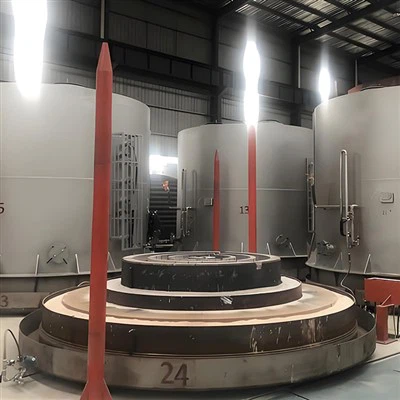
Temperature uniformity in a pit quenching furnace is a crucial factor that directly impacts the quality and performance of heat-treated components. As a supplier of pit quenching furnaces, I've seen firsthand how this aspect can make or break a production process. In this blog, I'll dive into what temperature uniformity means, why it's so important, and how we ensure it in our furnaces.
What is Temperature Uniformity?
Temperature uniformity refers to how evenly the temperature is distributed within the working chamber of a pit quenching furnace. In an ideal scenario, every part of the load being heat-treated would experience the exact same temperature throughout the process. However, in reality, achieving perfect uniformity is a challenge due to various factors such as furnace design, heating elements, and the nature of the load itself.
Think of it like baking a cake. If the oven has hot spots and cold spots, some parts of the cake will be overcooked while others remain undercooked. Similarly, in a pit quenching furnace, uneven temperature distribution can lead to inconsistent hardness, microstructure, and mechanical properties in the heat-treated components.
Why is Temperature Uniformity Important?
The importance of temperature uniformity cannot be overstated, especially in industries where precision and quality are paramount. Here are some key reasons why it matters:
Consistent Product Quality
When the temperature is uniform across the load, the heat treatment process is more predictable and repeatable. This means that each component will have the same hardness, strength, and other mechanical properties, resulting in consistent product quality. For example, in the aerospace industry, where components must meet strict safety and performance standards, even a slight variation in temperature can compromise the integrity of the part.
Reduced Scrap and Rework
Uneven temperature distribution can cause parts to be out of specification, leading to scrap or the need for rework. This not only increases production costs but also delays the delivery of finished products. By ensuring temperature uniformity, we can minimize the occurrence of defective parts and improve overall production efficiency.
Extended Furnace Lifespan
A furnace that operates with good temperature uniformity is less likely to experience thermal stress and hot spots, which can cause premature wear and tear on the heating elements, insulation, and other components. This can extend the lifespan of the furnace and reduce maintenance costs over time.
Factors Affecting Temperature Uniformity
Several factors can influence the temperature uniformity in a pit quenching furnace. Understanding these factors is essential for designing and operating a furnace that can achieve the desired level of uniformity. Here are some of the key factors:
Furnace Design
The design of the furnace plays a crucial role in determining temperature uniformity. Factors such as the size and shape of the working chamber, the location and configuration of the heating elements, and the airflow pattern all affect how heat is distributed within the furnace. For example, a furnace with a well-designed airflow system can help to ensure that hot air is evenly circulated throughout the chamber, reducing temperature gradients.
Heating Elements
The type, placement, and performance of the heating elements also have a significant impact on temperature uniformity. Different types of heating elements, such as electric resistance heaters or gas burners, have different heating characteristics and may require different control strategies to achieve uniform heating. Additionally, the placement of the heating elements can affect how heat is transferred to the load, and unevenly spaced or damaged heating elements can cause hot spots or cold spots in the furnace.
Load Characteristics
The size, shape, and material of the load being heat-treated can also affect temperature uniformity. Large or irregularly shaped loads may create areas of poor heat transfer, while materials with high thermal conductivity may heat up more quickly than those with low thermal conductivity. To ensure uniform heating, it's important to consider the load characteristics when designing the furnace and developing the heat treatment process.
Control System
The control system of the furnace is responsible for regulating the temperature and ensuring that it remains within the desired range. A high-quality control system with accurate sensors and precise control algorithms can help to maintain temperature uniformity by adjusting the heating power based on the actual temperature readings. Additionally, advanced control systems can provide real-time monitoring and feedback, allowing operators to make adjustments as needed to optimize the heat treatment process.


How We Ensure Temperature Uniformity in Our Pit Quenching Furnaces
As a supplier of pit quenching furnaces, we take temperature uniformity very seriously. We use a combination of advanced design techniques, high-quality components, and rigorous testing procedures to ensure that our furnaces can achieve the highest level of temperature uniformity possible. Here are some of the ways we do it:
Advanced Furnace Design
Our pit quenching furnaces are designed with a focus on maximizing temperature uniformity. We use computational fluid dynamics (CFD) simulations to optimize the airflow pattern within the furnace and ensure that hot air is evenly distributed throughout the working chamber. Additionally, we carefully select the location and configuration of the heating elements to minimize temperature gradients and provide uniform heating across the load.
High-Quality Heating Elements
We use only the highest quality heating elements in our furnaces, which are designed to provide consistent and reliable heating performance. Our heating elements are carefully calibrated and tested to ensure that they meet our strict quality standards and can maintain uniform temperature distribution over a long period of time.
Precision Control System
Our furnaces are equipped with state-of-the-art control systems that use advanced algorithms and sensors to regulate the temperature and ensure that it remains within the desired range. The control system continuously monitors the temperature at multiple points within the furnace and adjusts the heating power as needed to maintain uniform heating across the load. Additionally, the control system provides real-time feedback and diagnostics, allowing operators to quickly identify and address any issues that may arise.
Rigorous Testing and Quality Assurance
Before each furnace is shipped to our customers, it undergoes a series of rigorous tests and quality assurance checks to ensure that it meets our strict performance standards. We use temperature mapping techniques to measure the temperature distribution within the furnace and verify that it is within the specified tolerance. Additionally, we conduct performance tests to ensure that the furnace can achieve the desired heating rate, cooling rate, and temperature uniformity under real-world operating conditions.
Our Range of Pit Quenching Furnaces
In addition to our standard pit quenching furnaces, we also offer a range of specialized furnaces to meet the unique needs of our customers. Here are some of the types of furnaces we offer:
- Forklift Quenching Furnace: Designed specifically for the heat treatment of forklift components, this furnace offers high temperature uniformity and fast heating and cooling rates.
- Aluminum Alloy Quenching Furnace: Ideal for the heat treatment of aluminum alloy components, this furnace features a special design to prevent oxidation and ensure uniform heating and cooling.
- Fully Automatic Aluminum Alloy Quenching Furnace: This advanced furnace offers fully automated operation, including loading, heating, quenching, and unloading, for maximum efficiency and productivity.
Conclusion
Temperature uniformity is a critical factor in the performance and quality of a pit quenching furnace. By understanding what temperature uniformity is, why it's important, and how to achieve it, we can ensure that our customers get the best possible results from their heat treatment processes. As a leading supplier of pit quenching furnaces, we are committed to providing our customers with high-quality, reliable, and efficient furnaces that meet their specific needs. If you're interested in learning more about our products or have any questions about temperature uniformity in pit quenching furnaces, please don't hesitate to contact us. We'd be happy to discuss your requirements and help you find the right solution for your business.
References
- Smith, J. (2018). Heat Treatment Handbook. New York: Wiley.
- Jones, R. (2019). Temperature Control in Industrial Furnaces. London: Elsevier.
- Brown, A. (2020). Advances in Furnace Design and Technology. Berlin: Springer.