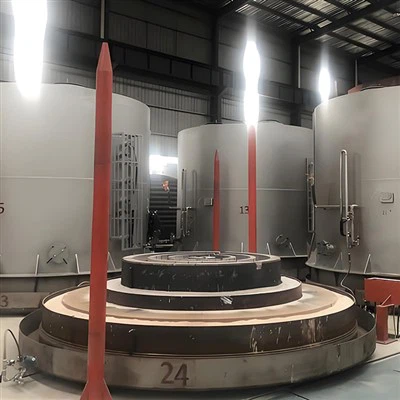
As a supplier of pit furnaces, I often receive inquiries from customers about the ventilation requirements for these industrial heating units. Ventilation is a crucial aspect of operating a pit furnace safely and efficiently. In this blog post, I will delve into the importance of ventilation, the specific requirements for pit furnaces, and how proper ventilation can enhance the performance and longevity of your equipment.
The Importance of Ventilation in Pit Furnaces
Pit furnaces are used in a variety of industrial applications, including heat treatment, annealing, and hardening. These processes involve heating materials to high temperatures, which can produce harmful gases, fumes, and dust. Without proper ventilation, these contaminants can accumulate in the workspace, posing a significant health risk to operators and causing damage to the furnace and surrounding equipment.
In addition to health and safety concerns, ventilation also plays a crucial role in maintaining the efficiency of the pit furnace. Proper ventilation helps to remove excess heat and moisture from the furnace, preventing overheating and reducing the risk of thermal stress on the furnace components. This can extend the lifespan of the furnace and improve its overall performance.
Specific Ventilation Requirements for Pit Furnaces
The ventilation requirements for a pit furnace depend on several factors, including the size and type of the furnace, the type of process being performed, and the workspace environment. Here are some general guidelines to consider:
Airflow Rate
The airflow rate is the volume of air that needs to be exchanged in the workspace per unit of time. It is typically measured in cubic feet per minute (CFM). The airflow rate required for a pit furnace depends on the size of the furnace and the type of process being performed. As a general rule, the airflow rate should be sufficient to remove all of the contaminants generated by the furnace and maintain a safe and comfortable working environment.
For example, a small pit furnace used for annealing may require an airflow rate of 500-1000 CFM, while a large pit furnace used for hardening may require an airflow rate of 2000-5000 CFM. It is important to consult with a ventilation expert to determine the appropriate airflow rate for your specific furnace and process.
Ventilation System Design
The ventilation system design is also an important consideration. The ventilation system should be designed to capture and remove the contaminants generated by the furnace as close to the source as possible. This can be achieved through the use of local exhaust ventilation (LEV) systems, such as hoods and ducts, which are installed directly over the furnace.
The ventilation system should also be designed to provide adequate makeup air to replace the air that is being removed. Makeup air can be provided through the use of fresh air intakes, which are located outside the workspace. The makeup air should be filtered to remove any contaminants before it is introduced into the workspace.
Ventilation Ductwork
The ventilation ductwork is the network of pipes and ducts that carry the contaminated air from the furnace to the exhaust system. The ductwork should be designed to minimize resistance to airflow and prevent the accumulation of contaminants. It is important to use smooth, straight ducts and to avoid sharp bends and elbows, which can cause turbulence and reduce the efficiency of the ventilation system.
The ductwork should also be properly sized to ensure that the airflow rate is maintained throughout the system. The size of the ductwork depends on the airflow rate, the length of the ductwork, and the number of bends and elbows. It is important to consult with a ventilation expert to determine the appropriate size of the ductwork for your specific furnace and process.
Exhaust System
The exhaust system is responsible for removing the contaminated air from the workspace and discharging it into the atmosphere. The exhaust system should be designed to meet all applicable local, state, and federal regulations. It is important to use a high-quality exhaust fan that is capable of providing the required airflow rate and pressure.
The exhaust system should also be equipped with appropriate filters and scrubbers to remove any contaminants from the exhaust air before it is discharged into the atmosphere. This can help to reduce the environmental impact of the furnace and ensure compliance with regulations.


Benefits of Proper Ventilation for Pit Furnaces
Proper ventilation offers several benefits for pit furnaces, including:
Improved Health and Safety
Proper ventilation helps to remove harmful gases, fumes, and dust from the workspace, reducing the risk of respiratory problems, skin irritation, and other health issues for operators. It also helps to prevent the accumulation of combustible gases and dust, reducing the risk of fires and explosions.
Enhanced Furnace Performance
Proper ventilation helps to maintain a stable temperature and humidity level in the furnace, preventing overheating and reducing the risk of thermal stress on the furnace components. This can extend the lifespan of the furnace and improve its overall performance.
Energy Efficiency
Proper ventilation can also help to improve the energy efficiency of the pit furnace. By removing excess heat and moisture from the furnace, the ventilation system can reduce the amount of energy required to maintain the desired temperature and humidity level. This can result in significant energy savings over time.
Conclusion
In conclusion, ventilation is a crucial aspect of operating a pit furnace safely and efficiently. The ventilation requirements for a pit furnace depend on several factors, including the size and type of the furnace, the type of process being performed, and the workspace environment. By following the guidelines outlined in this blog post and consulting with a ventilation expert, you can ensure that your pit furnace is properly ventilated and operating at its best.
If you are in the market for a pit furnace, we offer a range of high-quality products, including High Precision Pit Furnace, Pit Type Aluminum Alloy Quenching Furnace, and All Fiber Pit Furnace. Our team of experts can help you select the right furnace for your specific needs and ensure that it is properly installed and ventilated. Contact us today to learn more about our products and services and to discuss your procurement requirements.
References
- ASHRAE Handbook - Fundamentals. American Society of Heating, Refrigerating and Air-Conditioning Engineers, Inc.
- OSHA Technical Manual (OTM). Occupational Safety and Health Administration.
- NFPA 86 - Standard for Ovens and Furnaces. National Fire Protection Association.