Hey there! As a supplier of bell type furnaces, I often get asked about how these nifty machines work. So, I thought I'd take a few minutes to break down the working principle of a bell type furnace for you.
The Basics of a Bell Type Furnace
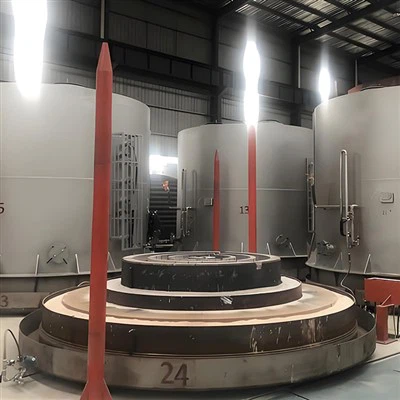
First off, let's talk about what a bell type furnace actually is. It's a type of industrial furnace that's used for heat treatment processes like annealing, normalizing, and stress relieving. The furnace gets its name from its unique design, which consists of a movable bell-shaped cover that sits on top of a stationary base. The workpiece to be heat-treated is placed on the base, and then the bell is lowered over it to create a sealed chamber.
The Working Principle
Now, let's dive into the working principle of a bell type furnace. The process can be broken down into a few key steps:
Loading the Workpiece
The first step is to load the workpiece onto the stationary base of the furnace. This can be done using a variety of methods, such as a crane or a forklift. The workpiece is typically placed on a hearth or a fixture to ensure proper positioning and support during the heat treatment process.
Lowering the Bell
Once the workpiece is loaded, the bell-shaped cover is lowered over it using a hoist or a hydraulic system. The bell is designed to fit snugly on the base, creating a sealed chamber that prevents heat and gases from escaping during the heat treatment process.
Heating the Workpiece
Once the bell is in place, the heating process begins. The furnace is equipped with heating elements, such as electric resistance heaters or gas burners, that are located inside the bell. These heating elements generate heat, which is transferred to the workpiece through radiation and convection.
The temperature inside the furnace is carefully controlled using a temperature controller, which monitors the temperature of the workpiece and adjusts the power output of the heating elements accordingly. This ensures that the workpiece is heated to the desired temperature and held at that temperature for the required amount of time.
Soaking the Workpiece
After the workpiece reaches the desired temperature, it is held at that temperature for a period of time to allow the heat to penetrate evenly throughout the material. This process is called soaking, and it is an important step in the heat treatment process as it helps to ensure that the material properties of the workpiece are uniform.
Cooling the Workpiece
Once the soaking period is complete, the heating elements are turned off, and the workpiece is allowed to cool down. The cooling rate can be controlled by adjusting the flow of cooling air or water through the furnace. This helps to prevent the workpiece from cracking or warping during the cooling process.
Raising the Bell
Once the workpiece has cooled down to a safe temperature, the bell-shaped cover is raised using the hoist or hydraulic system. The workpiece can then be removed from the furnace using a crane or a forklift.
Types of Bell Type Furnaces
There are several different types of bell type furnaces available, each with its own unique features and applications. Some of the most common types include:
Bell Type Bright Annealing Furnace
This type of furnace is used for bright annealing, which is a heat treatment process that is used to improve the surface finish and mechanical properties of metals. The furnace is equipped with a protective atmosphere, such as nitrogen or hydrogen, which helps to prevent oxidation and discoloration of the workpiece during the heat treatment process.
Bell Annealing Furnace
This type of furnace is used for annealing, which is a heat treatment process that is used to soften metals and improve their ductility and machinability. The furnace is typically equipped with a heating chamber and a cooling chamber, which allows for precise control of the heating and cooling rates during the annealing process.


Mobile Bell Type Furnace
This type of furnace is designed to be portable, which makes it ideal for use in remote locations or for on-site heat treatment applications. The furnace is typically mounted on a trailer or a skid, and it can be easily transported to different job sites using a truck or a tractor.
Advantages of Bell Type Furnaces
There are several advantages to using a bell type furnace for heat treatment processes, including:
Precise Temperature Control
Bell type furnaces are equipped with advanced temperature control systems that allow for precise control of the heating and cooling rates during the heat treatment process. This ensures that the workpiece is heated to the desired temperature and held at that temperature for the required amount of time, resulting in consistent and uniform material properties.
Energy Efficiency
Bell type furnaces are designed to be energy-efficient, which helps to reduce operating costs and minimize environmental impact. The furnace is typically insulated with high-quality materials, such as ceramic fiber or refractory brick, which helps to prevent heat loss and reduce energy consumption.
Versatility
Bell type furnaces can be used for a variety of heat treatment processes, including annealing, normalizing, stress relieving, and bright annealing. This makes them a versatile and cost-effective solution for a wide range of industrial applications.
Easy to Operate
Bell type furnaces are relatively easy to operate, which makes them suitable for use by both experienced and novice operators. The furnace is typically equipped with a user-friendly control panel that allows for easy adjustment of the heating and cooling parameters.
Conclusion
In conclusion, the working principle of a bell type furnace is based on the simple concept of heating a workpiece inside a sealed chamber using a bell-shaped cover. The furnace is equipped with advanced temperature control systems and heating elements that allow for precise control of the heating and cooling rates during the heat treatment process.
Bell type furnaces offer several advantages over other types of furnaces, including precise temperature control, energy efficiency, versatility, and ease of operation. If you're in the market for a high-quality heat treatment solution, I highly recommend considering a bell type furnace.
If you're interested in learning more about our bell type furnaces or would like to discuss your specific heat treatment requirements, please don't hesitate to contact us. We'd be happy to provide you with more information and help you find the right furnace for your needs.
References
- Smith, J. (2018). Industrial Furnaces: Principles, Design, and Operation. CRC Press.
- Jones, R. (2019). Heat Treatment of Metals: Principles and Practice. ASM International.
- Brown, A. (2020). Furnace Technology: A Practical Guide. Elsevier.