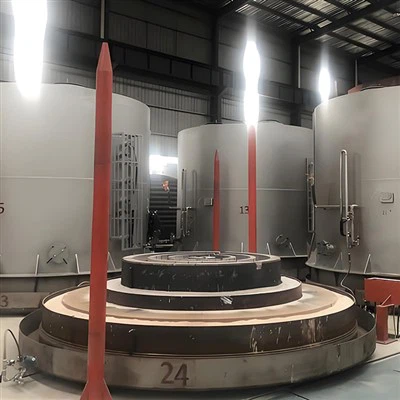
As a supplier of Carburizing Pit Furnaces, I often get asked about the types of materials that can be processed in these remarkable pieces of equipment. Carburizing pit furnaces are a cornerstone in the heat treatment industry, offering a reliable and efficient way to enhance the surface properties of various metals. In this blog post, I'll delve into the materials that can be effectively processed in a carburizing pit furnace, exploring their characteristics and the benefits of carburizing.
Understanding Carburizing Pit Furnaces
Before we dive into the materials, let's briefly understand what a carburizing pit furnace is. A Carburizing Pit Furnace is a specialized heat treatment furnace designed to introduce carbon into the surface of a metal component. This process, known as carburizing, increases the carbon content of the surface layer, resulting in improved hardness, wear resistance, and fatigue strength. The furnace is typically cylindrical in shape and is installed vertically, with the workpiece placed inside the pit. The furnace is heated to a high temperature, and a carbon-rich gas is introduced into the chamber, allowing the carbon to diffuse into the surface of the metal.
Materials Suitable for Carburizing
- Low Carbon Steels
Low carbon steels, typically containing less than 0.25% carbon, are one of the most common materials processed in carburizing pit furnaces. These steels are relatively soft and ductile, making them easy to machine. However, they lack the hardness and wear resistance required for many applications. Carburizing low carbon steels can significantly improve their surface properties, making them suitable for use in gears, shafts, and other components that require high strength and wear resistance.
During the carburizing process, the low carbon steel is heated to a temperature between 850°C and 950°C in the presence of a carbon-rich gas. The carbon atoms diffuse into the surface of the steel, forming a high carbon layer. This layer is then quenched to form a hard, martensitic structure, while the core of the steel remains relatively soft and ductile. The result is a component with a hard, wear-resistant surface and a tough, ductile core. - Alloy Steels
Alloy steels are steels that contain one or more alloying elements, such as chromium, nickel, molybdenum, or vanadium, in addition to carbon. These alloying elements can enhance the strength, hardness, and corrosion resistance of the steel. Carburizing alloy steels can further improve their surface properties, making them suitable for use in high-performance applications, such as aerospace, automotive, and tooling industries.
The carburizing process for alloy steels is similar to that for low carbon steels, but the temperature and time parameters may need to be adjusted to account for the presence of the alloying elements. The alloying elements can affect the diffusion rate of carbon into the steel, as well as the transformation of the microstructure during quenching. Therefore, it is important to carefully control the carburizing process to ensure that the desired surface properties are achieved. - Cast Irons
Cast irons are a group of iron-carbon alloys that contain more than 2% carbon. They are known for their high castability, wear resistance, and damping capacity. However, cast irons are relatively brittle and have limited ductility. Carburizing cast irons can improve their surface hardness and wear resistance, making them suitable for use in applications where high wear resistance is required, such as in the manufacturing of engine blocks, brake discs, and machine tool components.
The carburizing process for cast irons is more complex than that for steels, as the high carbon content and the presence of graphite in the microstructure can affect the diffusion of carbon and the transformation of the microstructure. Specialized carburizing techniques, such as pack carburizing or gas carburizing with a controlled atmosphere, may be required to achieve the desired surface properties. - Stainless Steels
Stainless steels are a group of steels that contain at least 10.5% chromium, which provides them with excellent corrosion resistance. However, stainless steels are generally not as hard or wear-resistant as carbon steels or alloy steels. Carburizing stainless steels can improve their surface hardness and wear resistance, while maintaining their corrosion resistance.
The carburizing process for stainless steels is challenging, as the chromium in the steel can form a stable oxide layer on the surface, which can prevent the diffusion of carbon into the steel. Specialized carburizing techniques, such as plasma carburizing or low-temperature carburizing, may be required to overcome this problem. These techniques can introduce carbon into the surface of the stainless steel without forming the oxide layer, resulting in a hard, wear-resistant surface.
Benefits of Carburizing
Carburizing offers several benefits for the materials processed in a carburizing pit furnace:
- Improved Hardness and Wear Resistance
By increasing the carbon content of the surface layer, carburizing can significantly improve the hardness and wear resistance of the material. This makes the components more durable and less prone to wear and tear, extending their service life. - Enhanced Fatigue Strength
Carburizing can also improve the fatigue strength of the material, making it more resistant to fatigue failure. This is particularly important for components that are subjected to cyclic loading, such as gears and shafts. - Selective Hardening
Carburizing allows for selective hardening of the surface layer, while the core of the material remains relatively soft and ductile. This can provide a combination of high strength and toughness, which is desirable for many applications. - Cost-Effective
Carburizing is a cost-effective way to improve the surface properties of materials. By using a relatively inexpensive low carbon steel or alloy steel and carburizing it, the same performance can be achieved as using a more expensive high carbon steel or alloy steel.
Conclusion
In conclusion, a Carburizing Pit Furnace can process a wide range of materials, including low carbon steels, alloy steels, cast irons, and stainless steels. Each material has its own unique characteristics and requirements for carburizing, and the process parameters need to be carefully controlled to achieve the desired surface properties. Carburizing offers several benefits, including improved hardness, wear resistance, fatigue strength, and selective hardening, making it a popular choice for many industries.
If you are interested in learning more about carburizing pit furnaces or have specific requirements for your heat treatment needs, I encourage you to contact us for a detailed discussion. Our team of experts can provide you with the information and support you need to make an informed decision. We look forward to the opportunity to work with you and help you achieve your heat treatment goals.


References
- ASM Handbook, Volume 4: Heat Treating, ASM International.
- Metals Handbook: Properties and Selection: Irons, Steels, and High-Performance Alloys, ASM International.
- Heat Treating: Principles and Processes, ASM International.