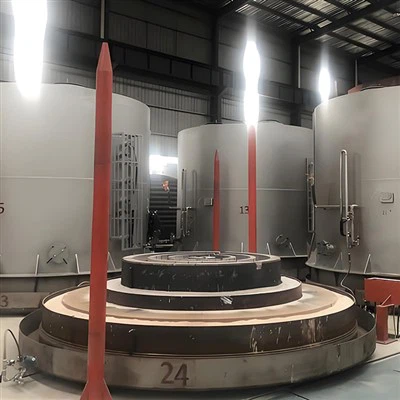
Hey there! As a supplier of Box Annealing Furnaces, I've seen firsthand how crucial it is to ensure the quality of annealed products. In this blog, I'll share some tips and tricks on how you can achieve top - notch results with your box annealing furnace.
Understanding the Basics of Box Annealing
First things first, let's quickly go over what box annealing is. Box annealing is a heat - treatment process where metal workpieces are placed inside a sealed container, or "box," and heated to a specific temperature for a set period. This process helps to relieve internal stresses, improve ductility, and enhance the overall mechanical properties of the metal.
The box annealing furnace is designed to provide a controlled environment for this process. It has to maintain a consistent temperature, and sometimes, a specific atmosphere to prevent oxidation or other unwanted chemical reactions.
Selecting the Right Material
The quality of the annealed product starts with the raw material. You need to choose high - quality metals that are suitable for the annealing process. Different metals have different annealing requirements, such as the optimal annealing temperature and time. For instance, steel and aluminum have very different heat - treatment profiles.
Before loading the material into the box annealing furnace, make sure it's clean. Any dirt, grease, or other contaminants can affect the annealing process and lead to inconsistent results. You can use solvents or mechanical cleaning methods to get the material in pristine condition.
Setting the Correct Temperature
Temperature is one of the most critical factors in the annealing process. You need to set the right temperature for the specific metal you're working with. If the temperature is too low, the annealing may not be effective, and the internal stresses won't be fully relieved. On the other hand, if the temperature is too high, you risk over - annealing, which can cause grain growth and reduce the strength of the metal.
Most box annealing furnaces come with temperature control systems. It's essential to calibrate these systems regularly to ensure accurate temperature readings. You can use thermocouples or other temperature - measuring devices to double - check the furnace's temperature.
Controlling the Annealing Time
In addition to temperature, the annealing time is also crucial. The annealing time depends on the size and shape of the workpiece, as well as the type of metal. Thicker workpieces generally require longer annealing times to ensure that the heat penetrates evenly throughout the material.


You can refer to annealing charts or guidelines provided by metal manufacturers to determine the appropriate annealing time. However, it's also a good idea to conduct some trial runs with small samples to fine - tune the annealing time for your specific application.
Maintaining a Stable Atmosphere
In many cases, maintaining a specific atmosphere inside the box annealing furnace is necessary. For example, some metals are prone to oxidation at high temperatures. To prevent this, you can use inert gases like nitrogen or argon to create a protective atmosphere inside the furnace.
The flow rate of the gas is also important. You need to ensure that there's a continuous and adequate supply of the protective gas to keep the oxygen levels low. Some advanced box annealing furnaces have gas control systems that can automatically adjust the gas flow based on the furnace's conditions.
Proper Loading of the Workpieces
How you load the workpieces into the box annealing furnace can also affect the quality of the annealed products. You need to arrange the workpieces in a way that allows for even heat distribution. Avoid overcrowding the furnace, as this can create hot and cold spots, leading to inconsistent annealing.
You can use racks or fixtures to hold the workpieces in place and ensure proper spacing between them. This will help the heat to circulate freely around each workpiece, resulting in more uniform annealing.
Monitoring the Annealing Process
During the annealing process, it's important to monitor the furnace's conditions closely. Keep an eye on the temperature, gas flow, and other parameters. Any sudden changes in these conditions can indicate a problem with the furnace or the annealing process.
You can use data loggers to record the temperature and other parameters over time. This data can be useful for troubleshooting and process optimization. If you notice any abnormal readings, stop the annealing process immediately and investigate the cause.
Cooling the Workpieces Properly
After the annealing process is complete, you need to cool the workpieces properly. The cooling rate can also affect the final properties of the annealed product. Some metals require slow cooling to achieve the desired microstructure, while others can be cooled more rapidly.
You can use different cooling methods, such as air cooling, furnace cooling, or quenching. The choice of cooling method depends on the metal and the specific requirements of the annealed product.
Other Types of Annealing Furnaces
If you're looking for alternatives to the box annealing furnace, there are other types of annealing furnaces available. For example, the Roller Annealing Furnace is suitable for continuous annealing processes, where the workpieces are moved through the furnace on rollers. The Bell Type Annealing Furnace uses a bell - shaped cover to enclose the workpieces, providing a controlled annealing environment. And the Trolley Type Vacuum Annealing Furnace is ideal for annealing in a vacuum environment, which can prevent oxidation and other surface reactions.
Conclusion
Ensuring the quality of annealed products in a box annealing furnace requires attention to detail at every step of the process. From selecting the right material to proper cooling, each factor plays a crucial role. By following the tips and guidelines I've shared in this blog, you can improve the quality of your annealed products and get the most out of your box annealing furnace.
If you're interested in purchasing a box annealing furnace or have any questions about the annealing process, feel free to reach out. We're here to help you make the best decisions for your heat - treatment needs.
References
- ASM Handbook Volume 4: Heat Treating
- Metals Handbook Desk Edition, 3rd Edition