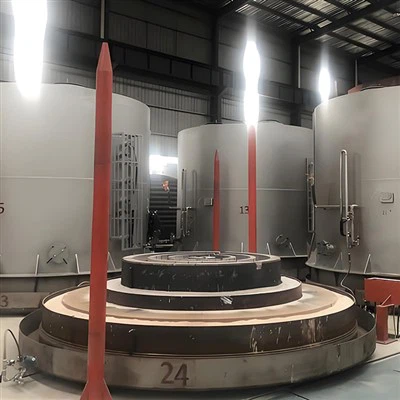
As a supplier of trolley furnaces, I've spent a great deal of time working with these industrial heating units. Trolley furnaces are widely used in various industries for heat treatment processes such as annealing, normalizing, quenching, and tempering. They offer several advantages, including large loading capacity, good temperature uniformity, and flexibility in handling different types of workpieces. However, like any industrial equipment, trolley furnaces also have their share of disadvantages. In this blog post, I'll discuss some of the key drawbacks associated with trolley furnaces.
High Initial Investment
One of the most significant disadvantages of a trolley furnace is the high initial investment required. These furnaces are complex pieces of equipment that involve advanced engineering and high - quality materials. The cost of purchasing a trolley furnace includes not only the furnace itself but also the installation, commissioning, and any necessary auxiliary equipment such as temperature control systems, ventilation systems, and material handling devices.
For small and medium - sized enterprises (SMEs), the high upfront cost can be a major barrier to entry. They may find it difficult to allocate the necessary funds for a trolley furnace, especially when there are other pressing financial needs. Even for larger companies, the high investment means a longer payback period, which can impact the overall financial health of the business. For example, a Large Trolley Furnace with a high - capacity loading and advanced temperature control features can cost a substantial amount of money.
High Energy Consumption
Trolley furnaces are energy - intensive equipment. They need to heat up large volumes of air and the workpieces inside to high temperatures, which requires a significant amount of energy. The energy sources commonly used in trolley furnaces include electricity, natural gas, or oil. Regardless of the energy source, the continuous operation of the furnace to maintain the required temperature results in high energy bills.
Moreover, the heating and cooling cycles of the trolley furnace are not always efficient. During the heating phase, a considerable amount of energy is lost through the furnace walls, doors, and other openings. In the cooling phase, the stored heat in the furnace and the workpieces is often wasted. This inefficiency further contributes to the high energy consumption. For industries that operate multiple trolley furnaces around the clock, the energy cost can be a major expense, eating into the profit margins.
Maintenance Requirements
Trolley furnaces require regular and extensive maintenance to ensure their proper operation and longevity. The high - temperature environment inside the furnace can cause wear and tear on various components such as heating elements, refractory materials, and insulation. These components need to be inspected, repaired, or replaced periodically.
The maintenance process can be time - consuming and costly. For instance, replacing the heating elements in a trolley furnace is not only expensive but also requires skilled technicians. Additionally, the refractory lining, which protects the furnace structure from high temperatures, may develop cracks or erode over time. Repairing or replacing the refractory lining is a complex and labor - intensive task that can disrupt the production schedule.
In addition to component - related maintenance, the furnace also needs to be cleaned regularly to remove scale, slag, and other contaminants. Failure to perform proper maintenance can lead to reduced furnace efficiency, uneven temperature distribution, and even breakdowns, which can result in production delays and increased costs.
Limited Production Flexibility
Although trolley furnaces are designed to handle a variety of workpieces, they still have limitations in terms of production flexibility. The size and shape of the workpieces that can be processed in a trolley furnace are restricted by the dimensions of the furnace chamber. If a company needs to process workpieces of different sizes or shapes on a regular basis, it may find that a trolley furnace is not the most suitable option.
For example, if a company suddenly receives an order for a large - scale workpiece that exceeds the capacity of the existing trolley furnace, it may need to invest in a new furnace or outsource the production, which can be costly and time - consuming. On the other hand, if the company needs to process a large number of small - sized workpieces, the trolley furnace may not be able to achieve optimal efficiency as the large furnace chamber may result in unnecessary energy consumption for heating the empty space.
Safety Risks
Working with trolley furnaces involves several safety risks. The high temperatures inside the furnace can cause burns if operators come into direct contact with the hot surfaces or if there are accidental openings of the furnace doors. The heating elements and other electrical components in the furnace also pose an electrical shock hazard if proper safety precautions are not taken.
In addition, the combustion of fuels such as natural gas or oil in some trolley furnaces can produce harmful gases such as carbon monoxide, nitrogen oxides, and sulfur dioxide. These gases are not only hazardous to the environment but also to the health of the operators. Adequate ventilation systems are required to remove these gases from the workplace, but if the ventilation system fails or is not properly maintained, the operators may be exposed to these toxic gases.
The movement of the trolley itself can also be a safety concern. The heavy - duty trolley, which is used to load and unload the workpieces, needs to be operated carefully to avoid collisions and other accidents.


Slow Heating and Cooling Rates
Trolley furnaces generally have relatively slow heating and cooling rates compared to some other types of furnaces. The large volume of the furnace chamber and the mass of the workpieces inside make it difficult to achieve rapid temperature changes. During the heating phase, it takes a long time for the furnace to reach the desired temperature, which can slow down the production process.
Similarly, during the cooling phase, the natural cooling rate of the furnace and the workpieces is often too slow for some applications. For industries that require quick turnaround times, the slow heating and cooling rates of trolley furnaces can be a significant drawback. To address this issue, some companies may use forced - cooling methods, but these methods can increase the energy consumption and complexity of the furnace system.
Environmental Impact
As mentioned earlier, the high energy consumption of trolley furnaces has a significant environmental impact. The burning of fossil fuels such as natural gas and oil releases large amounts of greenhouse gases, contributing to global warming. Even for electrically - powered trolley furnaces, the electricity is often generated from non - renewable sources, which also has an environmental footprint.
In addition to greenhouse gas emissions, the production and disposal of the components used in trolley furnaces, such as refractory materials and insulation, can also have an environmental impact. These materials may contain substances that are harmful to the environment if not disposed of properly.
Conclusion
Despite the many advantages that trolley furnaces offer, it's important for potential buyers to be aware of their disadvantages. The high initial investment, energy consumption, maintenance requirements, limited production flexibility, safety risks, slow heating and cooling rates, and environmental impact are all factors that need to be considered before making a purchasing decision.
However, at our company, we are constantly working on improving the design and performance of our trolley furnaces to mitigate these disadvantages. We are investing in research and development to develop more energy - efficient heating technologies, improve the durability of components, and enhance the safety features of our furnaces.
If you are considering purchasing a trolley furnace for your industrial needs, we invite you to [contact us](your preferred way to be contacted, e.g., fill out a form on our website) for more information. Our team of experts can provide you with detailed product specifications, cost - benefit analysis, and solutions tailored to your specific requirements. Whether you need a Car Furnace or a Trolley Type Heat Treatment Furnace, we can help you make an informed decision. Let's discuss how our trolley furnaces can meet your production goals while minimizing the associated drawbacks.
References
- "Industrial Furnace Handbook: Principles, Designs, and Operations" by A. V. Sirkar
- "Heat Treatment Furnaces: Design, Control, and Energy Efficiency" by John A. Schey