


Resistance Furnace
Your Professional Resistance Furnace Manufacturer!
Jiangsu Jiuding industrial furnace technology Co., Ltd., is a young enterprise with unique ideas about the design and manufacture of industrial furnaces and heat treatment furnace. Our company is located in jiangsu danyang yellow Nian bridge economic industrial park. Company site management implementation by 8 s standard, the product with scientific design, materials, quality assurance, manufacturing details rein to coordinate, implement welding, assembly, heat preservation, the control standard, coating, uniform temperature field, this is the dominant industrial furnace is ongoing. It is absolutely necessary to provide customers with every equipment manufacturing heart, use the rest assured.


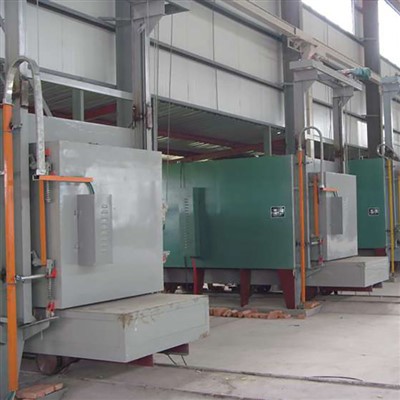
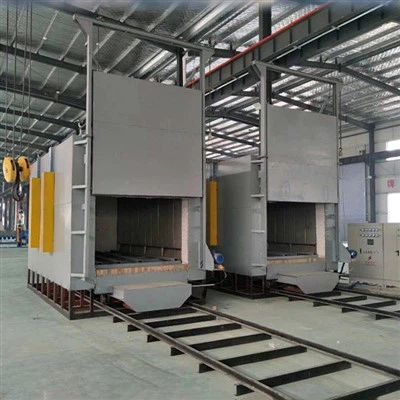
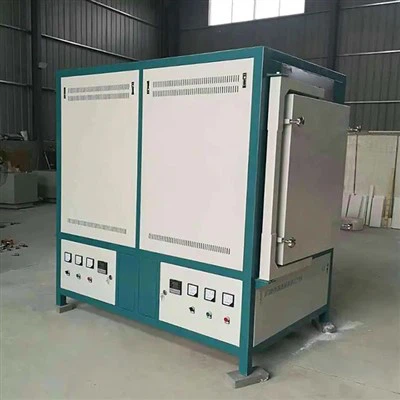

Our Factory
Jiuding have more than 90 staff and workers, and more than 60% are professional and technical personnel, in which, 1 senior engineer, 3 engineers, 5 assistant engineers and 15 technicians. Now, Jiuding have implement the 6S and ISO9001 management system comprehensively and this also lay the foundation for our company becoming the leader of furnace industry.
Product Application
Our products are widely used in heavy industry fields such as smelting, casting, forging, shipbuilding, chemical equipment manufacturing, hydropower equipment manufacturing, thermal power equipment manufacturing, nuclear power equipment manufacturing, and high-strength fastener manufacturing.
Advanced Equipment
Our company has a full range of conventional industrial furnace manufacturing equipment, and CNC plasma cutting machine, the United States fluke laser detector temperature field, wind pressure, wind speed measuring instrument, gas pressure tester, gas concentration detection alarming device, infrared thermometer.
Production Market
So far, Jiuding brand have been affirmed by all our customers and currently our sales network have reached all over the world, include: Russia, South Africa, Turkey, Saudi Arabia, UAE, Iran, India, Pakistan, Indonesia, Vietnam, Taiwan, Central Asia, etc.
Technical Parameters
|
Parameter name |
Unit |
Model |
||||||
|
RT3-1020-6 |
RT3-2100-6 |
RT3-850-9 |
RT3-2880-9 |
RT3-880-12 |
RT3-1860-12 |
|||
|
Rated Power |
KW |
1350 |
2100 |
850 |
2880 |
880 |
1860 |
|
|
Rated voltage |
V |
380 |
||||||
|
Frequency |
Hz |
50 |
||||||
|
Number of phases |
phase |
3 |
||||||
|
Rated Temp. |
℃ |
650 |
950 |
1200 |
||||
|
Operating Temp. |
℃ |
650 |
950 |
1100 |
||||
|
Furnace size |
D |
mm |
4700 |
10500 |
6000 |
13000 |
6000 |
16000 |
|
W |
mm |
4500 |
4000 |
3000 |
3000 |
3000 |
2500 |
|
|
H |
mm |
2500 |
3200 |
2500 |
3600 |
2000 |
2500 |
|
|
Heating element connection |
|
YYYYYY |
YYYYYYYY |
YYYYYY |
YYYYYYYY |
YYYYYY |
YYYYYYYY |
|
|
Empty furnace heating time |
h |
4.5 |
4.5 |
4 |
4.5 |
4 |
4.5 |
|
|
Temperature control accuracy |
℃ |
±1-2 |
||||||
|
Furnace temperature uniformity |
℃ |
±10 |
||||||
|
Max. load capacity |
Kg |
32000 |
90000 |
28000 |
100000 |
28000 |
80000 |
|
|
Weight |
Kg |
26000 |
39000 |
25000 |
45000 |
25000 |
35000 |
|
Advantages of Resistance Furnace


High Thermal Efficiency (50-80%)
Resistance furnaces convert electrical energy into heat with minimal losses, achieving thermal efficiencies between 50% and 80%.
This high efficiency reduces energy waste, making them cost-effective over time despite their high power consumption.
Precise Temperature Control
Equipped with automated control units, resistance furnaces can maintain and circulate temperatures with high accuracy.
This feature is critical for processes requiring consistent and specific heating conditions, such as metal hardening or laboratory experiments.
Suitable for Demanding Applications
Resistance furnaces are designed to handle demanding workpieces, including those requiring high temperatures (exceeding 1500°C).
Their robust construction and advanced controls make them ideal for industries like mining, metallurgy, and materials science.
Good Working Conditions
The sealed design of resistance furnaces creates a vacuum or controlled atmosphere, preventing heat loss and maintaining a stable environment.
This reduces exposure to harmful emissions and improves safety for operators.
Long Furnace Life
Resistance furnaces are built to last, with durable materials and components that withstand high temperatures and frequent use.
This longevity reduces the need for frequent replacements, lowering long-term operational costs.
Oxidation and Hardening Prevention
The gaseous medium inside the furnace eliminates oxidation, which is crucial for processes involving metals and alloys.
This feature ensures the integrity of materials being heated, particularly in mining and metallurgical applications.
Versatility in Applications
Resistance furnaces can handle a wide range of materials and processes, from small-batch alloy melting to large-scale industrial heating.
Their adaptability makes them suitable for diverse industries, including research, manufacturing, and mining.
Fast Heating and Uniform Temperature Distribution
Some resistance furnaces, such as graphite resistance furnaces, offer fast heating speeds and excellent temperature uniformity.
This ensures consistent results and reduces processing time, enhancing productivity.
Ease of Maintenance and Operation
Resistance furnaces are designed for ease of use, with straightforward controls and minimal maintenance requirements.
This reduces downtime and operational complexity, making them a practical choice for continuous industrial processes.
Applications of Resistance Furnace
Heat Treatment of Metals
Resistance furnaces are widely used for annealing, hardening, and tempering metals. Their precise temperature control results in consistent material properties, reducing defects and improving strength. For example, automotive component manufacturers rely on resistance heat treatment to meet strict quality standards. Adoption rates are high due to the furnaces' speed and repeatability, with outcomes measured in reduced processing times and improved product durability.
Ceramic and Glass Firing
In ceramics, resistance furnaces enable uniform firing of tiles, pottery, and advanced ceramic components. They help achieve consistent color, strength, and porosity. Glass manufacturers use resistance furnaces for melting and annealing, ensuring clarity and structural integrity.
Semiconductor and Electronics Manufacturing
Electronics industries utilize resistance furnaces for processes like wafer annealing and component testing. The high precision and cleanliness of these systems are critical for maintaining device performance. Adoption is driven by the need for ultra-clean environments and tight process controls, resulting in higher yields and lower defect rates.
Laboratory and R&D Applications
Research labs employ resistance furnaces for material testing, alloy development, and experimental processing. Their flexibility allows for custom temperature profiles and controlled atmospheres.
Environmental and Waste Management
Resistance furnaces are increasingly used for waste incineration and hazardous material treatment. Their ability to operate at high temperatures with minimal emissions makes them suitable for environmentally sensitive applications. Adoption is growing in waste-to-energy projects, where compliance with environmental standards is mandatory, and outcomes focus on safe, efficient waste processing.
Work method of Resistance Furnace
Resistance furnace is mainly composed of furnace body, heater, temperature control system and so on. It works as follows:
Heater heating:
The heater of the resistance furnace is a heating body, which is generally made of resistance alloy wires. When energized, Joule heat is generated inside the resistance wire, the heater heats up, and the objects in the furnace are also heated.
Temperature control:
The temperature control of the resistance furnace generally adopts the PID control algorithm. The temperature signal is sensed by the temperature sensor and compared with the set value to obtain the error value in the PID control algorithm, and then the heating power is adjusted according to the error value, so that the temperature is controlled within the set temperature range.
Heat transfer:
The material of the resistance furnace body is usually ceramic or metal, which has good thermal conductivity and can quickly transfer the heat generated by the heater to the objects in the furnace. During the heating process, heat is transferred through air convection, radiation, etc., so that the objects in the furnace reach the required temperature.
Maintenance and maintenance:
During the use of the resistance furnace, it needs to be cleaned and maintained regularly. For the maintenance of the heating element of the resistance furnace, it is necessary to pay attention to avoid oxidation and fusing. For the inside of the furnace, it needs to be cleaned regularly to avoid dust and impurities from affecting the heating effect.
Packaging and Shipping
Trucking:
For local or short-distance shipments, a flatbed truck is typically used. Use heavy-duty strapping or chains to secure the stove to the truck bed. Ensure the strapping is properly tightened and has no slack. Place padding between the stove and the truck bed to prevent scratches and damage.
Containerizing:
For long-distance or overseas shipments, use a container. Inside the container, use wooden blocks or brackets to support the stove and prevent it from moving.
Our certificates
