


Annealing Furnace
Jiuding Industrial Furnace:Your Professional Annealing Furnace Manufacturer!
Jiangsu Jiuding industrial furnace technology Co., Ltd., is a young enterprise with unique ideas about the design and manufacture of industrial furnaces and heat treatment furnace. Our company is located in jiangsu danyang yellow Nian bridge economic industrial park. Company site management implementation by 8 s standard, the product with scientific design, materials, quality assurance, manufacturing details rein to coordinate, implement welding, assembly, heat preservation, the control standard, coating, uniform temperature field, this is the dominant industrial furnace is ongoing. It is absolutely necessary to provide customers with every equipment manufacturing heart, use the rest assured.






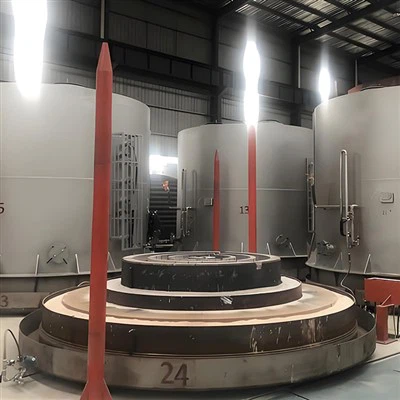
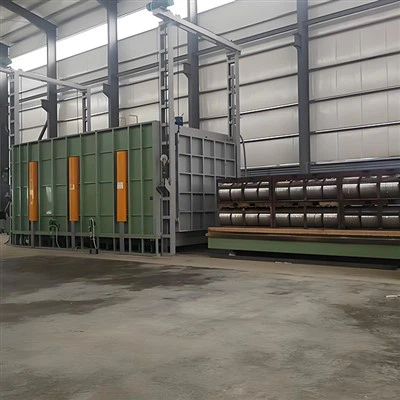
Why Choose Us
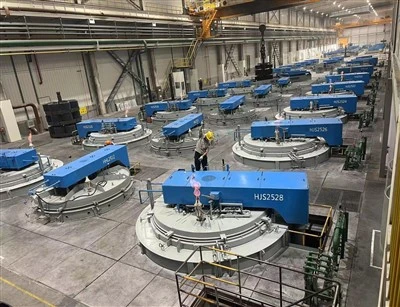
Our Factory
Jiuding have more than 90 staff and workers, and more than 60% are professional and technical personnel, in which, 1 senior engineer, 3 engineers, 5 assistant engineers and 15 technicians. Now, Jiuding have implement the 6S and ISO9001 management system comprehensively and this also lay the foundation for our company becoming the leader of furnace industry.
Product Application
Our products are widely used in heavy industry fields such as smelting, casting, forging, shipbuilding, chemical equipment manufacturing, hydropower equipment manufacturing, thermal power equipment manufacturing, nuclear power equipment manufacturing, and high-strength fastener manufacturing.
Advanced Equipment
Our company has a full range of conventional industrial furnace manufacturing equipment, and CNC plasma cutting machine, the United States fluke laser detector temperature field, wind pressure, wind speed measuring instrument, gas pressure tester, gas concentration detection alarming device, infrared thermometer.
Production Market
So far, Jiuding brand have been affirmed by all our customers and currently our sales network have reached all over the world, include: Russia, South Africa, Turkey, Saudi Arabia, UAE, Iran, India, Pakistan, Indonesia, Vietnam, Taiwan, Central Asia, etc.
Technical Parameters
|
Parameter name |
Unit |
Model |
||||||
|
RT4-75-9 |
RT4-105-9 |
RT4-150-9 |
RT4-180-9 |
RT4-220-9 |
RT4-300-9 |
|||
|
Rated Power |
KW |
75 |
105 |
150 |
180 |
220 |
300 |
|
|
Rated voltage |
V |
380 |
||||||
|
Frequency |
Hz |
50 |
||||||
|
Number of phases |
Phases |
3 |
||||||
|
Max. Temp. |
℃ |
950 |
||||||
|
Operating Temp. |
℃ |
950 |
||||||
|
Furnace size |
D |
mm |
1500 |
1800 |
2000/2800 |
2100 |
2500 |
3000 |
|
W |
mm |
750 |
900 |
1000/900 |
1050 |
1300 |
1500 |
|
|
H |
mm |
600 |
650 |
700/600 |
750 |
900 |
1200 |
|
|
Heating element connection |
|
Y |
||||||
|
Empty furnace heating time |
H |
2.5 |
2.5 |
3 |
3 |
3.5 |
4 |
|
|
Temperature control accuracy |
℃ |
±1 |
||||||
|
Furnace temperature uniformity |
℃ |
±5-8 |
||||||
|
Max. load capacity |
Kg |
1500 |
3000 |
4500 |
5000 |
7000 |
11000 |
|
|
Weight |
Kg |
3100 |
4000 |
4800 |
5600 |
8500 |
9200 |
|
High-performance burners/heating elements
Designed for uniform temperature distribution, our heating systems ensure consistent heat treatment, reducing process variability and improving product quality.
Safety & compliance
Built with safety in mind, all annealing furnaces include over-temperature protection, emergency shut-off, door interlocks, and are compliant with international safety standards.
Precision temperature control
Integrated digital PID controllers provide accurate temperature management with programmable heat-up, soak, and cool-down cycles for optimal process control.

Energy efficiency
Advanced insulation and power management systems minimize energy consumption without compromising performance.
Robust construction
Heavy-duty, insulated steel chambers with corrosion-resistant finishes deliver excellent thermal efficiency and long-lasting durability, even under continuous operation.
Versatile loading options
Available with front-loading or top-loading configurations, adjustable shelving, and customizable chamber sizes to accommodate a wide range of part geometries.
User-friendly interface
Intuitive touch-screen control panel with real-time data monitoring, alarms, and multiple recipe storage for easy and efficient operation.

Metallurgical Applications
In metallurgy, annealing is fundamental for treating metals like steel, aluminum, and copper. The process reduces brittleness and enhances workability, which is essential for further fabrication processes such as stamping, rolling, and machining. Consistency in grain structure and mechanical properties ensures components meet stringent quality standards in industries like automotive and aerospace manufacturing.
Glass Manufacturing
The annealing furnace is important in glass production, where controlled cooling eliminates internal stresses that could lead to cracking or warping. The process ensures durability and optical clarity in products ranging from architectural glass panels to precision optical components. Uniformity in temperature gradients within the furnace is critical to achieving flawless results in high-volume production.
Research and Development
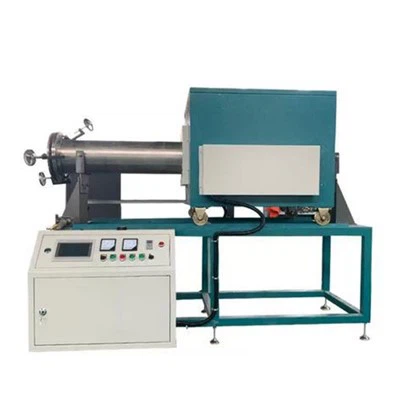
In research settings, annealing furnaces enable precise experimentation with material properties. Laboratories often use these furnaces to test new alloys, composites, and treatments under controlled conditions. The flexibility to adjust heating rates, dwell times, and cooling profiles makes an annealing furnace indispensable tools for materials science research and development.
Types of Annealing Furnaces
Batch Annealing Furnace
Batch annealing furnaces are ideal for small-batch production where materials require uniform heating. These furnaces provide precise temperature control, making them suitable for specialty steel, alloys, and precision components. Industries that require flexibility in production often prefer batch annealing furnaces due to their ability to handle different materials in separate cycles.
Continuous Annealing Furnace
For large-scale manufacturing, a continuous annealing furnace is the best choice. This type of furnace operates on a continuous conveyor system, allowing for high-volume production with consistent heat treatment. Industries such as automotive, aerospace, and large-scale steel processing benefit from the efficiency and speed of continuous annealing.
Bell Annealing Furnace
Bell annealing furnaces are commonly used for precision-controlled annealing of steel strips, wires, and other delicate components. They are designed to create a controlled atmosphere, ensuring uniform heat distribution while preventing oxidation. These furnaces are widely used in metallurgical plants and high-quality steel manufacturing.
Conveyor Annealing Furnace
A conveyor annealing furnace is an automated solution designed for mass production of small components. This furnace type is commonly used in electronics and semiconductor manufacturing, where consistency and precision are required. The automated conveyor system minimizes manual handling and improves production efficiency.
Components of Annealing Furnace
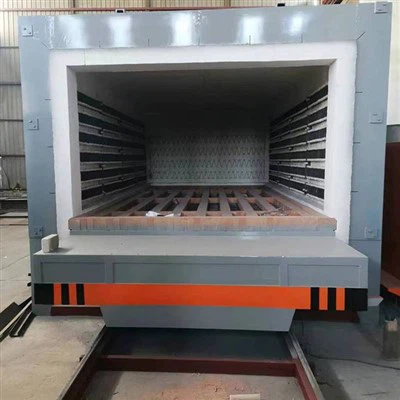
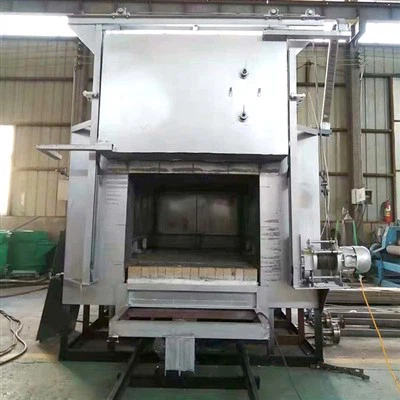
Furnace Body: The annealing furnace's skeleton is primarily welded from various steel materials. The outer frame typically uses channel steel as the main beam, the enclosure panels are made of cold-bent thin plate, and the trolley also uses channel steel as the main beam. The bottom plate and front and rear panels are typically made of intermediate plate.
Drive: The trolley is driven by an electric motor and a reducer via a chain, driving a set of drive pulleys at the front. The furnace door is electrically raised and lowered using a worm gear reducer and motor combination.
Sealing: The trolley and furnace body are sealed using a labyrinth-type structure, with an automatic sand-sealing knife seal installed on the sides of the trolley. The furnace door seal utilizes a roller-type and spring-loaded automatic mechanism. The furnace body is constructed of refractory bricks to ensure a tight seal. High-alumina bricks are used in the pressure-resistant area of the trolley, and insulation bricks are installed underneath for insulation.
Combustion System: Several burners are installed on both sides of the oil furnace, reciprocating heat flow within the furnace chamber to ensure uniform furnace temperature. Fully automatic or semi-automatic options are available depending on your needs.
Smoke preheating device: A flue gas preheating device is installed at the top of the furnace. When the flue gas in the furnace passes through the preheater, it is preheated by the fan into cold air, and then sent to the burner through the pipeline to assist combustion. A manual butterfly valve is installed at the outlet to adjust the pressure in the furnace.
Packaging and Shipping
Trucking: For local or short-distance shipments, a flatbed truck is typically used. Use heavy-duty strapping or chains to secure the stove to the truck bed. Ensure the strapping is properly tightened and has no slack. Place padding between the stove and the truck bed to prevent scratches and damage.
Containerizing: For long-distance or overseas shipments, use a container. Inside the container, use wooden blocks or brackets to support the stove and prevent it from moving.
Our certificates
