


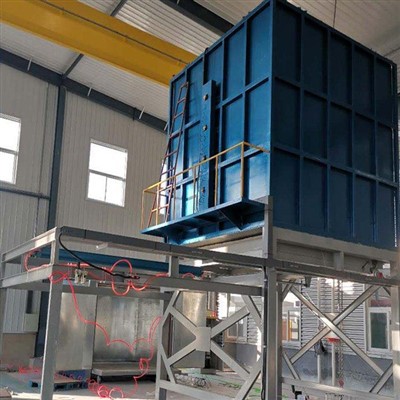
Quenching Furnace
Jiuding Industrial Furnace:Your Professional Quenching Furnace Manufacturer!
Jiangsu Jiuding industrial furnace technology Co., Ltd., is a young enterprise with unique ideas about the design and manufacture of industrial furnaces and heat treatment furnace. Our company is located in jiangsu danyang yellow Nian bridge economic industrial park. Company site management implementation by 8 s standard, the product with scientific design, materials, quality assurance, manufacturing details rein to coordinate, implement welding, assembly, heat preservation, the control standard, coating, uniform temperature field, this is the dominant industrial furnace is ongoing. It is absolutely necessary to provide customers with every equipment manufacturing heart, use the rest assured.




Why Choose Us
Our Factory
Jiuding have more than 90 staff and workers, and more than 60% are professional and technical personnel, in which, 1 senior engineer, 3 engineers, 5 assistant engineers and 15 technicians. Now, Jiuding have implement the 6S and ISO9001 management system comprehensively and this also lay the foundation for our company becoming the leader of furnace industry.
Product Application
Our products are widely used in heavy industry fields such as smelting, casting, forging, shipbuilding, chemical equipment manufacturing, hydropower equipment manufacturing, thermal power equipment manufacturing, nuclear power equipment manufacturing, and high-strength fastener manufacturing.
Advanced Equipment
Our company has a full range of conventional industrial furnace manufacturing equipment, and CNC plasma cutting machine, the United States fluke laser detector temperature field, wind pressure, wind speed measuring instrument, gas pressure tester, gas concentration detection alarming device, infrared thermometer.
Production Market
So far, Jiuding brand have been affirmed by all our customers and currently our sales network have reached all over the world, include: Russia, South Africa, Turkey, Saudi Arabia, UAE, Iran, India, Pakistan, Indonesia, Vietnam, Taiwan, Central Asia, etc.
Technical Parameters
|
Model |
Power(KW) |
Voltage(V) |
Temp. |
Frame size(MM) |
Loading capacity(KG) |
||
|
D |
W |
H |
|||||
|
T4-75-6 |
75 |
380 |
650 |
1000 |
1000 |
1000 |
500 |
|
T4-90-6 |
90 |
380 |
650 |
1200 |
1200 |
1000 |
800 |
|
T4-120-6 |
120 |
380 |
650 |
1200 |
1200 |
1500 |
1000 |
|
T4-135-6 |
135 |
380 |
650 |
1500 |
1500 |
1500 |
1500 |
|
T4-180-6 |
180 |
380 |
650 |
1700 |
1700 |
1700 |
2000 |
|
T4-210-6 |
210 |
380 |
650 |
2200 |
2200 |
2100 |
3000 |
|
Model |
Power(KW) |
Voltage(V) |
Temp. |
Frame size(MM) |
Loading capacity(KG) |
|
|
D |
H |
|||||
|
T4-60-6 |
60 |
380 |
650 |
800 |
1000 |
300 |
|
T4-75-6 |
75 |
380 |
650 |
1000 |
1200 |
500 |
|
T4-90-6 |
90 |
380 |
650 |
1200 |
1400 |
800 |
|
T4-120-6 |
120 |
380 |
650 |
1300 |
1500 |
1200 |
Advantages of Quenching Furnace
Temperature uniformity:
The temperature uniformity required by the user is achieved by the circulation fan, air guide cover plate, furnace structure, distribution of electric heating power and arrangement of electric heating elements, control method and process, furnace door structure and other related designs.
Advanced mechanical system:
The advancement of the system is guaranteed by design, component selection and quality, and processing and manufacturing quality. The mechanical system runs smoothly and reliably, and the equipment is in a low-noise, low-vibration working state.
Perfect control system:
It can achieve precise temperature control at 100-650℃, the system is stable and reliable, easy to operate, avoids human error operation, and has complete functions.
The quenching transfer time is fast and adjustable:
The double-opening furnace door at the bottom of the furnace, the double-speed lifting mechanism, and the advanced mechanical system make the quenching transfer fast and reliable, and the time can be adjusted according to the user's process requirements.
Application of Quenching Furnace

Automotive Industry:
Gears, shafts, bearings, and other powertrain components are often hardened using quenching furnaces.

Aerospace Industry:
Turbine blades, engine components, and other critical parts are often heat treated using quenching furnaces to ensure high strength and reliability.

Tool Manufacturing:
Cutting tools, dies, and molds are commonly quenched to increase their hardness and wear resistance.

Construction, Mining, and Heavy Machinery:
Components like buckets, gears, and other wear parts are often quenched to withstand harsh conditions.

Medical Industry:
Precision parts and instruments may require specific heat treatments, including quenching, to achieve desired properties.

Electronics:
Sensitive materials in electronics may require gentle quenching to avoid damage.
Types of Quenching Furnaces
Open Quenching Furnaces
Open quenching furnaces are the most basic type, where the metal is heated in an open environment and then transferred to a quenching medium. They are often used for small-scale operations where the control of the atmosphere isn’t critical.
Sealed Quench Furnaces
The sealed quench furnace, also known as an integral quench furnace, is designed to maintain a controlled atmosphere throughout the heat treatment process. The metal is heated in a sealed chamber, preventing exposure to the surrounding environment. This type of furnace is widely used in industrial settings for its ability to produce consistent results and reduce oxidation.
Vacuum Quenching Furnaces
Vacuum quenching furnaces operate in a vacuum environment, which eliminates the risk of oxidation and contamination. They are commonly used for high-precision applications, such as aerospace components and medical instruments.
Salt Bath Quenching Furnaces
In salt bath quenching, the metal is immersed in a molten salt bath, providing uniform heating and rapid cooling. This method is particularly effective for complex shapes and thin sections where uniformity is crucial.

Loading: The metal parts to be heat-treated are loaded into the sealed chamber or retort of the furnace. The retort is typically made of a heat-resistant material, such as stainless steel, and is sealed to prevent the entry of air or other gases during the process.
Heating: The furnace is heated to the desired temperature required for the heat treatment process. This temperature is often above the transformation temperature of the steel, enabling the desired metallurgical changes to occur.
Soaking: Once the desired temperature is reached, the metal parts are held at that temperature for a specific period. This soaking time allows for uniform heating and the completion of desired transformations within the steel.
Quenching: After the soaking period, the retort containing the metal parts is rapidly transferred to a quenching chamber. In the quenching chamber, the parts are exposed to a quenching medium, such as oil, polymer, or water.
This rapid quenching process rapidly cools the parts, resulting in the desired material properties, such as hardness or toughness.
Tempering (Optional): In some cases, after quenching, the parts may undergo a tempering process. Tempering involves reheating the parts to a lower temperature to reduce excessive hardness and improve toughness, ductility, and dimensional stability.
Packaging and Shipping
Trucking: For local or short-distance shipments, a flatbed truck is typically used. Use heavy-duty strapping or chains to secure the stove to the truck bed. Ensure the strapping is properly tightened and has no slack. Place padding between the stove and the truck bed to prevent scratches and damage.
Containerizing: For long-distance or overseas shipments, use a container. Inside the container, use wooden blocks or brackets to support the stove and prevent it from moving.
Our certificates
